
Environment – Supreme Court Panel Orders Strong Action to Protect Kolleru Lake
Environment –The Supreme Court-appointed Central Empowered Committee (CEC) has issued fresh directions aimed at strengthening environmental protection measures at Kolleru Lake. The panel has instructed the Eluru District administration to provide complete support to the Forest Department in removing illegally developed fish ponds, while also seeking detailed updates from the Andhra Pradesh government on recent encroachments and other activities affecting the protected wetland.
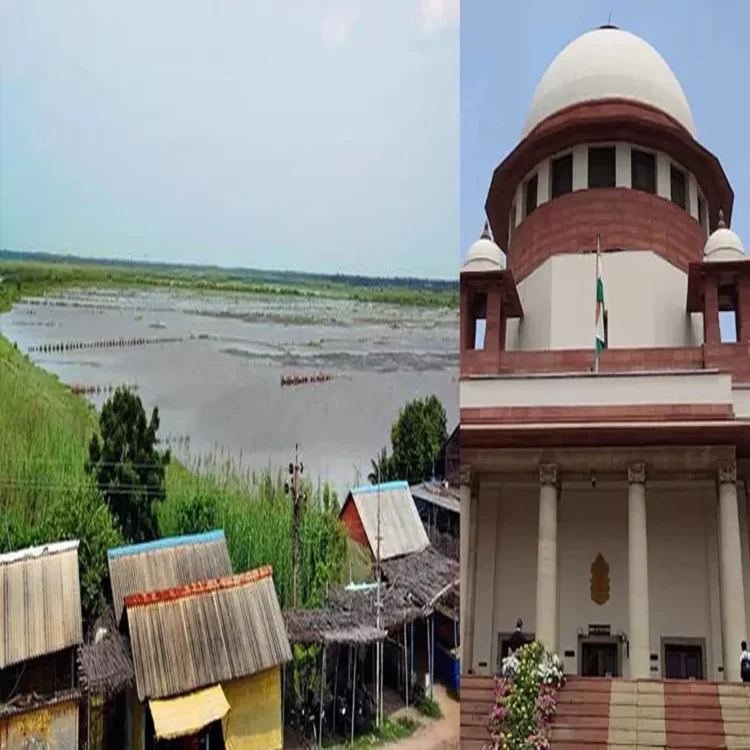
The Central Empowered Committee has made it clear that district authorities should work in close coordination with the Forest Department to ensure that demolition drives against unauthorized fish ponds are carried out without obstruction. The committee’s intervention follows concerns that enforcement efforts were being hindered at the local level, slowing action against violations inside the ecologically sensitive lake region.
Report Sought on Encroachments and Bund Construction
The committee has directed the Andhra Pradesh government to submit a comprehensive report covering recent instances of encroachment across Kolleru Lake, along with details of bunds constructed in the area. The information is expected to help assess the extent of unauthorized development and determine whether additional corrective measures are required to safeguard the wetland ecosystem.
Officials from the Forest and Environment Department had reportedly informed the committee that demolition operations faced resistance from certain local authorities. Taking these complaints seriously, the CEC emphasized the need for coordinated action so that conservation initiatives are implemented without unnecessary delays.
Questions Raised Over Electricity Supply
Another issue highlighted by the committee relates to the provision of electricity connections to illegal fish ponds operating within the sanctuary limits. The CEC expressed concern over how such facilities continued to receive power despite being unauthorized and has asked the concerned authorities to submit an explanation through a detailed report.
The panel’s observations indicate that supporting infrastructure provided to illegal activities could undermine conservation efforts and encourage further violations in the protected area.
Pollution and Bird Habitat Under Threat
Apart from encroachments, the committee also drew attention to worsening environmental conditions in Kolleru Lake. It expressed concern over increasing pollution levels and the gradual drying of the Atapaka Bird Sanctuary, a critical habitat that attracts thousands of migratory birds every year.
According to the committee, deterioration of the sanctuary poses a significant risk to bird populations that depend on the wetland for feeding, nesting, and seasonal migration. District authorities have been instructed to speed up restoration and conservation initiatives while regularly updating the committee on the progress achieved.
Fishing Community Seeks Protection Measures
The latest developments have also brought attention to concerns raised by local residents and members of the fishing community. They fear that saline water entering the lake through the Upputeru channel could adversely affect freshwater ecosystems and reduce fish availability, directly impacting livelihoods that depend on the lake.
Community representatives have urged the Andhra Pradesh government to construct three regulators to prevent seawater intrusion and help maintain the lake’s freshwater balance. They believe such infrastructure would not only protect fisheries but also contribute to the long-term ecological stability of Kolleru Lake.
Long-Standing Environmental Issues Return to Focus
The CEC’s latest directives have once again highlighted several unresolved challenges surrounding Kolleru Lake, including illegal fish ponds, unauthorized land encroachments, pollution, habitat degradation, and the need for stronger environmental enforcement. With the committee seeking multiple reports from the state government and district administration, authorities are expected to intensify monitoring and conservation efforts to preserve one of India’s most significant freshwater wetlands.