
Environment Clearance – Supreme Court Strikes Down 2021 Retrospective EC Policy
Environment Clearance – The Supreme Court has invalidated the Central government’s 2021 Office Memorandum that allowed projects to obtain environmental clearance after construction had already begun. The ruling reinforces that prior approval remains a mandatory legal requirement before any new project can proceed.
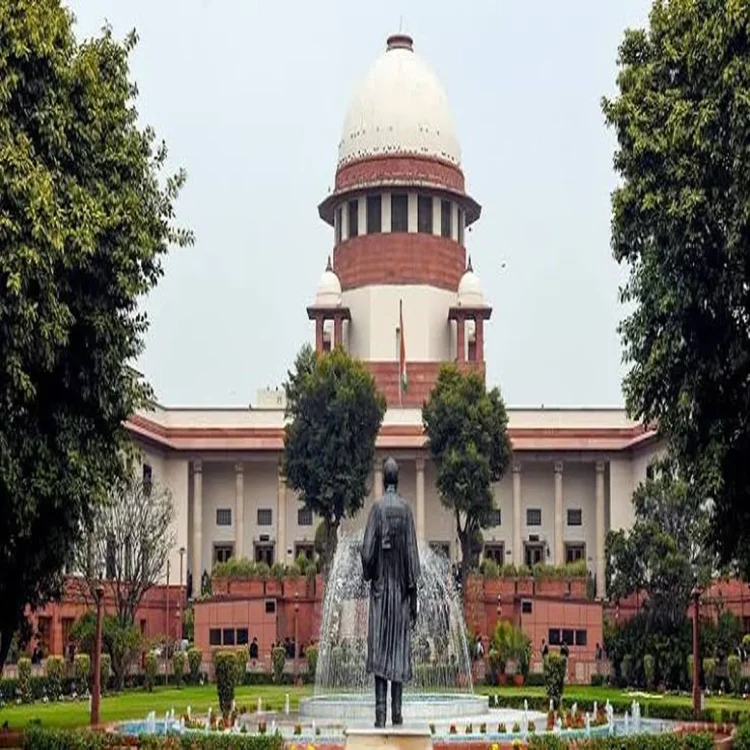
In a landmark unanimous judgment delivered on Wednesday, the Supreme Court set aside the Centre’s 2021 Office Memorandum (OM), which had introduced a mechanism for granting retrospective environmental clearances (ECs) to projects that started work without first securing mandatory environmental approval. The court ruled that such a significant policy change cannot be implemented through an executive office memorandum and must instead follow the legal process prescribed under environmental laws.
Existing Clearances Will Not Be Affected
A three-judge bench headed by Chief Justice Surya Kant, along with Justices Joymalya Bagchi and Vipul M. Pancholi, clarified that the verdict will operate prospectively. As a result, environmental clearances that have already been granted under the earlier framework will remain valid and will not be reopened.
This provides relief to several projects, including Telangana’s Palamuru-Rangareddy Lift Irrigation Scheme, Seethamma Sagar project and the Gouravelli Reservoir, all of which had received environmental approvals under the existing mechanism.
Prior Environmental Approval Remains Mandatory
The bench made it clear that no new development project should commence construction before obtaining environmental clearance. According to the court, beginning work without prior approval violates the established legal framework governing environmental protection.
The judges observed that even if the government intends to introduce a system permitting post-facto approvals, such a policy must be brought into force through a formal statutory notification. An administrative office memorandum, the court said, cannot replace the legal procedure required for changing environmental regulations.
Court Rejects Centre’s 2021 Office Memorandum
The Centre had issued the 2021 Office Memorandum to allow projects that had already started construction without prior environmental clearance to apply for approval later. The Supreme Court concluded that this administrative measure effectively altered the environmental regulatory framework without following the procedure required under law.
According to the judgment, any substantial modification affecting environmental governance must be made through a legally notified regulation rather than an executive instruction.
Constitutional Principles Highlighted
The Supreme Court reaffirmed that obtaining environmental clearance before starting a project is the fundamental rule under India’s environmental protection regime. It stressed that developers cannot ordinarily begin operations first and seek official approval afterwards.
The bench further ruled that the 2021 Office Memorandum violated Articles 14 and 21 of the Constitution. The judges found that the policy failed to satisfy the constitutional standards of proportionality and reasonableness, making it legally unsustainable.
No More Applications Under Earlier Framework
The court also directed that no fresh applications seeking environmental clearance under the 2017 notification or the quashed 2021 Office Memorandum should be accepted in the future. Additionally, it restrained the Central government from issuing similar administrative orders permitting post-facto environmental clearances.
The judgment is expected to strengthen compliance with environmental laws by ensuring that statutory approvals are obtained before construction begins, reinforcing accountability in future infrastructure and development projects.
The ruling is also significant for states planning major infrastructure initiatives. In Telangana, proposals for new barrages at Tummidihatti and across the Krishna River in the erstwhile Mahbubnagar region will now have to strictly follow the requirement of obtaining environmental clearance before any construction activity is undertaken