
ElectoralRolls – Delhi Voter List Revision May Remove Thousands of Outdated Records
ElectoralRolls –Delhi’s ongoing Special Intensive Revision (SIR) of electoral rolls is expected to result in the removal of nearly 20% to 25% of names from the existing voter list, according to election officials. The exercise is primarily aimed at updating electoral records by identifying voters who are no longer residing at their registered addresses. Officials say the national capital’s constantly changing population, frequent job transfers, and residential relocations have contributed significantly to outdated voter registrations.
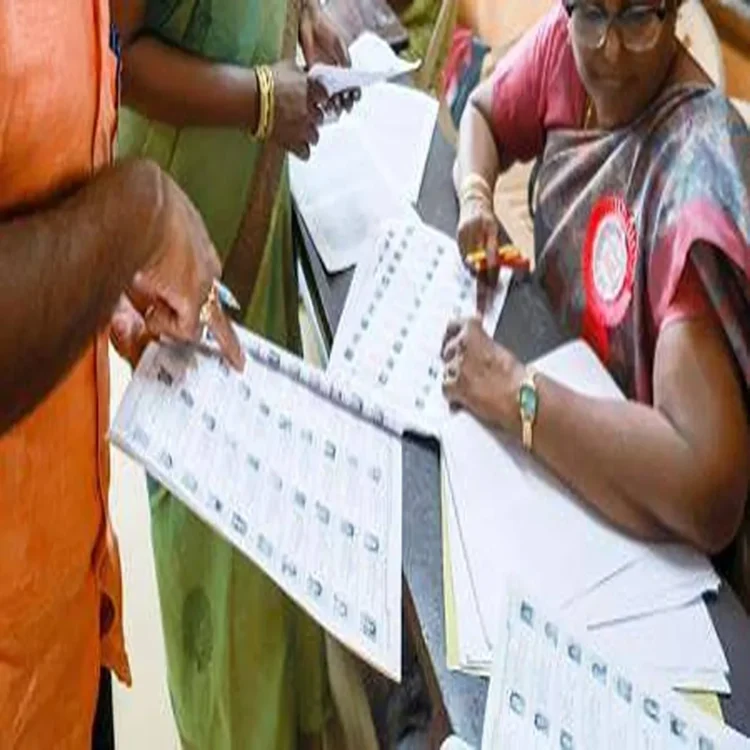
Population Movement Driving Electoral Roll Changes
Election authorities explained that the projected percentage is only a preliminary estimate. The exact number of deletions will become clear after the draft electoral rolls are released on August 17. Officials noted that Delhi experiences continuous movement of residents, including migrant workers, government employees, students, and families relocating within or outside the city. Many individuals shift to new homes without updating their voter registration, leaving their names linked to old addresses.
A senior official associated with the Chief Electoral Officer’s office said this pattern has made large-scale verification necessary. The official added that new residential colonies and changing population distribution across the city have further increased the need for an accurate electoral database.
Booth-Level Verification Reveals Missing Voters
Several Booth Level Officers (BLOs) involved in the revision process said that much of their work has focused on verifying whether registered voters still live at the addresses listed in the electoral rolls. In many cases, voters have not left Delhi altogether but have simply moved to different localities without transferring their voter registration.
Officials conducting field verification said they frequently encountered houses where the registered voter had relocated months or even years earlier. Such cases require electoral records to be updated so that voter lists accurately reflect current residential details.
Institutional Areas Face Frequent Turnover
One BLO highlighted the unique challenges in his polling area, which includes residential quarters at AIIMS, staff accommodation, and several student hostels. According to him, the voter list in this area changes regularly because doctors are transferred, employees retire, students complete their education, and government housing is reassigned to new occupants.
This continuous turnover makes electoral verification more demanding than in stable residential neighbourhoods. Officials said similar situations exist in several institutional and government housing clusters across Delhi.
Earlier Mapping Exercise Already Reduced Voter Numbers
Before launching the Special Intensive Revision, the Election Commission had carried out a preliminary mapping exercise to identify voters who had already shifted from their registered addresses. According to one BLO, this earlier verification significantly reduced the number of registered electors in his polling station.
He said the polling booth previously had around 1,150 to 1,200 registered voters. During the pre-verification process, nearly 500 to 600 names were removed after authorities confirmed that those individuals had relocated long ago.
The polling station currently has approximately 570 registered voters, but the officer believes that another 300 names may be deleted because the individuals could not be traced at their listed addresses during the present verification exercise.
Authorities Encouraged Voters to Update Registration
The BLO said he had started contacting registered voters several months before the formal revision process began. Beginning in January, he used the mobile numbers available in voter records to inform eligible voters about the need to transfer their registration if they had changed their place of residence.
According to the officer, while some voters completed the required formalities and updated their electoral details, many did not respond or failed to initiate the transfer process. As a result, those who cannot be verified at their registered addresses are likely to have their names removed from the current electoral roll.
Officials said affected individuals will still have the opportunity to submit fresh applications for voter registration at their new place of residence after the deletion process is completed, ensuring they remain eligible to participate in future elections from the correct constituency.