
Elections – Record Voter Turnout Marks Peaceful First Phase in Bengal Polls
Elections – West Bengal witnessed an unprecedented surge in voter participation during the first phase of its assembly elections, recording a turnout of 91.78 percent on Thursday. This marks the highest polling percentage in the state since Independence, surpassing the previous peak of 84.72 percent recorded in 2021.
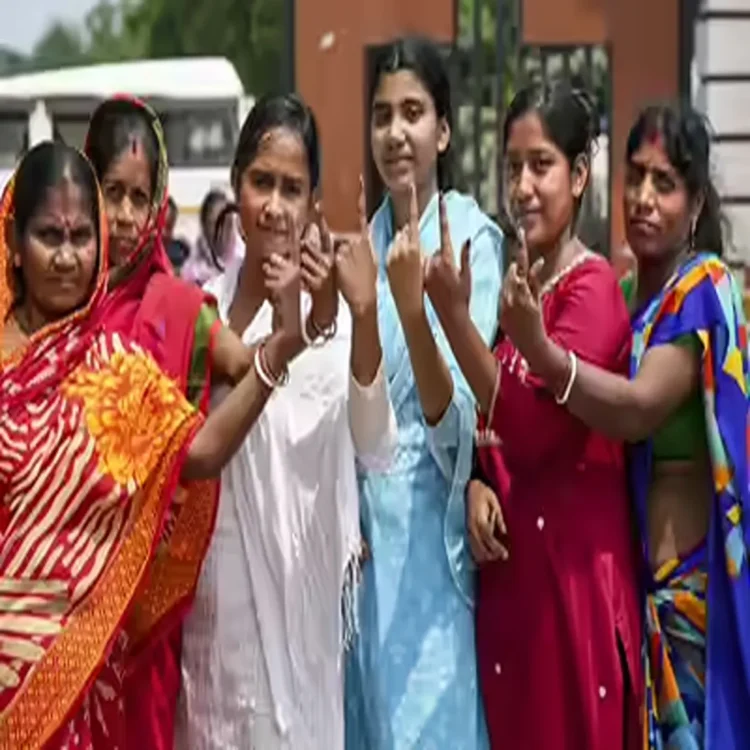
Strong Voter Participation Across Districts
The high turnout reflected widespread public engagement despite a major revision of electoral rolls carried out by the Election Commission of India. The Special Intensive Revision process had led to the removal of approximately 91 lakh names for various administrative reasons. Even so, enthusiasm among voters remained evident throughout the day.
Several districts reported exceptionally high polling figures. Murshidabad, Bankura, Cooch Behar, Malda, Jhargram, and Paschim Medinipur all recorded turnout figures hovering around or exceeding the 90 percent mark. In contrast, Kalimpong saw comparatively lower participation, with turnout estimated at about 81 percent.
Largely Peaceful Voting with Minor Incidents
One of the most notable aspects of this phase was the relatively calm atmosphere during polling. No fatalities were reported, which stands out in comparison to previous elections in the state. However, isolated incidents of unrest did occur in certain areas.
Prime Minister Narendra Modi acknowledged the conduct of the elections, praising the Election Commission for ensuring a largely peaceful voting process. He highlighted the reduced level of violence as a significant development, noting that such conditions had not been seen in decades.
Political Reactions Reflect Diverging Views
Chief Minister Mamata Banerjee offered a different perspective on the high voter turnout. She suggested that the large number of voters could be linked to concerns among citizens about their voting rights and citizenship status, particularly in the context of the recent revision of electoral rolls.
The first phase covered voting in 152 out of the state’s total 294 assembly constituencies. The remaining 142 seats are scheduled to go to polls in the second phase on April 29.
Women Voters Take the Lead
An interesting trend observed during the polling was the higher participation of women voters. Female turnout stood at 92.69 percent, surpassing male participation, which was recorded at 90.92 percent. This shift added a layer of complexity to political predictions, as parties found it more challenging to assess voter sentiment.
Despite this uncertainty, both the ruling Trinamool Congress and the Bharatiya Janata Party expressed confidence in securing a decisive mandate once the results are declared.
Scattered Clashes Reported in Some Areas
While the overall polling remained peaceful, a few incidents of violence were reported. In the Nawda area of Murshidabad district, clashes broke out between supporters of the Trinamool Congress and the Aam Janata Unnayan Party, led by Humayun Kabir, a former TMC leader. Security forces intervened, using mild force to control the situation.
In another incident in Kumarganj, a BJP candidate, Subrata Sarkar, was reportedly attacked. Additionally, the vehicle of BJP MLA Agnimitra Paul came under attack near Rahmat Nagar in the Asansol Dakshin constituency.
Looking Ahead to the Next Phase
As the state prepares for the second phase of voting, the focus will remain on maintaining law and order while ensuring high voter participation. The first phase has set a significant benchmark, both in terms of turnout and relative calm, raising expectations for the remaining stages of the election.
The final outcome will depend on how voters across different regions and demographics translate their participation into electoral results, making this one of the most closely watched state elections in recent years.