
Elections – Adhikari Leads Ram Navami Rally Ahead of Bengal Poll Battle
Elections – West Bengal’s Leader of Opposition, Suvendu Adhikari, on Thursday spearheaded a Ram Navami procession in Kolkata’s Bhabanipur constituency, signaling an active start to his campaign efforts ahead of the upcoming assembly elections.
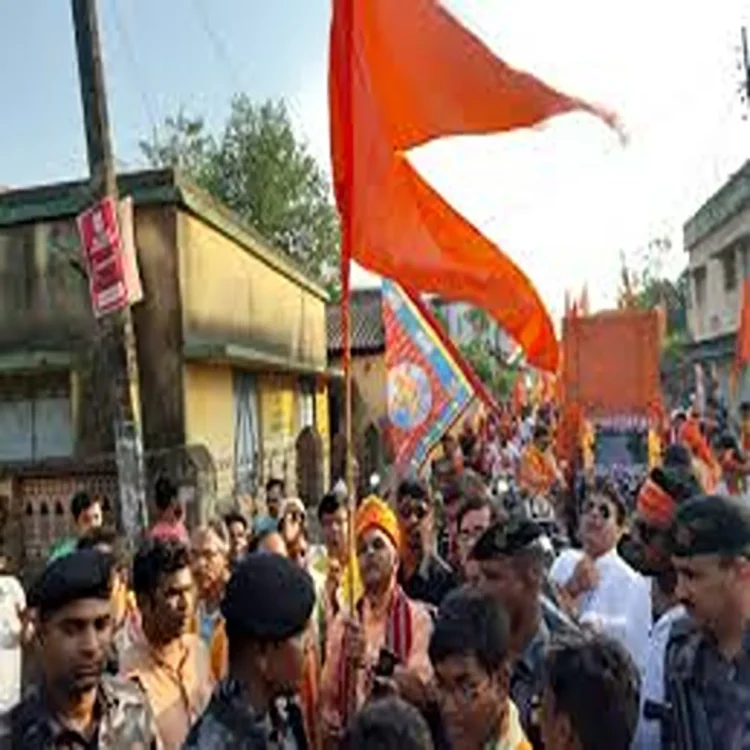
Rally Marks Early Campaign Push in Bhabanipur
The rally, held in one of Kolkata’s politically significant constituencies, drew attention as Adhikari prepares to contest from both Bhabanipur and Nandigram. His participation in the religious procession is being seen as part of a broader strategy to connect with voters during a period of heightened political activity in the state.
Bhabanipur holds particular importance in the current electoral landscape, as it is expected to witness a direct contest between Adhikari and Chief Minister Mamata Banerjee. The constituency has previously played a decisive role in shaping political narratives in West Bengal.
Past Electoral Rivalry Adds Context
The political rivalry between Adhikari and Banerjee has a recent history. In the 2021 assembly elections, Banerjee faced defeat in Nandigram against Adhikari, marking a significant moment in the state’s political timeline. However, she later secured a return to the विधानसभा through a by-election victory in Bhabanipur.
This time, the stakes are higher as both leaders are set to contest against each other in Bhabanipur, while Adhikari also aims to retain his hold over Nandigram. The dual-contest strategy adds another layer of complexity to the upcoming polls.
Security Arrangements for Religious Processions
In a parallel development, authorities ensured tight security arrangements for a Ram Navami procession organized in Howrah by the Anjani Putra Sena. Given the scale and public participation in such events, administrative preparedness remained a key focus to maintain order and safety.
Significance of Ram Navami and Navratri
Ram Navami marks the culmination of the nine-day festival of Chaitra Navratri, a period dedicated to the worship of the nine forms of Goddess Shakti. Devotees across the country observe rituals, fasting, and prayers during this time, reflecting deep-rooted cultural and religious traditions.
The festival celebrates the birth of Lord Rama, revered as both a divine and human figure in Hindu belief. While festivities are observed nationwide, Ayodhya in Uttar Pradesh remains a focal point for large-scale celebrations and religious gatherings.
During the Navratri period, many followers observe fasting and adopt a disciplined lifestyle, refraining from certain foods and habits while engaging in prayer and meditation. The practices are often associated with both spiritual reflection and physical well-being.
Election Schedule Announced in Two Phases
The Election Commission has outlined a two-phase polling schedule for West Bengal. Voting will take place on April 23 and April 29, covering a total of 294 assembly constituencies.
The first phase includes 152 constituencies, with the notification set to be issued on March 30, 2026. Candidates can file their nominations until April 6, followed by scrutiny on April 7. The deadline for withdrawal of nominations is April 9.
The second phase will cover 142 constituencies. The notification for this phase will be released on April 2, with nominations accepted until April 9. Scrutiny is scheduled for April 10, and candidates may withdraw their names until April 13. Polling for this phase will be conducted on April 29.
Vote counting for both phases is scheduled for May 4, and the overall election process is expected to conclude by May 6.
As campaigning gathers pace, political leaders are increasingly engaging with voters through both traditional outreach and participation in cultural events, reflecting the multifaceted nature of electioneering in the state.