
Election – High Stakes Battle Unfolds in Tamil Nadu Assembly Polls
Election – Voters across Tamil Nadu turned out in large numbers on Thursday as polling began for the state’s Assembly elections, with Chief Minister M. K. Stalin casting his vote in Chennai alongside family members, including Deputy Chief Minister Udhayanidhi Stalin. The polling process, conducted under tight security, is scheduled to conclude by 6:00 pm.
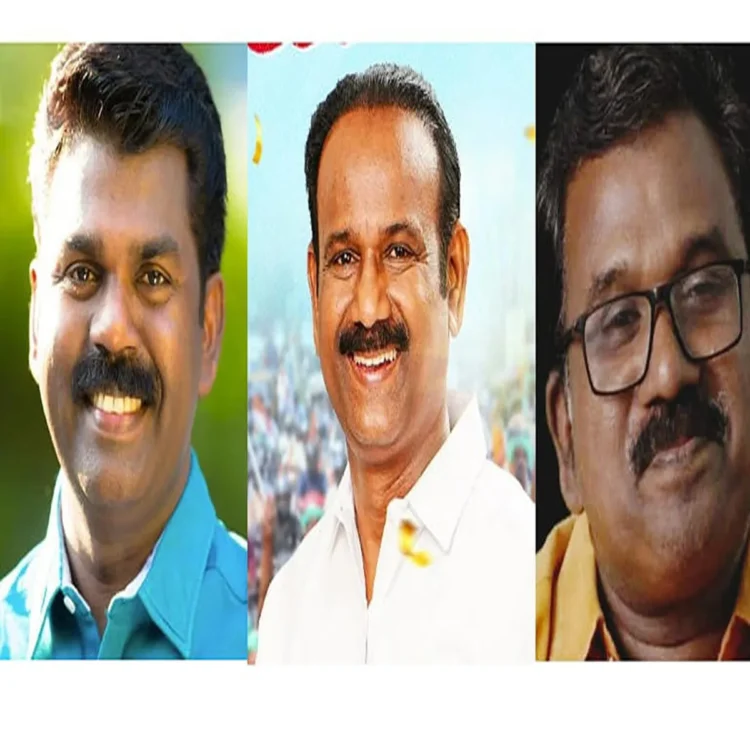
Kolathur Emerges as Key Electoral Battleground
The Kolathur Assembly constituency, long considered a stronghold of M. K. Stalin, has drawn significant attention this election cycle. Stalin is seeking re-election from the seat, but the contest has become increasingly competitive due to the presence of multiple challengers. Candidates from Tamilaga Vettri Kazhagam (TVK), AIADMK, and Naam Tamilar Katchi (NTK) have intensified the race, turning it into a closely watched multi-cornered contest.
TVK’s V. S. Babu, AIADMK’s P. Santhana Krishnan, and NTK’s Soundara Pandian Louther Seth are all attempting to weaken Stalin’s traditional voter base. The entry of TVK, led by actor-turned-politician Vijay, has added a new dimension to the electoral dynamics, particularly among younger voters.
Stalin’s Past Performance Sets High Benchmark
Despite the strong challenge, Stalin enters the race with a solid electoral record in Kolathur. In the 2021 Assembly elections, he secured over 1,05,000 votes, accounting for more than 61 percent of the total share. His margin of victory exceeded 70,000 votes, underlining his dominance in the constituency. That election recorded a voter turnout of approximately 64.6 percent from a total electorate of over 2.6 lakh voters.
This history of decisive victories continues to play a crucial role in shaping voter expectations, although the evolving political landscape suggests a more competitive environment this time.
Chepauk-Triplicane Witnesses Parallel Contest
Meanwhile, Udhayanidhi Stalin is contesting from the Chepauk-Triplicane constituency, where he faces opposition from AIADMK, NTK, and TVK candidates. The seat is also witnessing a triangular contest, reflecting the broader trend across several constituencies in the state.
Political observers note that the performance of emerging parties and candidates could influence the overall balance of power, particularly in urban constituencies.
Statewide Polling Conducted in Single Phase
Polling for all 234 Assembly constituencies in Tamil Nadu is being conducted in a single phase. Alongside Tamil Nadu, the first phase of elections is also underway in West Bengal, where voting will continue in multiple stages. The second phase in West Bengal is scheduled for April 29, while vote counting for both states will take place on May 4.
Security arrangements have been strengthened across polling stations to ensure a smooth and peaceful voting process. Election authorities have reported steady voter turnout since morning, with participation expected to rise as the day progresses.
Major Alliances Face Off in Crucial Election
The primary contest in Tamil Nadu remains between the DMK-led alliance and the AIADMK-led National Democratic Alliance (NDA). The DMK alliance includes parties such as the Indian National Congress, DMDK, and VCK, while the AIADMK is contesting alongside the BJP and PMK.
The ruling DMK is focusing on its governance record and welfare initiatives, while the opposition alliance is campaigning on promises of change and administrative reforms. The emergence of TVK as a new political force has further complicated the electoral equation, potentially reshaping vote shares in key constituencies.
Three-Way Contest Adds Uncertainty
The presence of multiple strong contenders in several constituencies suggests that the election outcome may not follow traditional patterns. TVK’s debut, combined with the efforts of established parties to consolidate their bases, has created a more unpredictable political scenario.
As voting continues, attention remains on voter turnout trends and constituency-level performances, which will ultimately determine the direction of Tamil Nadu’s political future.