
Digital India – Eleven Years of Digital Growth Strengthen India’s Global Technology Leadership
Digital India – India has witnessed a remarkable expansion in digital infrastructure over the past eleven years, with technology playing a central role in improving governance, public services, and economic development. Marking the anniversary of the Digital India programme, leaders at both the national and state levels highlighted how digital initiatives have reshaped everyday life and strengthened India’s position as a global technology leader.
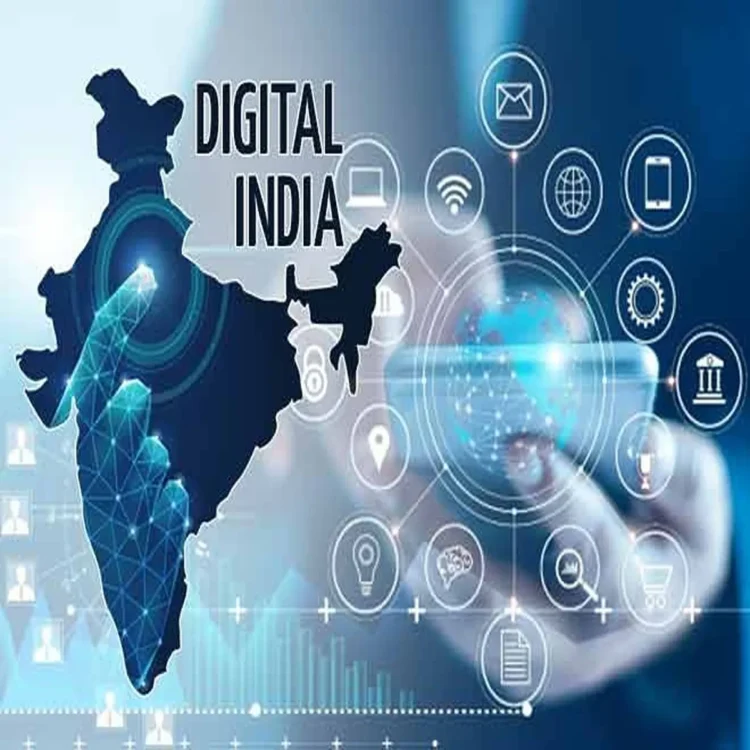
Digital expansion reaches every corner of the country
Uttarakhand Chief Minister Pushkar Singh Dhami said on Wednesday that the Digital India programme, introduced under Prime Minister Narendra Modi’s leadership, has significantly transformed the country’s digital landscape. According to the Chief Minister, India now serves as an international example of digital innovation, supported by rapid growth in internet access and digital public services.
He noted that the country has crossed 1.03 billion internet connections, while the BharatNet project has connected nearly 2.2 lakh Gram Panchayats through broadband infrastructure. This growing digital network has helped improve access to government services, education, financial systems, and public welfare across urban and rural regions alike.
Uttarakhand benefits from expanding digital services
Highlighting the impact within Uttarakhand, Dhami said digital connectivity has reached remote hill districts, making government services more accessible for residents. Digital payment systems, particularly UPI, have become widely used in villages as well as tourist destinations, allowing secure and convenient transactions.
He also pointed out that welfare benefits under various government schemes are now transferred directly into beneficiaries’ bank accounts through the Direct Benefit Transfer (DBT) system. According to the state government, these initiatives have increased transparency while reducing delays in service delivery.
Digital economy continues to drive national growth
Government officials said the Digital India initiative has evolved into the backbone of India’s digital economy and Digital Public Infrastructure. India currently accounts for nearly 49 percent of global real-time digital payment transactions through the Unified Payments Interface (UPI), making it one of the world’s largest digital payment ecosystems.
Officials added that the digital economy currently contributes an estimated 12 to 14 percent of the country’s Gross Domestic Product and is expected to account for nearly one-fifth of the economy over the coming decade. The expansion of digital infrastructure has also encouraged innovation, startup growth, and wider adoption of emerging technologies such as artificial intelligence, cloud computing, and cybersecurity solutions.
Prime Minister highlights eleven-year milestone
Prime Minister Narendra Modi marked eleven years of the Digital India initiative through posts on X, describing technology adoption by more than a billion people as a transformative achievement. He said the programme has given India a stronger global identity while encouraging innovation and technological advancement across sectors.
The Prime Minister stated that Digital India has become a key pillar of a developed and self-reliant nation by simplifying citizens’ daily lives and improving opportunities for economically weaker sections. He also said the expansion of optical fibre networks and the rapid growth of digital transactions have drawn international attention toward India’s digital progress.
Global partnerships strengthen India’s digital presence
The Digital India programme was designed around nine key pillars, including broadband connectivity, mobile access, e-governance, digital service delivery, electronics manufacturing, public internet access, information sharing, technology-based employment, and early implementation initiatives.
According to an official government release, India has steadily expanded its global digital partnerships. As of February 2026, agreements have been signed with 24 countries to cooperate on India Stack and Digital Public Infrastructure, covering digital identity, payment systems, data exchange, and public service delivery.
UPI has already been introduced in more than eight countries, including the United Arab Emirates, Singapore, France, Mauritius, and Sri Lanka. Government platforms such as Aadhaar, DigiLocker, CoWIN, GeM, DIKSHA, UMANG, and eSanjeevani are also attracting international interest as models for digital governance. Officials said India intends to continue promoting technology-driven public services, digital inclusion, and international cooperation as the programme enters its next phase.