
Cyber Fraud – Six Arrested After ₹10.40 Crore WhatsApp Director Impersonation Scam
Cyber Fraud – A major interstate cyber fraud case has been uncovered after criminals allegedly used a fake WhatsApp profile to impersonate a company director and deceive a senior corporate executive into transferring more than ₹10.40 crore. The South Region Cyber Cell has arrested six individuals from different states and recovered a significant portion of the defrauded amount during the investigation.
Fake WhatsApp Profile Used to Gain Trust
According to investigators, the victim, a senior executive at a well-known company, received a WhatsApp message on June 3 from a mobile number displaying the company director’s photograph as its profile picture. The sender claimed to be the director, stating that he was occupied in an important meeting and urgently required company funds to be transferred to several bank accounts shared through the chat.
Believing the request to be genuine, the executive processed multiple transactions from the company’s bank account over the following days without independently verifying the sender’s identity.
Fraud Came to Light After Director Was Contacted
Police said the transfers continued between June 3 and June 15, 2026, with a total of ₹10,40,71,924 being sent to different accounts provided by the fraudsters. The deception was uncovered only after the company official later contacted the actual director to confirm whether the funds had reached the intended destination.
The director denied sending any WhatsApp message or requesting any financial transfer, making it clear that his identity had been misused. The executive immediately realised that the company had become the target of a sophisticated cyber fraud.
Cyber Cell Registers Case and Freezes Funds
Following the complaint, the South Region Cyber Cell registered a criminal case under cheating charges along with relevant provisions of the Information Technology Act. Investigators quickly began tracing the financial transactions and identified the accounts where the stolen money had been deposited.
Officials said they successfully froze ₹5,63,98,191 from the defrauded amount before it could be withdrawn or moved further. The financial trail extended across Maharashtra, Bihar, Uttar Pradesh and Delhi, prompting a coordinated interstate investigation.
Six Accused Taken Into Custody
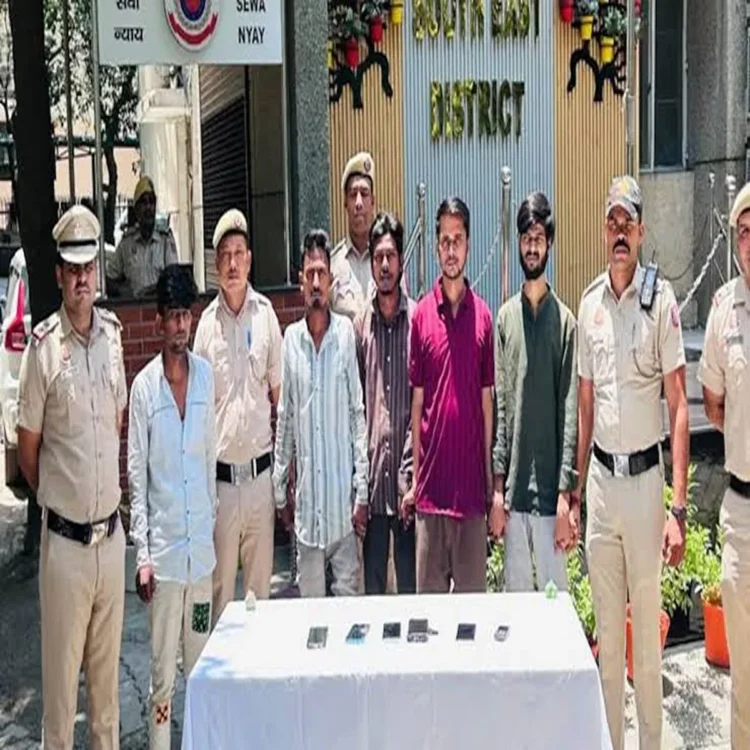
The arrested individuals have been identified as Dnyaneshwar Darebhan Thoke, Birendrakumar Chandrama Bhagat, Ranjankumar Raju Kharwar, Vikas Upendra Bind, Vansh Sumit Manocha and Faiyaz Shabbir Hussain Alam.
Police recovered two mobile phones, several bank passbooks and ATM cards during the operation. Investigators also found evidence suggesting that part of the illegally obtained money had been used to purchase substantial quantities of gold jewellery.
Investigation Reveals Network of Bank Accounts
The investigation first led officers to Dnyaneshwar Thoke in Maharashtra’s Jalna district. Police alleged that nearly ₹31 lakh from the fraudulent transactions had been deposited into his bank account. He is accused of opening the account before handing over banking documents, including the debit card, cheque book, passbook and SIM card, to the main conspirators.
Further investigation took officers to Bihar, where Birendrakumar Bhagat was arrested after approximately ₹9.5 lakh from the fraud proceeds was traced to his account. Police alleged that he had allowed Ranjankumar Kharwar to operate the account. Kharwar was later arrested, and investigators claimed he purchased a large quantity of gold jewellery using the fraud money before passing it to the principal accused.
Probe Continues Into Wider Cyber Fraud Network
Police said the investigation further established the involvement of Vikas Bind, Vansh Manocha and Faiyaz Alam, who allegedly assisted other members of the gang in carrying out the fraud. Officials are continuing to examine financial records and digital evidence to determine whether additional suspects or linked cybercrime cases are connected to the network.
Authorities have also advised companies and senior executives to verify financial instructions received through messaging platforms before approving fund transfers, particularly when requests involve urgent payments or unfamiliar bank account details.