
Digital Education – Delhi Government Schools Face Major Technology Gaps
Digital Education – Delhi’s government schools continue to face significant shortfalls in digital learning facilities, with only 6.5% having functional digital libraries, according to UDISE 2025-26 data released by the Union education ministry on July 7. The findings point to a gap between the availability of conventional library spaces and the use of technology-based learning resources in classrooms.
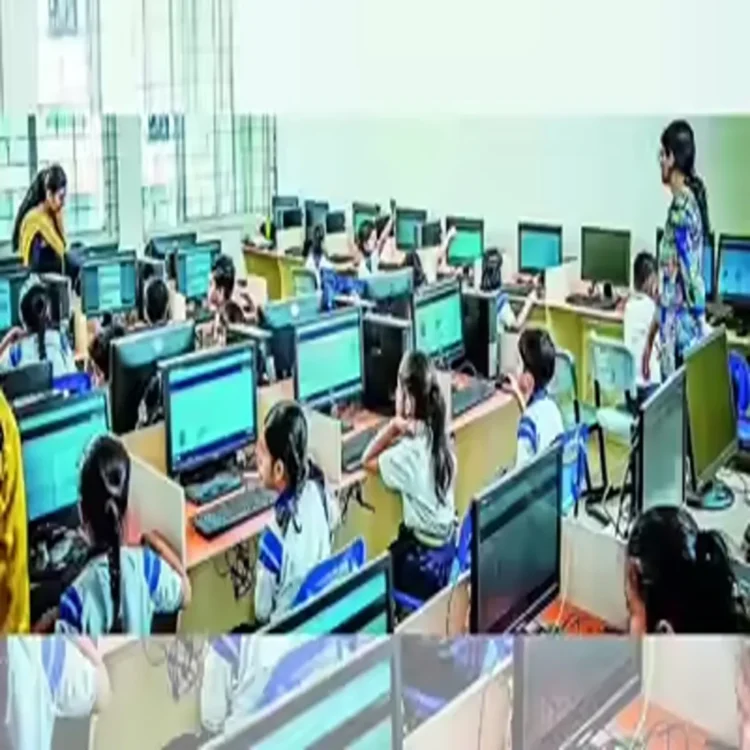
Digital Libraries Remain Limited Across Government Schools
Out of 2,688 government schools in Delhi, only 176 have working digital libraries. In comparison, libraries or reading corners are available in 5,642 of the city’s 5,643 schools, showing that physical reading infrastructure is far more widespread than digital access.
The data suggests that while schools have largely developed spaces for books and reading, many students still do not have access to digital collections, online learning material or technology-supported library services.
Smart Classrooms Have Wider Reach Than Other Devices
The UDISE figures show that 72% of Delhi government schools have functional smart classrooms with facilities such as digital boards and televisions. However, access to other important teaching devices remains limited.
Only 39% of schools have functional integrated learning devices. Projectors are available in 58.2% of government schools, while just 42.9% have working mobile phones that can be used for classroom teaching. These numbers indicate that digital education resources are not evenly available across the school system.
In actual numbers, 1,059 government schools have integrated learning devices, while 1,565 schools have projectors. Functional mobile phones for teaching are available in 1,152 schools.
Government Plans Include More Digital Learning Facilities
The latest data comes after the Delhi government outlined plans to improve technology access in schools through its Economic Survey 2025-26, released in March. The survey proposed upgrading 125 government school libraries with digital devices, headphones, kiosks and charging carts.
It also stated that 8,777 smart classrooms would be set up by the end of 2025. The proposed upgrades are aimed at expanding the use of digital tools in teaching and making learning resources more accessible to students.
The effectiveness of these plans will depend on the timely installation of equipment, regular maintenance and training for teachers to use digital resources in daily classroom activities.
ICT Labs Yet to Reach All Eligible Schools
Information and Communication Technology infrastructure has also not reached all government schools. Although the government announced ICT labs last year, only 804 such labs have been established so far. Of these, 770 are functional.
These labs are intended for students in upper primary, secondary and senior secondary classes. Their limited number shows that many schools may still be waiting for dedicated computer-based learning facilities.
A stronger ICT network could support computer education, digital research, coding lessons and access to online academic material, particularly for students preparing for higher classes.
Enrolment and Retention Remain Key Concerns
Delhi has been listed among the better-performing states and Union Territories in the Performance Grading Index 2025-26. However, the report also raised concerns about falling enrolment at the foundational stage and lower student retention at the secondary level.
The data highlights that improving school education will require attention not only to digital infrastructure but also to student participation and continuity in learning. Expanding access to functional devices, digital libraries and ICT labs could support classroom engagement, but broader efforts will be needed to address enrolment and retention challenges.