
Culture – Rumi Play Returns to Delhi Exploring Mysticism and Human Connection
Culture – The stage production ‘Rumi: Unveil the Sun’ has made a thoughtful return to New Delhi, bringing audiences closer to the life and philosophy of the revered Sufi poet Jalaluddin Rumi.
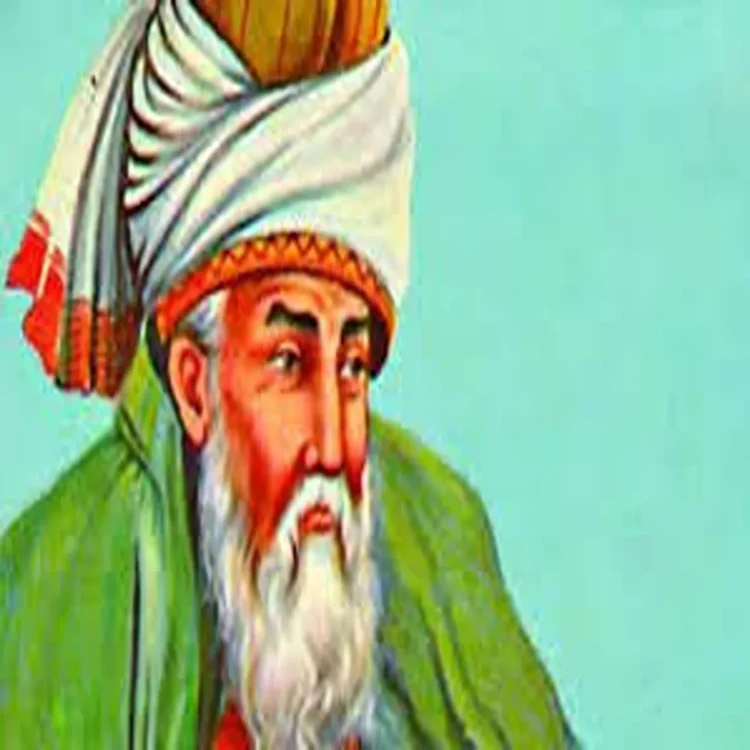
The performance, held in collaboration with Dhoomimal Art Gallery and Koan Advisory, offers more than a theatrical experience. It invites viewers into a reflective space shaped by Rumi’s teachings on love, faith, and inner transformation. At a time when social divisions are often in focus, the production attempts to reconnect audiences with ideas of unity and shared humanity.
A deeper look at Rumi’s personal journey
Rather than presenting only the poetry that made Rumi globally admired, the play focuses on the lesser-explored aspects of his life. Written by Mohini Kent Noon and Amrit Kent, the script examines the emotional and spiritual evolution of the 13th-century mystic. It highlights how his worldview was shaped by profound personal experiences rather than abstract philosophy alone.
Central to the narrative is Rumi’s bond with Shamsuddin Tabrizi, a wandering mystic whose influence altered the poet’s life. Their relationship, often described as intense and transformative, forms the backbone of the production. Through this connection, the play traces how Rumi moved from a traditional scholar to a deeply spiritual voice whose work continues to resonate across cultures.
A story rooted in historical authenticity
What distinguishes this staging is its effort to stay grounded in historical detail. While Rumi’s life has inspired countless adaptations over the years, this version attempts to present events and relationships with careful attention to documented accounts. The portrayal of Shamsuddin Tabrizi is particularly significant, as it sheds light on a figure who played a pivotal role in shaping Rumi’s legacy.
By focusing on authenticity, the creators aim to present not just a poetic figure but a human story marked by transformation, devotion, and intellectual awakening. This approach allows audiences to better understand the circumstances that led to the creation of Rumi’s enduring verses.
Revival of a widely appreciated production
First staged in 2007 during UNESCO’s Year of Rumi, the play received strong appreciation from prominent cultural figures at the time. Its return after nearly two decades brings a refreshed interpretation under the direction of Rajesh Nirmal, who introduces new artistic elements while retaining the essence of the original work.
The revival reflects the continued relevance of Rumi’s message in contemporary society. By revisiting the production, the team seeks to reintroduce these ideas to a new generation of viewers who may be encountering his philosophy for the first time.
Performances, music, and visual storytelling
Actor Oroon Das reprises his role as Rumi, delivering a portrayal that blends emotional depth with poetic expression. Ashhar Haque appears as Shamsuddin Tabrizi, capturing the mystique and intensity associated with the character. Their on-stage dynamic forms the emotional core of the play.
The production is further enriched by music composed by Jitender Singh Jamwal, whose Sufi-inspired score enhances the narrative’s spiritual tone. Costume design by Anju Modi and movement direction by Gilles Chuyen add visual and physical layers to the storytelling, creating a cohesive artistic experience.
Together, these elements combine to form a performance that moves beyond conventional theatre. It integrates poetry, music, and movement to create an immersive environment where the audience can engage with the themes on multiple levels.
Upcoming shows and audience response
Scheduled to be performed at the NCUI Auditorium on April 4 and 5, the play has already generated interest through its preview events. These previews featured a blend of art, Dastangoi storytelling, and live Sufi music, setting the tone for the full performances.
Early audience reactions suggest that the production successfully communicates its central idea of oneness. By bringing together different artistic forms, it reinforces the timeless relevance of Rumi’s teachings in a modern setting.