
BorderSecurity – Encrypted Networks and Drones Intensify Cross-Border Drug Smuggling Challenge
BorderSecurity –Secure communication technology and cross-border surveillance concerns – Punjab has witnessed a significant rise in sophisticated cross-border smuggling operations, with investigators reporting that criminal networks are increasingly using encrypted communication platforms, drone technology, and fraudulent digital identities to move narcotics and illegal weapons across the international border.
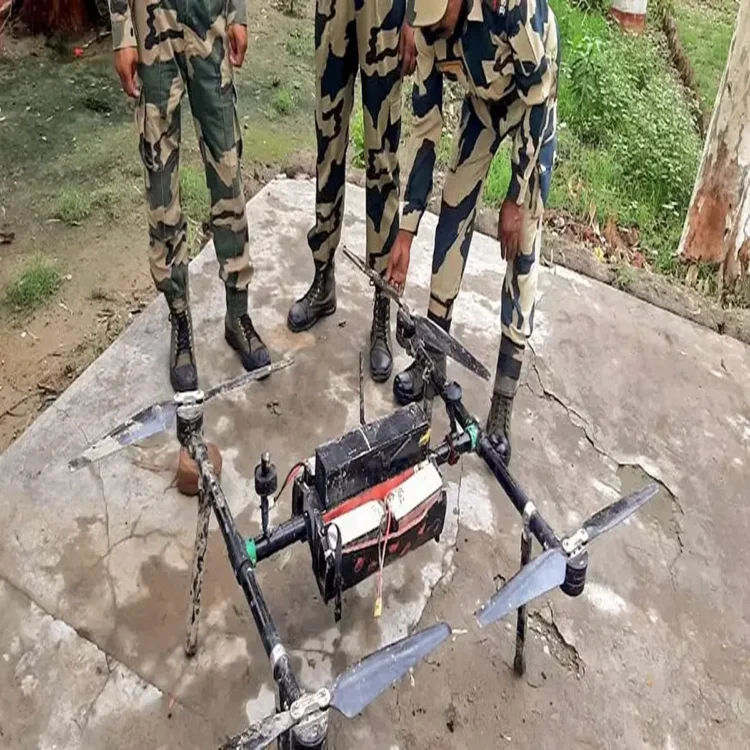
Pakistan-based trafficking groups are now relying on encrypted messaging applications, including Skred and Zangi, to communicate with local operatives while reducing the risk of interception by security agencies. Investigators say these networks also use virtual phone numbers, forged KYC-linked SIM cards, and GPS-enabled drones to coordinate the delivery of illegal consignments into Punjab. Once the drones drop the packages at pre-determined locations, local couriers retrieve them using location details shared through secure communication channels.
Punjab Police Seek Advanced Drone Investigation Facilities
Amid the growing security challenge, the Punjab Police has approached the Ministry of Home Affairs with a proposal to establish additional drone forensic laboratories. Officials believe these facilities would help investigators examine drone flight records, recover technical evidence, and trace the movement of unmanned aerial vehicles used by cross-border smuggling networks.
Security agencies have recorded a substantial number of recoveries this year. During the first seven months alone, authorities recovered 161 drones and seized approximately 392.355 kilograms of heroin across Punjab, reflecting the continuing efforts to disrupt illegal trafficking activities.
Recent Heroin Recoveries Near the International Border
Law enforcement agencies have continued operations in vulnerable border regions. On Tuesday, Punjab Police recovered 10.4 kilograms of heroin from Sufian village located near the Indo-Pak international border. The seizure came just a day after the Narcotics Control Bureau recovered nearly 9 kilograms of heroin from the Lopoke area during another anti-smuggling operation.
Officials say these recoveries highlight the persistent attempts by cross-border trafficking networks to move narcotics into India despite increased surveillance and security measures.
Encrypted Communication Creates Investigation Challenges
According to officials familiar with the investigations, encrypted messaging applications have become a major obstacle for enforcement agencies because their communication is difficult to monitor. The issue was recently discussed during a meeting of senior police officers from Punjab’s border districts, chaired by Union Home Minister Amit Shah, where strategies to strengthen anti-smuggling operations were reviewed.
To improve coordination, the Union government has established a Joint Coordination Committee (JCC) that monitors investigations into major narcotics cases. The Narcotics Control Bureau has already conducted four state-level JCC meetings in Punjab to strengthen action against organised drug syndicates and examine their suspected links to terror financing.
Coordinated Strategy Against Organised Smuggling
Authorities have also implemented a four-tier Narco-Coordination Centre (NCORD) framework, bringing together central ministries, state governments, law enforcement agencies, and other stakeholders to improve information sharing and coordinated action against organised crime.
Officials note that drone-assisted smuggling has increased considerably since 2021. Between 2025 and July 27 this year, security forces recovered 474 drones and seized 777.474 kilograms of heroin along the Punjab sector of the Indo-Pak international border. During 2025 alone, authorities reported 316 drone-related incidents, recovered 313 drones, and seized 385.119 kilograms of heroin, indicating the expanding scale of drone-assisted trafficking.
Anti-Drone Systems Strengthen Border Surveillance
The Punjab government has deployed three anti-drone systems, including two in Tarn Taran district and one in Amritsar Rural, with an investment of around ₹53 crore. These systems provide surveillance coverage across nearly 210 kilometres covering parts of Ferozepur, Tarn Taran, and Amritsar Rural districts.
Punjab shares a 553-kilometre international border with Pakistan, stretching through Pathankot, Gurdaspur, Batala, Amritsar Rural, Tarn Taran, Ferozepur, and Fazilka, making the region particularly vulnerable to cross-border trafficking attempts.
Investigation Continues After Suspects Escape
In the latest case, Amritsar Rural Police registered a case against three suspected drug traffickers identified as Raja Singh, Gora Singh, and Amrinder Singh, also known as Abu, all residents of Sufian village. Investigators said the suspects allegedly arrived at a designated pickup location after receiving GPS coordinates from Pakistan-based handlers through encrypted messaging applications. However, they managed to flee after noticing the police, taking cover in tall jowar fields.
During the subsequent search operation, police recovered a black kit bag containing 20 packets of heroin wrapped in yellow adhesive tape. Preliminary findings indicate that the narcotics were transported into India using a drone before the exact drop location was shared electronically with local operatives, who were expected to collect the consignment.