
AirQuality – Delhi Plans Major Expansion of Pollution Monitoring Network
AirQuality – Delhi is preparing to strengthen its air quality monitoring network with the addition of 13 new Continuous Ambient Air Quality Monitoring Stations (CAAQMS) across the city, aiming to improve pollution tracking and environmental data collection.
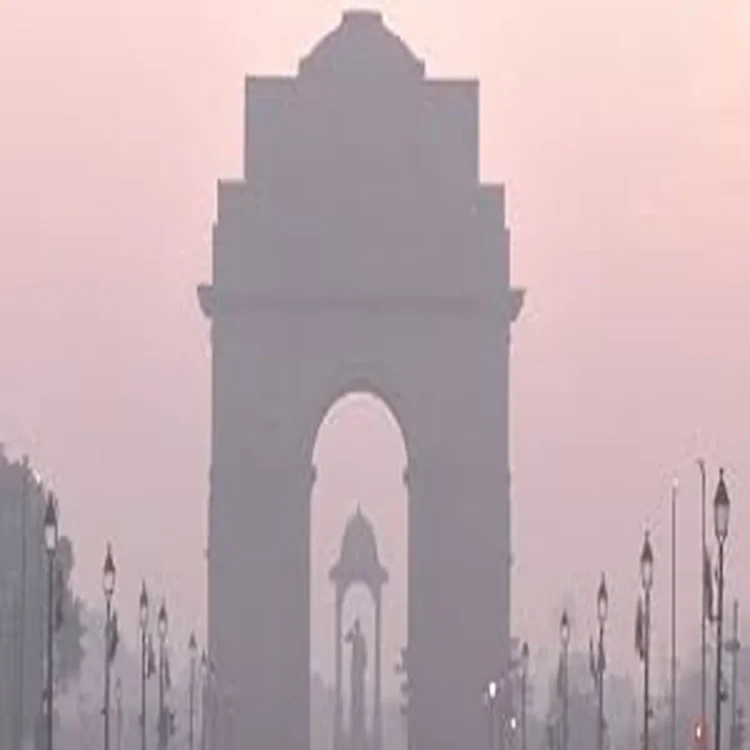
Delhi authorities said the expansion is part of an ongoing effort to build a more detailed and reliable air pollution monitoring framework in the national capital. Officials from the Delhi Pollution Control Committee (DPCC) confirmed that work on 10 of the upcoming monitoring stations is already underway and these units are expected to become operational by October this year.
Monitoring Coverage Set to Increase Across the Capital
According to senior officials, Delhi already operates the largest number of air quality monitoring stations among Indian cities. The city also maintains the highest density of Continuous Ambient Air Quality Monitoring Stations in the country, allowing agencies to observe pollution trends more accurately across different areas.
At present, Delhi has 47 operational CAAQMS units spread across multiple zones. With the planned expansion, the total number of stations is expected to rise significantly in the coming months. Officials believe the larger network will help improve pollution assessment, identify local emission sources, and support policy decisions related to air quality management.
The DPCC stated that the additional stations are being developed to strengthen real-time environmental monitoring, especially during periods of severe pollution that affect the capital during winter months.
DPCC Developing Advanced Pollution Supersite
Apart from increasing the number of monitoring stations, the Delhi Pollution Control Committee is also working on a dedicated “supersite” for advanced environmental data collection. Officials said this facility will gather detailed scientific information related to pollutants, atmospheric conditions, and emission patterns.
The supersite is expected to support deeper analysis of pollution behaviour in Delhi and may help researchers and policymakers better understand how different factors contribute to declining air quality. Authorities believe such detailed data can assist in designing more effective pollution-control measures in the future.
Environmental experts have repeatedly stressed the need for stronger scientific monitoring systems in major cities, particularly in urban regions where pollution levels fluctuate rapidly because of traffic, construction activity, weather conditions, and industrial emissions.
Three Additional Stations Planned by Research Institute
Officials further stated that the remaining three monitoring stations out of the proposed 13 will be installed by the Indian Institute of Tropical Meteorology. These stations are likely to become operational around July this year.
The final locations for the new monitoring units have not yet been officially confirmed. Authorities are currently evaluating different areas to ensure wider geographical coverage and improved pollution data collection across the city.
Experts say the placement of monitoring stations plays an important role in accurately measuring pollution levels in residential, industrial, and traffic-heavy zones. A broader network also helps environmental agencies compare air quality conditions between different parts of the capital.
Government Focus on Wider Environmental Monitoring
Earlier in February, Delhi chief minister Rekha Gupta inaugurated six newly installed air quality monitoring stations as part of the government’s environmental infrastructure expansion.
During the inauguration, the chief minister said the administration is working towards establishing at least one air quality monitoring station for every 25 square kilometres in Delhi. The objective is to ensure more complete and accurate pollution data across the city.
Officials believe the increased monitoring capacity will help improve public awareness about pollution conditions while also strengthening environmental planning and response measures. The expansion comes as Delhi continues to face recurring concerns over air pollution and its impact on public health and daily life.