
Terrorism – Australia Brings Back Women and Children Linked to Islamic State
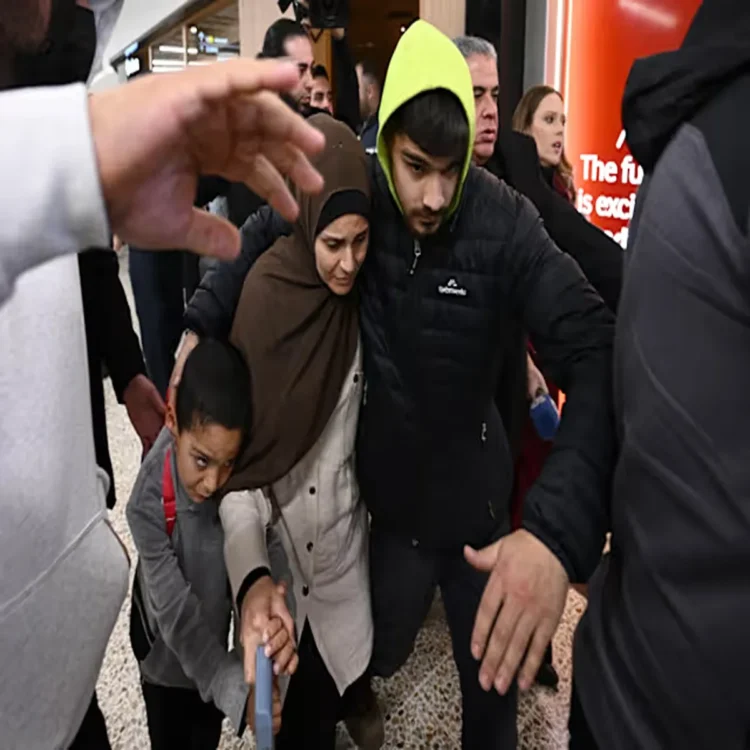
Terrorism – Australia received another group of women and children connected to the Islamic State organisation on Tuesday as authorities continued the long-running process of bringing citizens home from detention camps in Syria. A flight carrying several returnees landed in Melbourne, while another group was expected to arrive in Sydney later in the day under close supervision from security agencies.
Government Confirms New Arrivals
Australian officials confirmed that seven women and 12 children were returning to the country on commercial flights operated by Qatar Airways. Their arrival came only weeks after another group of Australians linked to extremist networks returned from Syria and faced immediate legal scrutiny.
The federal government stated that law enforcement agencies had spent years preparing for such repatriations. Authorities stressed that any individual suspected of criminal activity or links to terrorism would be investigated under Australian law upon arrival.
Home Affairs Minister Tony Burke said national security remained the government’s highest concern and warned that anyone found to have committed offences could face prosecution. He added that officials had not provided special support or assistance to the returning group.
Security Agencies Continue Monitoring Efforts
According to the government, Australian intelligence and police agencies have maintained operational plans for dealing with returning Islamic State-linked citizens since 2014. Officials believe strict monitoring measures are necessary because many of the returnees spent years inside refugee and detention camps established after the collapse of the Islamic State in the Middle East.
The women and children had been living in the Roj camp in northeastern Syria, near the Iraqi border. The facility has housed foreign nationals connected to the extremist group since Islamic State forces lost territorial control in 2019.
Authorities said at least two Australians are still believed to remain at the camp following the latest departures.
Legal Cases Follow Earlier Repatriation
The latest operation follows another repatriation effort earlier this month involving 13 Australians. Several women from that group were arrested shortly after arriving in the country.
Among them were Kawsar Ahmed, also known as Kawsar Abbas, and her daughter Zeinab Ahmed, who were detained in Melbourne. Investigators allege the family purchased a Yazidi woman as a slave during the period when Islamic State militants controlled parts of Iraq and Syria.
Another returnee, Janai Safar, was arrested in Sydney alongside her young son. She faces allegations related to membership in a terrorist organisation and entering an area controlled by extremists.
Australian courts are expected to continue reviewing these cases in the coming months.
Exclusion Order Prevents One Woman’s Return
One Australian woman was reportedly unable to travel back with the latest group because of a temporary exclusion order imposed earlier this year. Media reports identified her as a woman in her late twenties who remained in Syria with her daughter, who reportedly suffered disabling injuries from shrapnel wounds.
Her family has hired legal representatives in Sydney to challenge the government’s order, which currently blocks her return to Australia until 2028.
Temporary exclusion orders were introduced under legislation passed in 2019. The laws were designed to stop former Islamic State fighters and associates from immediately re-entering Australia without security assessments.
Debate Over Repatriation Continues
Australia has previously organised the return of women and children from Syrian camps on two official occasions. In addition to government-managed operations, several Australians have reportedly returned independently over recent years.
The issue continues to generate political and public debate, with supporters arguing that Australian citizens should face justice within the country’s legal system rather than remain indefinitely in unstable camps overseas. Critics, however, have raised concerns about national security risks and the long-term monitoring burden placed on intelligence agencies.
Government officials maintain that all returnees undergo extensive security assessments before entering the country and that protecting public safety remains the central priority throughout the repatriation process.