
Security – US Senate Hearing Raises Concerns Over Domestic Threats and Community Safety
Security – A closely watched US Senate hearing for Homeland Security Secretary nominee Markwayne Mullin brought renewed attention to rising security challenges across the country, with lawmakers warning that both physical and digital threats are becoming more complex and frequent. The discussion also highlighted implications for immigrant communities, including Indian Americans, who are closely tied to sectors affected by these issues.
Growing Concerns Over National Security Threats
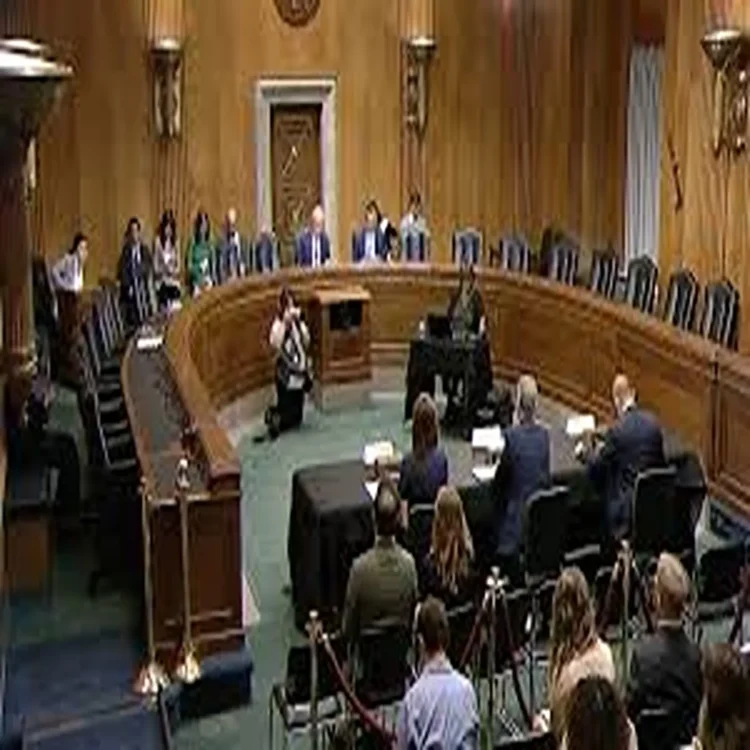
During the confirmation hearing held on Wednesday, senators from both parties expressed concern over what they described as an increasingly dangerous security environment. Several lawmakers pointed to recent violent incidents and cyberattacks as evidence that risks to the country are escalating.
Among the incidents referenced was an attack on a synagogue in Michigan, as well as a cyber intrusion reportedly linked to a group backed by Iran. These examples were used to illustrate how threats are no longer limited to one domain but span both physical violence and sophisticated digital operations.
Lawmakers stressed that the evolving nature of these risks requires a coordinated and well-resourced response from federal agencies.
Impact on Religious and Community Institutions
The discussion also drew attention to the safety of religious institutions, which have increasingly become targets of concern. Places of worship across the United States, including Hindu temples and Sikh gurdwaras, have been strengthening their security measures in recent years.
Mullin acknowledged these concerns during the hearing and emphasized the importance of collaboration between federal authorities and local communities. He expressed support for improving grant programs designed to help vulnerable institutions enhance their security infrastructure.
Senators noted that many religious organizations are now investing heavily in private security arrangements. These include surveillance systems, protective barriers, and emergency preparedness plans, often supplemented by federal assistance.
Cybersecurity Challenges Under Scrutiny
Another major focus of the hearing was cybersecurity. Lawmakers raised concerns about staffing shortages and budget constraints within the Department of Homeland Security, warning that such limitations could weaken the country’s ability to respond to cyber threats.
According to senators, hostile actors are increasing the scale and frequency of cyberattacks targeting critical systems in the United States. The issue has broader implications, particularly given the role of international collaboration in cybersecurity efforts.
Indian-origin professionals, who form a significant part of the US technology workforce, are closely connected to this sector. Any changes in federal cybersecurity policies or hiring practices could have ripple effects on workforce dynamics and cooperation between the United States and India.
Mullin stated that strengthening the cybersecurity workforce would be a priority, adding that attracting skilled professionals is essential to counter emerging risks.
Debate Over Enforcement and Civil Liberties
The hearing also revealed differing perspectives on how to balance national security with civil liberties. Democratic lawmakers raised concerns about the conduct of immigration enforcement agencies, particularly regarding the use of force and operations within communities.
On the other hand, Republican senators argued that stricter enforcement measures are necessary to ensure national safety.
Mullin sought to strike a balance between these positions. While reaffirming the department’s responsibility to protect the country, he also emphasized the importance of building trust with communities and ensuring accountability within federal agencies.
Workforce and Operational Pressures
In addition to policy debates, the hearing highlighted operational challenges within the Department of Homeland Security. Mullin pointed out that a significant number of employees are currently working without pay due to ongoing funding issues.
Despite these challenges, he noted that staff continue to carry out their duties, underscoring their commitment to public service. However, lawmakers warned that prolonged financial uncertainty could affect morale and overall readiness.
Need for Faster Emergency Response
The discussion also touched on disaster response and federal assistance programs. Mullin called for reforms to improve the speed and efficiency of aid distribution, noting that delays in reimbursements to local authorities are a persistent issue.
He stressed that timely support is essential for effective disaster management and for maintaining coordination between federal, state, and local agencies.
Broader Implications for Communities
For Indian Americans and other diaspora groups, the issues discussed during the hearing are closely connected to daily life. As communities deeply integrated into sectors like technology, healthcare, and education, they are directly influenced by changes in public safety policies and cybersecurity frameworks.
At the same time, concerns about community safety, law enforcement practices, and protection of religious institutions remain important factors shaping their sense of security.