
Security – Europe Weighs NATO Restructuring Amid Uncertainty Over US Commitment
Security – Europe is quietly preparing for a possible shift in its security framework as concerns grow over the United States’ long-term commitment to the transatlantic alliance. Recent developments, including political rhetoric in Washington and geopolitical tensions linked to Iran, have prompted European leaders to consider strengthening their own role within NATO’s existing structure rather than building an entirely new system.
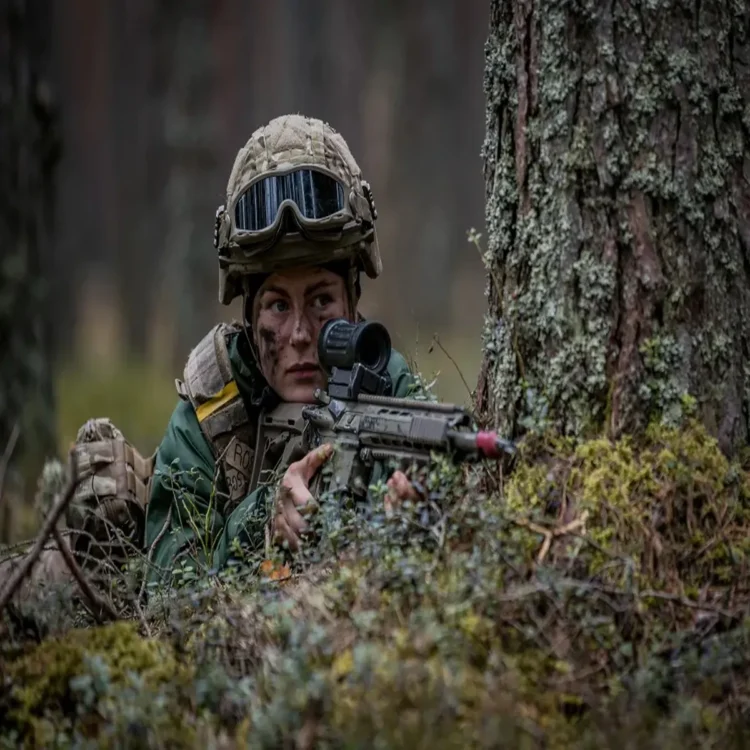
Informal talks focus on strengthening European role
Discussions are currently taking place within NATO circles, though largely behind closed doors. Officials are examining ways to increase European participation in key command and operational roles. The idea, sometimes described as a more “Europe-led NATO,” aims to ensure continuity in defence operations even if US involvement decreases.
Rather than replacing NATO, the approach is intended to reinforce the alliance’s ability to deter threats, particularly from Russia. By gradually expanding European responsibilities, leaders hope to maintain stability without disrupting existing military coordination.
Germany’s shift signals changing priorities
A notable development is Germany’s evolving stance on defence leadership in Europe. Historically cautious about assuming a larger military role, Berlin is now showing greater openness to increased responsibility. This change reflects broader concerns about the reliability of US support in future conflicts.
Under new leadership, Germany has expressed support for initiatives that enhance Europe’s defence capabilities within NATO. This shift has encouraged other nations to engage more actively in discussions about shared security responsibilities.
Concerns over US rhetoric and policy direction
Recent statements from US political figures have added urgency to these conversations. Criticism of NATO allies and suggestions that American support could depend on alignment with US foreign policy priorities have unsettled European governments.
Leaders across Europe are now considering how to safeguard the alliance’s effectiveness if US commitments become conditional or reduced. The goal is not confrontation but preparedness for multiple scenarios.
Gradual transition seen as essential
European officials emphasize that any change must happen carefully and over time. A sudden reduction in US involvement could create gaps in defence readiness, which European nations are not yet fully equipped to handle independently.
Leaders have stressed the importance of a controlled transition, allowing Europe to build capabilities while maintaining strong transatlantic cooperation. The focus remains on partnership rather than separation.
Capability gaps remain a major challenge
Despite growing ambition, Europe still faces significant limitations in military capacity. NATO’s current structure relies heavily on US resources, particularly in intelligence, logistics, and advanced defence systems.
One of the most critical gaps lies in nuclear deterrence. The US nuclear umbrella remains central to NATO’s security framework, and no European country currently offers an equivalent level of protection.
Efforts to boost defence production and coordination
To address these shortcomings, European nations are increasing investment in defence manufacturing and joint projects. Collaborative efforts are underway to develop advanced weapons systems and improve coordination among member states.
There have also been discussions about extending nuclear deterrence capabilities within Europe, including exploring how existing assets could provide broader coverage. While still at an early stage, these conversations highlight the seriousness of current concerns.
Renewed debate over military service
The changing security environment has revived discussions about compulsory military service in several countries. Some policymakers argue that national service could enhance preparedness and strengthen defence forces.
Finland, which maintains a conscription system, is often cited as an example of how such policies can contribute to national security. However, opinions remain divided across Europe.
Long-term implications for global security
While Europe is taking steps to strengthen its role, officials acknowledge that replacing the United States as NATO’s central military power is not feasible in the short term. Years of limited defence spending have created gaps that will take time to address.
At the same time, these developments could have broader global implications. Changes in NATO’s structure may influence security dynamics beyond Europe, particularly in regions such as West Asia and the Indo-Pacific.
As geopolitical tensions continue to evolve, Europe’s efforts to adapt its defence strategy reflect a growing recognition of the need for greater self-reliance while preserving long-standing alliances.