
RedSeaAttack – Saudi Oil Tanker Hit by Fire in Red Sea After Houthi Strike
RedSeaAttack –A Saudi-linked oil tanker caught fire in the Red Sea after what maritime authorities described as an attack involving an unidentified projectile, adding to growing security concerns along one of the world’s busiest energy shipping routes. The vessel, identified as Encelia, had departed the Saudi port of Yanbu on July 20 when the incident occurred. While the crew remained safe and no pollution was reported, the attack has once again highlighted the risks facing commercial shipping in the region.
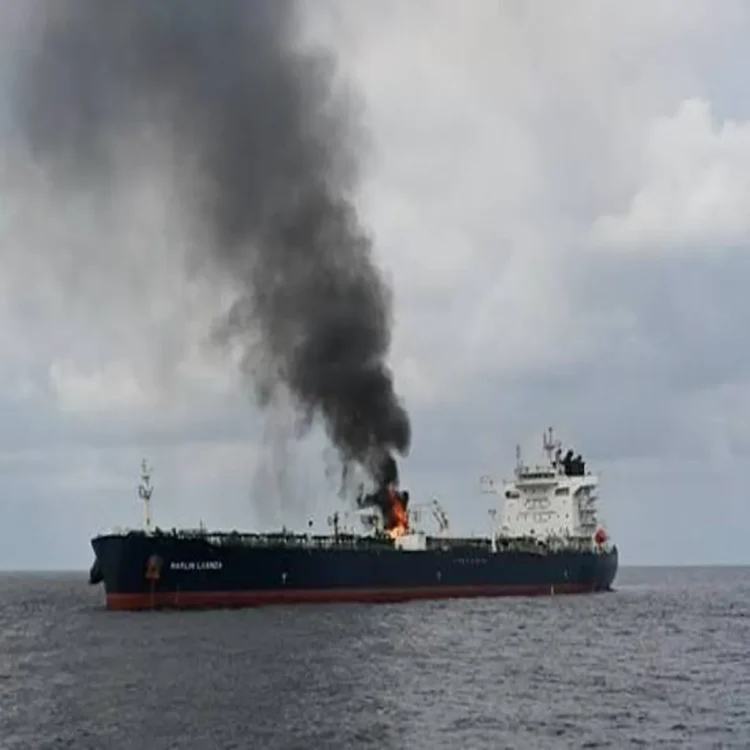
Vessel Damaged During Transit
According to available maritime reports, the tanker was navigating approximately 70 nautical miles southwest of Al Shuqaia when the ship’s master reported that the vessel had been struck by an unidentified missile or projectile. The impact triggered a fire onboard, prompting an immediate response from the crew.
Maritime security company Vanguard Tech stated that the projectile struck the vessel on its starboard side. The fire was later brought under control, and authorities confirmed there were no injuries among the crew members. Initial assessments also indicated that the incident did not result in any oil spill or other environmental damage.
Houthis Claim Responsibility
The Houthi movement in Yemen later claimed responsibility for the attack, saying it had targeted two Saudi oil tankers operating in the Red Sea. The Iran-backed group alleged that the vessels had breached what it described as a blockade imposed on Saudi ports.
In a statement, the Houthis said the operation involved drones as well as ballistic missiles. The group has carried out multiple attacks on commercial and military vessels in the region over recent months, arguing that its operations are linked to the wider conflict affecting the Middle East.
Second Tanker Also Reportedly Targeted
The Houthis further claimed that another large crude carrier, Layla, owned by Bahri, was also attacked and that the vessel caught fire following the strike.
However, there has been no independent confirmation of that reported attack. Maritime authorities and shipping security agencies have not publicly verified the group’s claim regarding the second tanker. As a result, details surrounding the alleged incident remain uncertain.
Shipping Routes Face Fresh Disruptions
The latest security incident has prompted renewed caution among shipping companies operating through the Red Sea. According to Reuters, five commercial tankers altered their routes on Wednesday to avoid passing through the Bab el-Mandeb Strait, a critical maritime gateway connecting the Red Sea with the Gulf of Aden.
In addition, three tankers transporting Saudi crude oil to customers in China and India reportedly reversed course a day earlier, reflecting growing concern over the safety of vessels navigating the region.
Higher Costs for Global Energy Trade
The Red Sea has become increasingly important for Saudi oil exports, particularly as shipments have been redirected through the western port of Yanbu to reduce reliance on the Strait of Hormuz.
Industry analysts note that if vessels are unable to safely transit the Bab el-Mandeb Strait, many cargoes would be forced to take the alternative route through the Suez Canal’s northern approach. Such diversions can extend voyage times by several weeks, increasing transportation expenses, insurance costs, and logistical challenges for global energy markets.
With millions of barrels of Saudi crude moving through these sea lanes each day, continued security threats could place additional pressure on international shipping networks and supply chains. Maritime authorities and shipping operators are expected to maintain heightened vigilance as they monitor developments across the Red Sea corridor.