
GlobalInfluence – US Senate Raises Concerns Over China’s Expanding Reach
GlobalInfluence – China’s rising presence across several regions came under close scrutiny during a recent US Senate hearing, where diplomatic nominees outlined concerns about Beijing’s growing economic and political footprint. Officials warned that China’s outreach in Latin America, Africa, and parts of Eurasia is increasingly shaping global dynamics in ways that could challenge American interests.
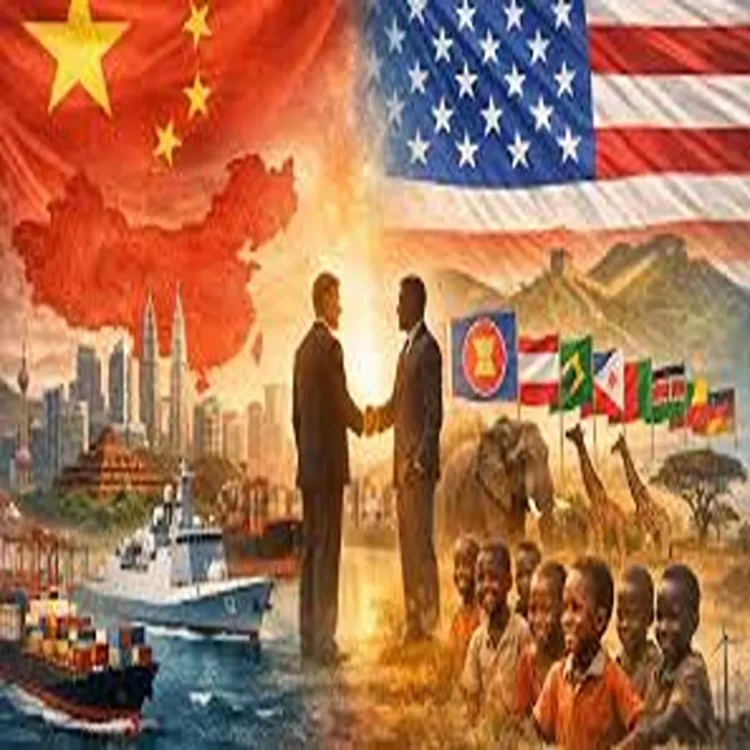
Focus on Latin America and Strategic Balance
During testimony before the Senate Foreign Relations Committee, Juan Rodriguez, nominated as ambassador to Guatemala, emphasized the implications of China’s economic activities in the Western Hemisphere. He stated that Beijing’s expanding role could impact US national security, economic stability, and critical supply chains.
Rodriguez highlighted Guatemala’s strategic importance, suggesting it could act as a stabilizing partner in limiting external influence in the region. He also connected the issue to broader concerns such as migration, trade enforcement, and regional security. According to him, stronger US engagement must produce tangible outcomes, including better trade compliance and enhanced economic opportunities for American stakeholders.
Africa’s Competitive Landscape
The discussion extended to Africa, where William Trachman, nominee for ambassador to Tanzania, described an increasingly competitive international environment. He noted that China has built significant influence through infrastructure investments and resource development initiatives across the continent.
Trachman stressed the need for the United States to present an alternative model of partnership. He argued that cooperation based on transparency and accountability could offer long-term benefits, contrasting it with China’s approach, which critics often view as less open. His remarks underscored the importance of sustained diplomatic and economic engagement in Africa.
Eurasia and Security Considerations
China’s role also emerged as a key issue in discussions related to European and Eurasian security. Darrell Owens, nominated as the US representative to the Organization for Security and Co-operation in Europe, pointed to the growing influence of both China and Russia in Central Asia.
Owens suggested that the region presents an opportunity for increased US involvement, particularly at a time when Russia remains heavily engaged in the conflict in Ukraine. He indicated that strengthening ties and partnerships in Central Asia could help balance the influence of competing global powers.
Lawmakers Highlight Urgency
Members of the Senate echoed the concerns raised by the nominees. Senator Jeanne Shaheen noted that China now maintains a larger diplomatic presence worldwide than any other country. She stressed the importance of filling key diplomatic positions quickly to ensure the United States remains competitive on the global stage.
The hearing reflected a shared bipartisan understanding that China’s influence now extends across multiple sectors, including infrastructure, energy, governance, and security. Lawmakers indicated that addressing this challenge requires a coordinated and sustained approach.
Strategic Investments and Global Competition
George Holding, nominated to represent the United States at the European Bank for Reconstruction and Development, emphasized the role of strategic investments in maintaining global influence. He described the current environment as one marked by intensified competition among major powers.
Holding argued that targeted investments and partnerships could help strengthen the US position internationally, particularly in regions where China has been actively expanding its presence.
Broader Implications for US Policy
The nominations come at a time when Washington is intensifying efforts to respond to Beijing’s global outreach. The discussions during the hearing highlighted the need for a comprehensive strategy that combines diplomacy, economic engagement, and security cooperation.
As China continues to expand its reach, US policymakers appear increasingly focused on reinforcing alliances and promoting alternative models of development and governance. The hearing underscored the growing importance of global competition in shaping future international relations.