
Geopolitics – Chinese Aircraft and Naval Activity Raises Tensions Near Taiwan
Geopolitics – Taiwan’s Ministry of National Defense reported fresh military activity by China near its territory early Monday, highlighting ongoing tensions in the region.
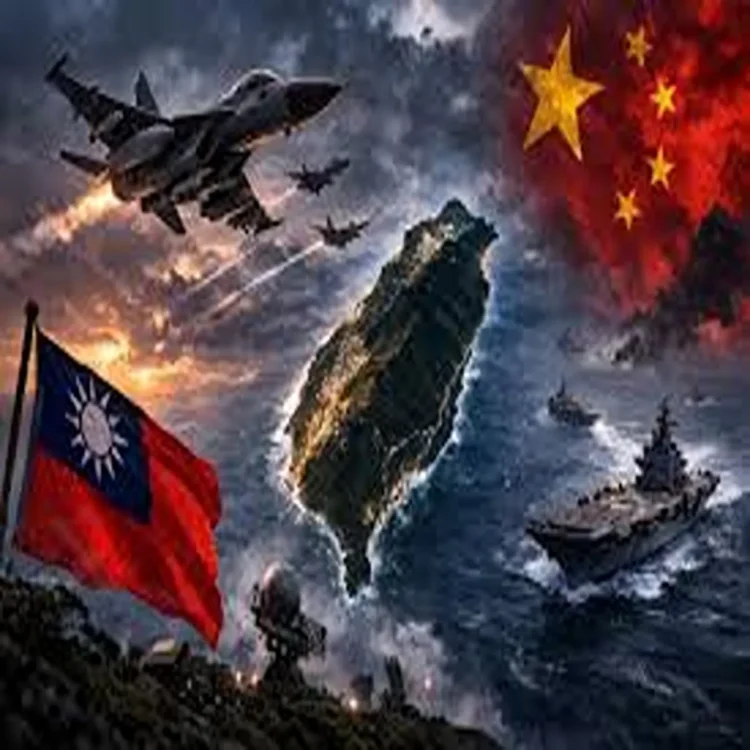
Military Movements Detected Near Taiwan
According to Taiwan’s defense authorities, seven Chinese military aircraft and nine naval vessels were identified operating around the island as of 6 a.m. local time on Monday. Officials noted that six of the detected aircraft entered Taiwan’s northern and southwestern Air Defense Identification Zone (ADIZ), an area closely monitored for security purposes.
In an official update shared on social media, the ministry confirmed that Taiwan’s armed forces tracked the movements and took appropriate measures in response. Monitoring such incursions has become a routine yet critical task for Taiwan’s defense systems.
Increased Activity Observed a Day Earlier
The latest developments follow a more significant presence recorded on Sunday. On that day, Taiwan reported spotting 28 Chinese military aircraft along with eight naval vessels in nearby areas. Of these, 18 aircraft crossed into Taiwan’s ADIZ, covering northern, central, and southwestern sectors.
The scale of activity over the weekend marked a noticeable increase compared to Monday’s figures, reflecting fluctuating patterns in military operations around the island. Taiwan’s military once again emphasized that it maintained surveillance and responded in line with established protocols.
Understanding the Broader Dispute
The continued presence of Chinese military assets near Taiwan is closely tied to a long-standing geopolitical dispute. China considers Taiwan to be part of its territory and has consistently reiterated its position through official policies and international statements.
Taiwan, however, operates independently with its own political system, defense forces, and economic structure. While it has not formally declared independence, it functions as a self-governed entity. This delicate balance has contributed to ongoing tensions, particularly in the context of military activity.
Historical Roots of the Taiwan Issue
The origins of the dispute date back several centuries. In 1683, the Qing Dynasty incorporated Taiwan after defeating forces loyal to the Ming Dynasty. However, governance over the island remained limited during that period.
A major turning point came in 1895, when China ceded Taiwan to Japan following its defeat in the First Sino-Japanese War. Taiwan remained under Japanese rule for five decades until the end of World War II. After Japan’s surrender, control of Taiwan reverted to Chinese authorities, though questions over formal sovereignty persisted.
Division Following the Chinese Civil War
The situation became more complex in 1949 after the Chinese Civil War. The People’s Republic of China (PRC) was established on the mainland, while the Republic of China (ROC) government relocated to Taiwan. Both sides maintained claims over China, leading to overlapping assertions of legitimacy.
Since then, Taiwan has developed its own governance and identity, even as China continues to assert its claim. The island has avoided a formal declaration of independence, largely to prevent escalating tensions or potential military confrontation.
Ongoing International Attention
The Taiwan Strait remains one of the most closely watched regions globally due to its strategic importance and the sensitive nature of cross-strait relations. Military activities such as aircraft incursions and naval deployments are seen as indicators of broader geopolitical dynamics.
Experts note that the situation involves key principles of international relations, including sovereignty, self-determination, and non-interference. As a result, developments in the region are frequently monitored by governments and analysts worldwide.
Continued Vigilance by Taiwan
Taiwan’s defense authorities have reiterated their commitment to safeguarding the island’s security. Regular monitoring of air and sea activity forms a crucial part of their strategy to respond effectively to any potential threats.
While such incidents have become more frequent in recent years, Taiwan continues to rely on its surveillance capabilities and defense readiness to manage the evolving situation.