
Ebola – Congo Strengthens Emergency Response as Rare Virus Cases Increase
Ebola – Authorities in the Democratic Republic of the Congo are expanding emergency medical operations after a dangerous outbreak of the rare Bundibugyo strain of Ebola resulted in nearly 120 deaths and hundreds of suspected infections across eastern regions of the country.
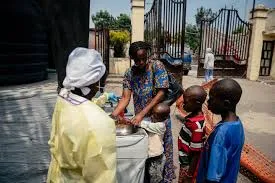
Health officials confirmed that three new Ebola treatment facilities will soon begin operations in Ituri province as international support teams arrive to assist overwhelmed local health services. The World Health Organization has also deployed specialists to help contain the spread of the virus following its declaration of a global public health emergency.
Delayed Detection Raised Concerns
The outbreak appears to have circulated unnoticed for several weeks before officials confirmed the exact strain responsible. According to medical experts, initial laboratory screenings focused on the more common Zaire variant of Ebola, producing negative results that delayed urgent containment measures.
Cases have now been identified in several eastern Congolese locations, including Bunia, Goma, Butembo, Mongbwalu and Nyakunde. Health specialists fear the true scale of infections may be significantly larger as surveillance teams continue investigations in remote communities.
Matthew Kavanagh, director of the Georgetown University Center for Global Health Policy and Politics, said the delay in identifying the correct virus strain likely slowed critical response efforts. He also expressed concern about weakened international disease monitoring systems following reductions in global health funding in recent years.
Treatment Centers Prepared in Ituri
Residents in Bunia are increasingly worried as hospitals report growing numbers of patients showing symptoms associated with Ebola. Many local families remember previous outbreaks that devastated nearby communities.
One resident, Noëla Lumo, said memories of earlier Ebola waves in Beni prompted her to begin producing handmade protective masks immediately after hearing news of the latest infections.
Congo’s Health Minister Samuel Roger Kamba stated that the first known victim died in Bunia on April 24 before being transported to the Mongbwalu mining region. Officials believe this movement may have accelerated transmission within surrounding communities.
Further alarm emerged on May 5 when health authorities reported approximately 50 unexplained deaths in Mongbwalu, including several healthcare workers. The first officially confirmed Ebola case was announced on May 14, with laboratory testing later verifying the rare Bundibugyo strain.
American Doctor Among Confirmed Patients
An American physician working in Bunia has tested positive for Ebola after treating infected patients at a local hospital. The doctor, identified as Dr. Peter Stafford, reportedly developed symptoms over the weekend while serving in eastern Congo.
The humanitarian organization employing Stafford confirmed that three additional American staff members, including his wife, remain under medical observation but have not shown signs of illness.
U.S. health authorities said seven Americans are being transferred to Germany for precautionary monitoring. The U.S. Centers for Disease Control and Prevention described the immediate risk to the American public as low, though officials issued updated travel guidance for visitors to Congo and neighboring Uganda.
The CDC also announced temporary entry restrictions affecting foreign nationals who recently traveled through Congo, Uganda or South Sudan. Additional screening measures have been introduced at airports and border checkpoints to identify travelers displaying possible Ebola symptoms.
Rare Ebola Variant Presents Major Challenge
The Bundibugyo strain is considered one of the rarest forms of Ebola virus disease. Since the virus was first identified in 1976, Congo and Uganda have experienced more than 20 Ebola outbreaks, but this marks only the third known appearance of the Bundibugyo variant.
Medical experts warn that Ebola spreads through direct contact with infected bodily fluids, including blood and vomit. Symptoms typically include fever, muscle pain, weakness, vomiting, diarrhea and unexplained bleeding.
Dr. Craig Spencer, a public health specialist and Ebola survivor, said healthcare workers and family caregivers often face the highest exposure risks during outbreaks because of their close contact with infected patients.
Specialists also believe reported case numbers may rise sharply in coming weeks as health teams improve tracing operations and uncover infections that previously went undocumented.
Humanitarian Crisis Complicates Response
Containing the outbreak presents additional difficulties because eastern Congo continues to face armed conflict, displacement and limited infrastructure. Mongbwalu, one of the worst-affected areas, is located more than 1,000 kilometers from the capital Kinshasa and suffers from poor transport access.
According to United Nations estimates, more than 273,000 displaced people currently live in Ituri province. U.N. staff members in Bunia have reportedly been advised to work remotely and avoid crowded public spaces.
Regional governments are also increasing border precautions. Rwanda temporarily closed its land crossings with Congo, while Ugandan authorities strengthened surveillance operations along shared border zones. Officials in Uganda stated there is currently no evidence of widespread transmission inside the country despite one reported death linked to the outbreak.