
Politics – Kangana Ranaut Reacts as Teen’s Apology Sparks Debate Over Protest Conduct
Politics –A fresh political debate has emerged after actor and BJP MP Kangana Ranaut commented on the controversy surrounding a teenage girl’s public apology over allegedly using offensive language against Prime Minister Narendra Modi during a demonstration at Delhi’s Jantar Mantar.
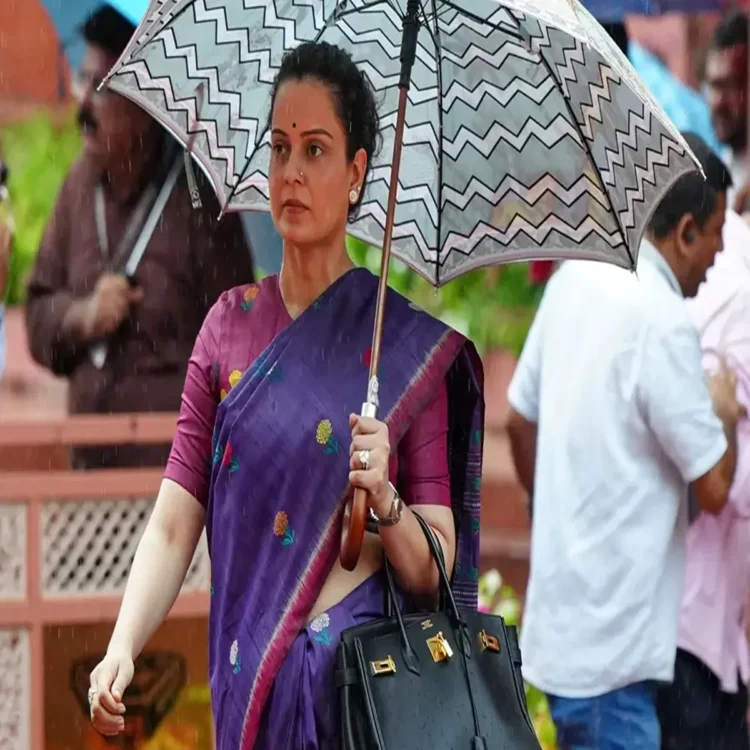
The issue gained national attention after the teenager shared an apology video on social media, expressing regret over her remarks made during a protest linked to the NEET paper leak controversy. The video quickly spread across digital platforms, prompting reactions from political leaders and the public alike.
Kangana Ranaut Questions Influence on Young Protesters
Reacting through her Instagram Stories, Kangana Ranaut shared a screenshot from the apology video and expressed concern about what she described as the ideological influence on young participants at political demonstrations. She claimed that the teenager had stated she had never previously posted anything against the Prime Minister and suggested that she was encouraged by others present at the protest to use abusive language.
The BJP MP urged parents to remain attentive to the environment surrounding their children and called for greater efforts to protect young people from what she termed harmful ideological influences. She also appealed for society to reflect on how easily teenagers can be influenced during politically charged events.
FIR Registered After Protest Remarks
The controversy follows earlier reports that the Noida Police registered a First Information Report (FIR) in connection with allegedly objectionable remarks directed at Prime Minister Narendra Modi during a protest organised over concerns related to the NEET examination paper leak.
The protest, held at Delhi’s Jantar Mantar, drew significant attention after videos from the event circulated widely on social media. The legal action taken against some participants later became another point of political discussion.
Organisers Demand Withdrawal of Cases
Following the registration of FIRs, Cockroach Janta Party (CJP) founder Abhijeet Dipke criticised the police action and warned that demonstrations could continue if the cases against students were not withdrawn.
Speaking to reporters, Dipke said the organisation would not step back from its campaign and indicated that future protests could be larger if authorities failed to reconsider the legal action taken against those involved.
Prime Minister Calls for Guidance Instead of Punishment
Addressing the controversy through a video message shared on Instagram, Prime Minister Narendra Modi acknowledged the widespread criticism over the language used during the protest. He said the remarks directed at him, including references to his late mother, were inappropriate and did not reflect the values of a civilised society.
At the same time, the Prime Minister urged the public to recognise that young people can make mistakes and should be given an opportunity to learn from them. He appealed for compassion rather than harsh punishment, stressing that society has a responsibility to guide children who may have lost their way.
Using a metaphor, Modi said that just as people do not harm their own teeth when the tongue is accidentally bitten, society should treat children with understanding instead of anger. He added that rehabilitation and positive guidance should take precedence over punitive measures.
Political Developments After NEET Protest
The developments come against the backdrop of the nationwide debate over alleged irregularities in the NEET examination process. Following the protests and growing public pressure, Dharmendra Pradhan stepped down as the Union Education Minister.
Subsequently, Parliament passed the Public Examinations (Prevention of Unfair Means) Amendment Bill, 2026. The legislation is intended to strengthen legal provisions aimed at preventing examination malpractice, including paper leaks, and to improve the integrity of public recruitment and competitive examinations.