
Diplomacy – Trump Signals Frustration With Netanyahu Amid Iran Negotiations
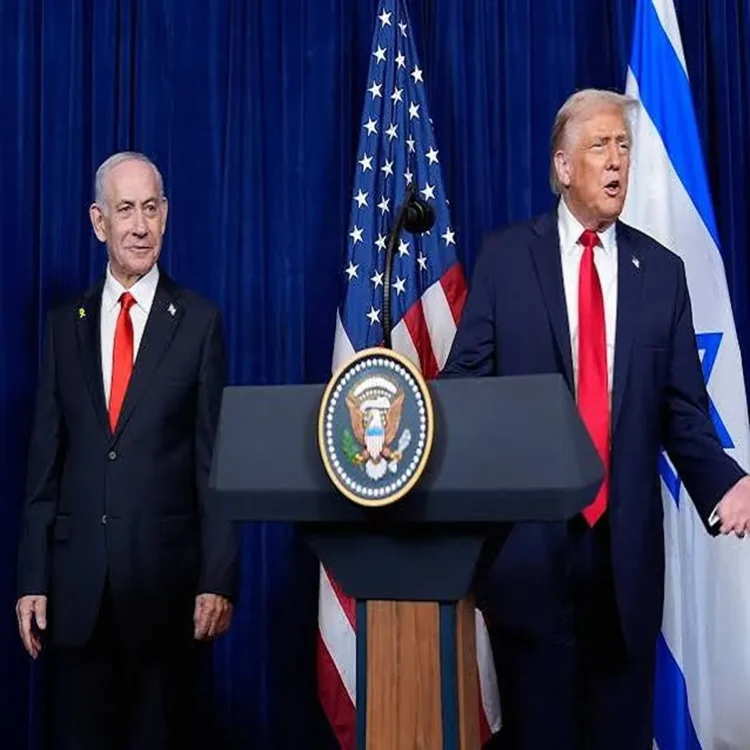
Diplomacy – A rare public disagreement between U.S. President Donald Trump and Israeli Prime Minister Benjamin Netanyahu has drawn attention as Washington intensifies efforts to secure an agreement aimed at ending tensions with Iran. The remarks mark one of the most direct criticisms of the Israeli leader by an American president, highlighting growing strains between two longtime political allies.
Growing Differences Over Regional Strategy
Trump and Netanyahu have maintained a close political relationship for years, with the Israeli prime minister previously describing Trump as one of Israel’s strongest supporters in the White House. However, recent developments suggest a noticeable shift in tone as the U.S. administration pursues a diplomatic breakthrough with Iran.
Speaking during the G7 summit in France, Trump voiced dissatisfaction with Netanyahu’s recent decisions, particularly regarding Israeli military actions in Lebanon. According to Trump, those actions risk complicating delicate negotiations that Washington has been attempting to advance with Tehran.
He also emphasized the support his administration provided Israel during his time in office, pointing to major policy decisions that strengthened ties between the two countries. At the same time, he suggested that Israeli leadership must exercise greater caution while regional talks remain underway.
Pressure Builds Ahead of Planned Agreement
The public criticism comes as diplomats prepare for a scheduled agreement expected to be signed Friday at the Burgenstock resort near Luzern. Trump has made ending the conflict a central objective, especially as the ongoing tensions have generated political challenges at home, including concerns about rising fuel costs and public opposition to continued military involvement.
Foreign policy analyst Aaron David Miller said Trump appears willing to use his influence if he believes Netanyahu’s actions could undermine an outcome he strongly wants to achieve. Miller noted that when a major presidential objective is at risk, political relationships can quickly become secondary.
Changing Political Landscape in Washington
Support for Israel has traditionally enjoyed broad backing from both major American political parties. In recent years, however, that consensus has weakened as debates over the Gaza conflict and broader Middle East policy have become increasingly polarized.
Many progressive voices have expressed concern over Israel’s treatment of Palestinians, while some conservatives have questioned the long-term scope of U.S. commitments abroad. These debates have fueled broader discussions about American foreign policy and the future of the U.S.-Israel partnership.
Criticism Draws Mixed Reactions
Trump’s comments immediately generated responses from political and advocacy organizations. Halie Soifer, head of the Jewish Democratic Council of America, criticized the president’s remarks, arguing that framing Israel’s existence around the actions of a single American leader was inappropriate and offensive to many supporters of the country.
At the same time, several conservative pro-Israel figures downplayed the significance of the dispute. Matt Brooks, president of the Republican Jewish Coalition, described the disagreement as a normal difference of opinion between close allies rather than a fundamental break in relations.
Brooks also stressed that Trump’s record demonstrates strong support for Israel, citing actions such as relocating the U.S. embassy from Tel Aviv to Jerusalem and efforts involving Israeli hostages held in Gaza.
Debate Over Public Versus Private Diplomacy
Some longtime Israel advocates expressed concern about the decision to air disagreements publicly. Mort Klein, president of the Zionist Organization of America, argued that such discussions would have been better handled behind closed doors.
Klein said he worries that growing criticism of Israel among portions of the American public may be influencing political messaging. While acknowledging Trump’s longstanding support for Israel, he suggested that public rebukes of Netanyahu could create uncertainty during a sensitive period in regional diplomacy.
Uncertain Path Ahead
The latest exchange underscores the complex nature of the relationship between Washington and Jerusalem. Although disagreements between U.S. presidents and Israeli leaders have occurred under multiple administrations, they have often remained largely private.
With negotiations involving Iran approaching a critical stage and regional security concerns continuing to dominate international discussions, the evolving relationship between Trump and Netanyahu is likely to remain under close scrutiny in the weeks ahead.