
Diplomacy – Jaishankar Meets Cyprus Counterpart in Brussels to Expand Strategic Cooperation
Diplomacy – India’s External Affairs Minister S. Jaishankar held discussions with Cyprus Foreign Minister Constantinos Kombos in Brussels, focusing on strengthening bilateral ties and reviewing regional developments. The meeting took place ahead of the European Union’s Foreign Affairs Council session, where ministers from EU member states gathered to exchange views on global issues.
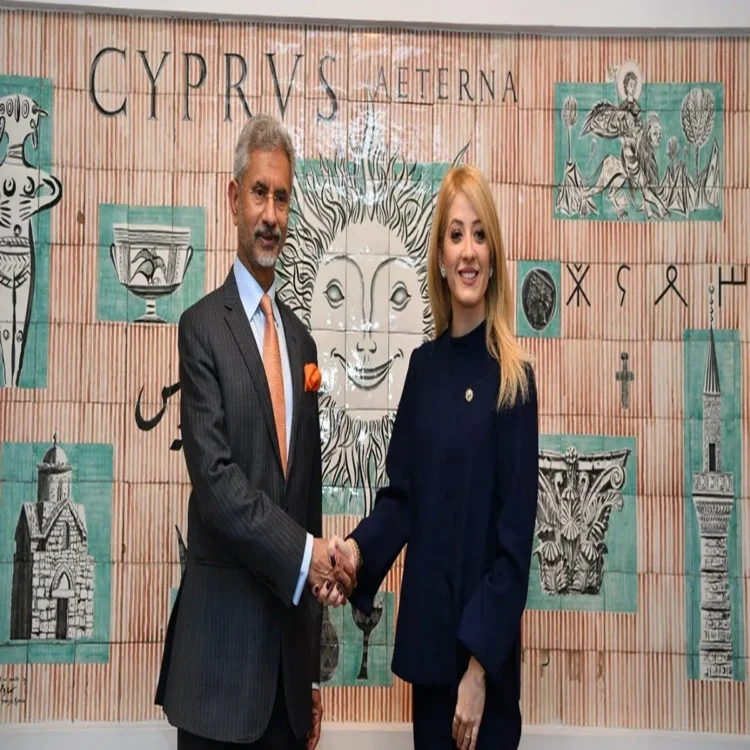
The interaction marked the first official meeting between Jaishankar and Kombos since the Cypriot minister assumed office. Both leaders described the exchange as constructive and emphasized the importance of closer collaboration between their countries.
Strengthening Bilateral Strategic Partnership
During the meeting, the two ministers explored ways to deepen cooperation between India and Cyprus across political, economic, and diplomatic areas. Jaishankar noted that the conversation centered on expanding the existing strategic partnership and identifying opportunities for further engagement.
In a message shared on social media, the Indian minister said he was pleased to meet his Cypriot counterpart and appreciated Cyprus’ continued support in advancing engagement between India and the European Union. Cyprus currently holds the Presidency of the Council of the European Union, a position that gives it an important role in shaping EU policy discussions.
Both sides discussed how closer collaboration could contribute to stronger ties between India and European institutions, particularly at a time when relations between New Delhi and Brussels are gaining momentum.
Discussion on West Asia Situation
Regional security developments were also an important part of the dialogue. Jaishankar and Kombos exchanged views on the evolving situation in West Asia, a region that continues to face geopolitical tensions and humanitarian concerns.
According to Kombos, the conversation highlighted the urgent need for diplomacy and dialogue to reduce tensions in the Middle East. He described the current developments in the region as deeply concerning and stressed that peaceful engagement remains the only sustainable path toward stability.
The ministers agreed that international cooperation and continued diplomatic efforts are essential for addressing the challenges facing the region.
Focus on EU–India Relations
The meeting also included discussions about broader EU–India relations, which have been gaining renewed attention following the recent EU–India Summit. Both ministers acknowledged that closer cooperation between India and the European Union could play a significant role in global economic and political frameworks.
Kombos highlighted the progress made in EU–India engagement, including the successful conclusion of negotiations related to a free trade agreement. The agreement is expected to enhance economic cooperation and create new opportunities for trade and investment between India and EU member states.
Officials believe that strengthening this partnership will help expand cooperation in sectors such as technology, infrastructure, sustainability, and energy.
Upcoming Presidential Visit to India
Another key topic of discussion was the upcoming visit of Cyprus President Nikos Christodoulides to India. The visit is expected to provide further momentum to bilateral relations and create opportunities for new agreements and initiatives.
Kombos said the meeting with Jaishankar allowed both sides to prepare the groundwork for the presidential visit and review the next steps in advancing the Cyprus–India strategic partnership.
Diplomatic observers note that Cyprus has historically maintained friendly relations with India and has often supported stronger EU engagement with New Delhi. The upcoming visit is expected to reinforce those ties and open new avenues for cooperation.
Jaishankar’s Brussels Visit
Jaishankar is currently in Brussels for an official visit from March 15 to March 16. The visit was organized at the invitation of Kaja Kallas, the European Union’s High Representative for Foreign Affairs and Security Policy and Vice President of the European Commission.
During his stay, Jaishankar is scheduled to interact with foreign ministers from the EU’s 27 member states at the Foreign Affairs Council meeting. He is also expected to hold separate discussions with EU leadership as well as with counterparts from Belgium and other European nations.
The visit comes shortly after the 16th India–EU Summit, which was widely described as a significant step in strengthening the strategic partnership between India and the European Union. Officials from both sides believe continued high-level exchanges will help deepen cooperation across diplomacy, trade, security, and global governance.
Analysts say Jaishankar’s meetings in Brussels signal India’s growing engagement with Europe and underline the importance of building stronger partnerships in an increasingly complex global landscape.