
DefenceStrategy – India Marks One Year Since Operation Sindoor Reshaped Regional Security
DefenceStrategy – India observed the first anniversary of Operation Sindoor on Thursday, recalling a military campaign that significantly altered the country’s strategic and diplomatic posture in South Asia.
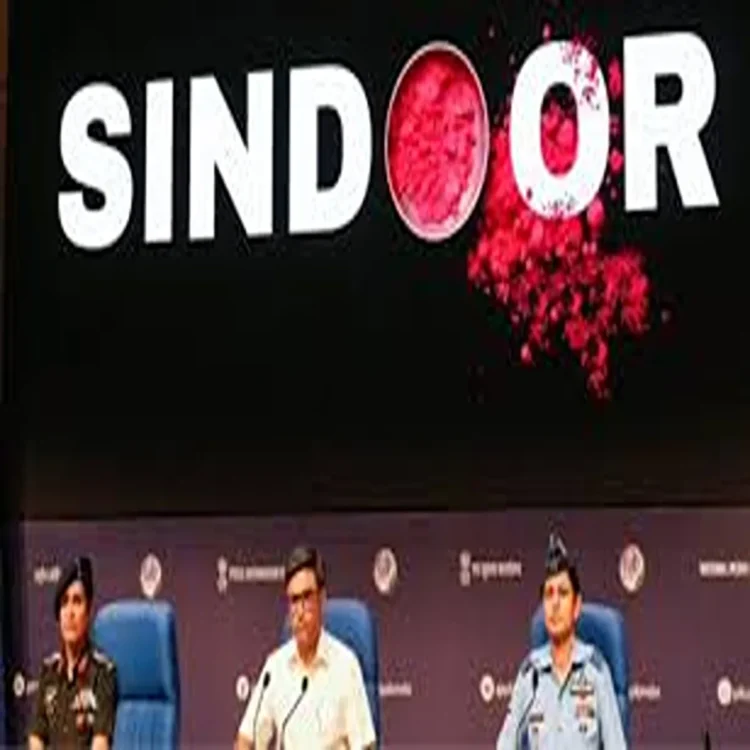
The military operation, launched in May last year after the deadly terror attack in Pahalgam that claimed 26 lives, is now viewed as one of the most decisive responses to cross-border terrorism in recent years. What began as a direct reaction to the killings quickly evolved into a broader demonstration of India’s military readiness, intelligence coordination and geopolitical confidence.
Precision Strikes Changed Regional Narrative
Indian forces targeted terrorist infrastructure spread across nine locations during the 96-hour conflict. Among the sites identified were facilities linked to Jaish-e-Mohammad in Bahawalpur and Lashkar-e-Taiba in Muridke. Officials maintained that the strikes were designed to minimise civilian casualties while disabling operational networks associated with extremist activity.
Military analysts later described the campaign as a carefully calibrated tri-services operation involving coordinated efforts by the Army, Air Force and Navy. The action also reinforced India’s position that attacks originating from across the border would invite a direct and proportionate response.
Global Reactions Reflected Diplomatic Shift
International responses following the operation suggested a noticeable change in how major countries viewed India’s security actions. Most governments avoided strong criticism, with several acknowledging India’s concerns regarding terrorism.
US President Donald Trump commented soon after the strikes that long-standing tensions between the two neighbours had created an environment where such developments were anticipated. He expressed hope that the situation would de-escalate quickly.
US Secretary of State Marco Rubio also appealed for restraint, while Israel’s Ambassador Reuven Azar openly supported India’s right to act against terrorist organisations, saying such groups should not feel protected from accountability.
China adopted a cautious tone, describing the situation as regrettable and urging both nations to avoid further escalation. Observers noted that Beijing’s response remained relatively restrained despite its close ties with Pakistan.
United Nations Secretary-General Antonio Guterres called for maximum restraint from both sides. Russia, Japan and the United Arab Emirates similarly stressed the importance of diplomacy while condemning acts of terrorism and warning against the possibility of a larger military confrontation.
Diplomatic Outreach Strengthened India’s Position
Government officials credited India’s diplomatic engagement for shaping international opinion during the crisis. Senior leaders, including the Prime Minister and National Security Adviser, reportedly held detailed briefings with foreign envoys and partner nations to explain the objectives and scope of the operation.
This outreach helped present India as a country responding to terrorism within a defined strategic framework rather than pursuing uncontrolled escalation. Analysts believe the effort reduced the possibility of major international pressure against New Delhi during the conflict.
Indigenous Defence Systems Played Key Role
Operation Sindoor also highlighted the growing role of domestically developed military technology under the Atmanirbhar Bharat initiative. Defence platforms including the Akash missile system, BrahMos missile, Akashteer network and Tejas aircraft were used extensively during the operation.
When Pakistan attempted retaliatory drone and unmanned combat aerial vehicle attacks, India’s layered air defence network reportedly intercepted multiple threats. Officials pointed to the effectiveness of the Integrated Command and Control Strategy in coordinating responses across different military branches.
The Indian Navy also maintained strong control in the maritime domain through the deployment of its Carrier Battle Group, limiting operational flexibility for Pakistani forces along the western coastline.
Security Doctrine Continues to Evolve
Security forces also intensified border monitoring during the conflict period. BSF personnel stationed in Samba successfully prevented infiltration attempts, reinforcing confidence in India’s border management systems.
One year later, Operation Sindoor continues to influence India’s defence planning and military reforms. The government has accelerated work related to the Joint Theatre Command framework, incorporating lessons learned during the conflict.
Officials have repeatedly maintained that the ceasefire established after May 10, 2025, should not be interpreted as a permanent closure of the issue. India’s security establishment has signalled that any future terror strike linked to cross-border groups would invite an even stronger response.