
AfghanistanConflict – India Criticises Pakistan Over Civilian Casualties at UN Debate
AfghanistanConflict – India sharply criticised Pakistan at the United Nations Security Council after raising concerns over civilian deaths linked to cross-border military actions in Afghanistan. During a discussion focused on the protection of civilians in conflict zones, India accused Pakistan of presenting itself as a defender of international law while allegedly carrying out attacks that harmed non-combatants.
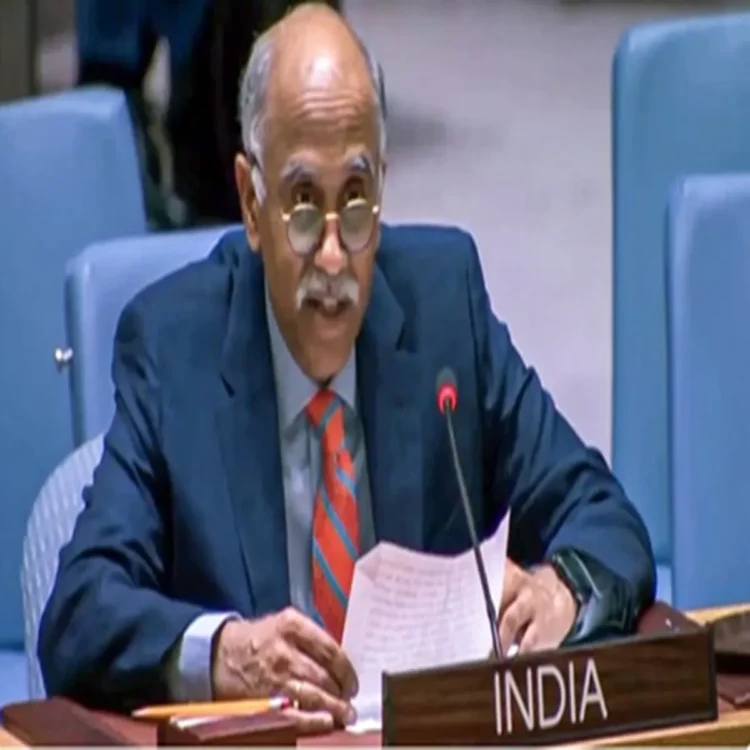
India Responds During Security Council Debate
India’s Permanent Representative to the United Nations, P. Harish, addressed the council during an open debate chaired by China. His remarks came after Pakistan’s representative, Asim Iftikhar Ahmad, referred to Kashmir while speaking at the meeting.
Harish rejected Pakistan’s criticism of India and accused Islamabad of spreading misleading narratives on global platforms. He stated that Pakistan’s record on civilian protection stood in contradiction to the principles it publicly supports at international forums.
Reference to UNAMA Civilian Casualty Report
Citing findings from the United Nations Assistance Mission in Afghanistan, commonly known as UNAMA, Harish said hundreds of civilians had been killed or injured in Afghanistan during the opening months of 2026 because of armed violence linked to Pakistani military operations.
According to the UNAMA report referenced by India, around 750 civilian casualties were documented during the first quarter of the year. The report reportedly attributed many of these incidents to cross-border air strikes.
India also highlighted the humanitarian impact of the violence, saying tens of thousands of Afghan civilians were displaced and forced to leave their homes because of the ongoing attacks.
Allegations Over Hospital Airstrike
A major focus of India’s remarks involved an alleged strike on the Omid Addiction Treatment Hospital in Kabul during the month of Ramadan. Harish described the attack as deeply disturbing, particularly because it reportedly occurred near the conclusion of evening prayers when civilians were leaving a nearby mosque.
He referred to UNAMA findings claiming that the strike resulted in the deaths of 269 civilians and left more than 120 others injured. India argued that medical facilities and healthcare workers are protected under international humanitarian law and should never become targets during military operations.
The Indian representative further said the incident raised serious questions about Pakistan’s commitment to international legal obligations and civilian protection standards.
Historical References Raised by India
During his address, Harish also referred to events linked to the 1971 Bangladesh Liberation War. He accused Pakistan of carrying out severe human rights violations during that period, including violence against civilians.
India argued that such historical episodes reflected a pattern of behaviour in which internal political and security failures were redirected outward through military aggression. Harish claimed that repeated acts of violence had damaged Pakistan’s credibility when discussing humanitarian principles at international institutions.
UNAMA Findings on Civilian Harm
The UNAMA report mentioned during the debate reportedly documented the impact of violence on vulnerable groups in Afghanistan. Among the casualties were women and children, including dozens of girls and boys affected during the reported incidents.
The report also reiterated that international humanitarian law requires all parties involved in armed conflict to clearly distinguish between civilians and combatants. It further emphasised that civilian infrastructure, including hospitals and healthcare facilities, must receive special protection during hostilities.
Growing International Attention on Afghanistan
The exchange between India and Pakistan at the Security Council reflected broader international concerns over instability in Afghanistan and the safety of civilians living in conflict-affected areas. Humanitarian agencies have repeatedly warned about the risks faced by ordinary Afghans amid continuing violence and economic hardship.
The debate also highlighted how regional tensions continue influencing diplomatic discussions at the United Nations, particularly on issues connected to security, humanitarian law and civilian safety.