
Markets – South Korean Shares Slide Amid Rising Middle East Tensions
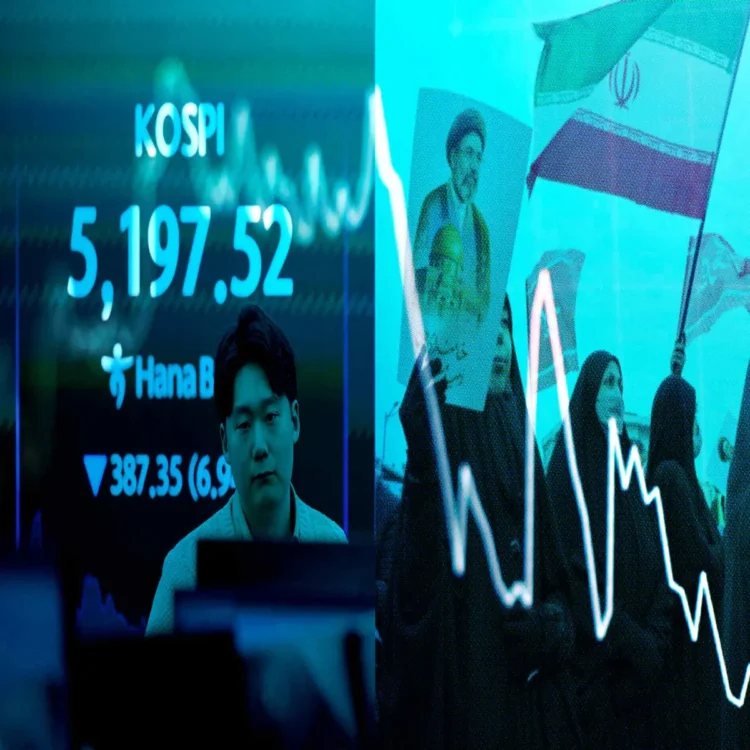
Markets – South Korean equities moved lower on Monday as investors reacted cautiously to escalating tensions in the Middle East, following stalled diplomatic efforts between the United States and Iran. The absence of progress in recent talks, combined with renewed geopolitical threats, weighed heavily on market confidence and triggered a broad sell-off across key sectors.
Diplomatic Breakdown Sparks Market Anxiety
Investor sentiment turned negative after high-level discussions between Washington and Tehran, held over the weekend in Islamabad, failed to yield any meaningful outcome. Adding to concerns, U.S. President Donald Trump announced plans to impose a blockade on Iranian ports, a move that could significantly disrupt global oil shipments. According to official statements, the measure was scheduled to take effect later on Monday.
Market analysts warned that such developments could further destabilize an already fragile geopolitical environment. The Strait of Hormuz, a crucial route for global energy supplies, remains at the center of these concerns. Any disruption in this region has the potential to impact international trade flows and increase uncertainty across financial markets.
Benchmark Index Records Noticeable Decline
The Korea Composite Stock Price Index (KOSPI) registered a sharp decline during morning trading hours, reflecting widespread selling pressure. By late morning, the index had dropped over one percent, highlighting the cautious approach adopted by investors in response to global developments.
Experts noted that geopolitical risks often trigger immediate reactions in equity markets, particularly in export-driven economies like South Korea. The country’s reliance on stable global supply chains makes it especially sensitive to external shocks.
Technology and Industrial Stocks Lead Losses
Major technology firms and industrial companies were among the hardest hit. Samsung Electronics, considered a key market indicator, recorded a notable decline, while semiconductor equipment makers also saw their share prices fall.
The shipbuilding sector experienced similar pressure, with leading companies reporting losses amid fears of reduced global trade activity. Analysts pointed out that prolonged uncertainty in international shipping routes could dampen demand in this segment.
In the biotechnology space, large-cap firms also faced downward movement, reflecting a broader trend of risk aversion among investors.
Select Consumer Stocks Offer Limited Support
Despite the overall negative trend, some consumer-focused companies managed to post gains. Food manufacturers, particularly those with strong global brand recognition, showed resilience. One major food company recorded modest gains, while another saw a sharp rise driven by sustained international demand for its popular products.
However, these gains were not sufficient to offset the broader market decline, as investors remained focused on macroeconomic and geopolitical risks.
Currency Weakness Reflects External Pressures
The South Korean won also weakened significantly against the U.S. dollar, opening lower compared to the previous trading session. The currency has shown increased volatility in recent weeks, largely influenced by developments in the Middle East.
Rising oil prices have played a key role in this trend. As South Korea depends heavily on imported energy, higher crude costs increase demand for dollars, putting additional pressure on the local currency.
At the same time, the U.S. dollar strengthened against a basket of major global currencies, further contributing to the won’s depreciation.
Oil Prices and Inflation Concerns Loom
Market participants are closely monitoring oil price movements, as sustained increases could lead to higher inflation and slower economic growth. Analysts cautioned that prolonged geopolitical tensions may disrupt supply chains, affecting not just energy markets but also broader economic activity.
The combination of rising costs and uncertain global conditions has created a challenging environment for investors, prompting a shift toward safer assets and a more cautious trading approach.