
Financial Literacy – Financial Awareness Must Become Essential Life Skill Today
Financial Literacy – Financial literacy is no longer an optional skill but a necessary foundation for managing modern life effectively.
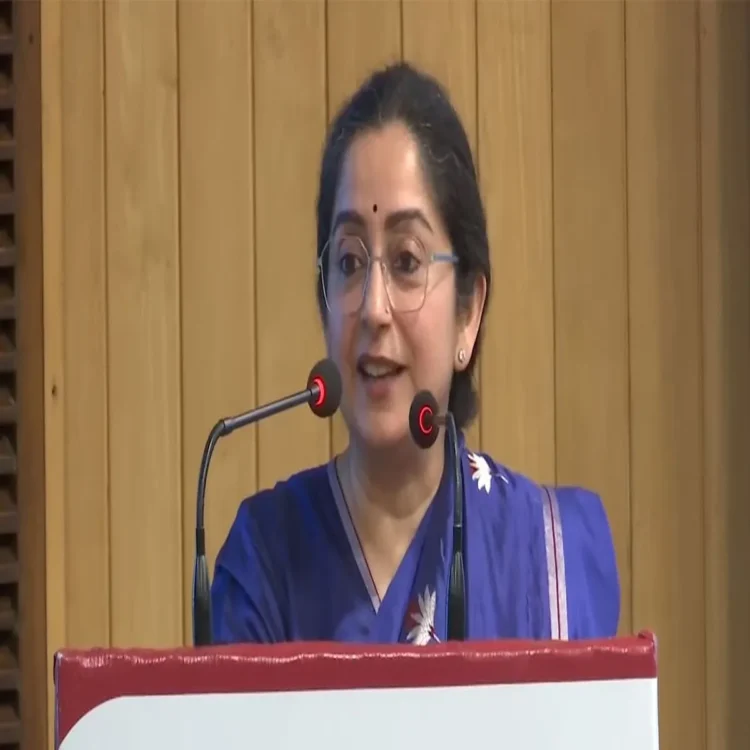
Financial awareness should be treated as an essential ability, much like learning to navigate roads or stay afloat in water, according to economist Shamika Ravi. Speaking at the launch of a financial literacy initiative by the National Stock Exchange’s Investor Hub on Thursday, she highlighted how understanding money matters has become inseparable from everyday decision-making.
Financial knowledge as a basic necessity
Ravi pointed out that while people can avoid driving or swimming by relying on alternatives, there is no escaping the need for financial understanding. Every individual, she noted, is constantly building financial assets through work and savings, making it crucial to know how to manage them effectively.
She stressed that financial literacy should not be seen as a specialized skill but as a basic life requirement that empowers individuals to make informed choices about their income, savings, and investments.
A long-standing challenge without a single solution
During her keynote address, Ravi acknowledged that improving financial literacy in India has remained a persistent challenge for decades. One of the main reasons, she explained, is that the issue cannot be addressed with a one-size-fits-all approach.
Different groups—ranging from urban professionals to rural households—require tailored methods of education. This diversity makes it difficult to design a unified strategy that works effectively across the country.
Gaps exist even among highly educated individuals
Drawing from her experience in teaching at international business schools, Ravi shared that even students with strong analytical abilities often struggle with basic financial concepts. She noted that many fail to distinguish between commonly used terms such as flat interest rates and reducing balance interest rates.
Despite earning high salaries, these individuals may still lack clarity when evaluating financial products like loans. This, she said, highlights a deeper issue where formal education does not always translate into practical financial understanding.
Limited awareness at the grassroots level
Ravi also shed light on financial gaps among economically weaker sections. She mentioned that many women unknowingly pay insurance premiums because such products are bundled with loans, without fully understanding what they are purchasing.
Additionally, she pointed out that awareness about regulated financial systems remains low. For instance, many people are unaware that chit funds operate under a legal framework in India, reflecting a broader lack of clarity about financial institutions.
Digital access does not guarantee understanding
While digital platforms have made financial services more accessible, Ravi cautioned that ease of access does not automatically lead to better comprehension. Mobile-based transactions and online investment tools may simplify processes, but they do not ensure that users understand the risks or benefits involved.
She also questioned why traditional assets like gold continue to attract investors despite the availability of modern financial instruments offering potentially higher returns. This, she suggested, is linked to a lack of confidence and understanding of market-based products.
From savings to investment: The missing link
India has historically maintained a strong culture of saving, but much of this wealth is held in non-liquid forms such as land and jewelry. Ravi emphasized that for savings to contribute to economic growth, they must flow into formal financial markets.
With over 100 million participants now active in the equity market, she noted that increased participation brings both opportunities and risks. Without proper knowledge, new investors may be vulnerable to poor decisions.
Financial literacy as a public responsibility
Ravi underlined that financial education cannot rely solely on financial institutions, as educating individuals is time-intensive and not commercially viable. Instead, she argued that financial literacy should be treated as a public good.
She advocated for integrating financial education into the school curriculum, ensuring that students graduate with a clear understanding of essential concepts such as cash flow management and basic banking functions.
Early education can shape long-term financial behavior
Referring to recent educational reforms, Ravi highlighted efforts to introduce financial concepts at an early stage. She emphasized that building awareness from a young age can lead to more responsible financial behavior in adulthood.
In her concluding remarks, she underscored the importance of knowledge in safeguarding wealth, suggesting that informed decisions are key to financial security and stability.