
Politics – Seven MPs Exit AAP, Join BJP Amid Internal Disputes
Politics – A significant political shift unfolded on Saturday as Rajya Sabha MP Raghav Chadha announced his departure from the Aam Aadmi Party, raising serious concerns about the party’s internal direction and functioning. Chadha stated that the organisation, once built on ideals of transparency and grassroots participation, has gradually moved away from its founding principles, leaving many dedicated members disillusioned.
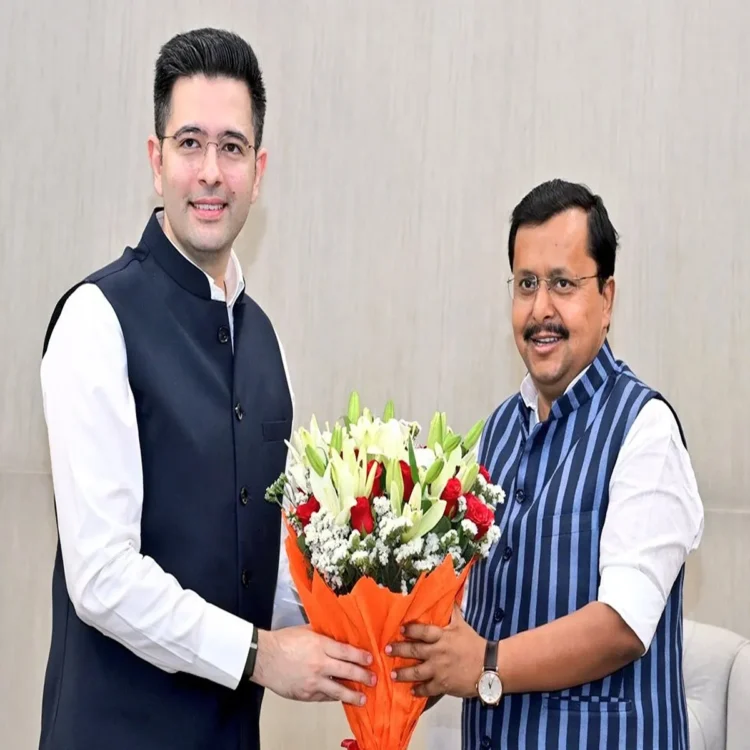
Growing dissatisfaction within party ranks
Speaking to the media, Chadha claimed that several committed workers and leaders who once believed strongly in the party’s mission are now distancing themselves. According to him, individuals who contributed tirelessly to strengthen the organisation feel sidelined and unheard.
He remarked that many sincere members no longer see space for constructive work within the party. This sense of exclusion, he suggested, has led to a steady outflow of leaders who no longer wish to be associated with what they perceive as a declining organisational culture.
Collective resignation by multiple MPs
Chadha further revealed that his decision was not an isolated one. He stated that seven Members of Parliament chose to leave together, citing shared concerns over the party’s trajectory. He referred to constitutional provisions that allow elected representatives to step away from their party if they believe it has strayed from ethical governance or accountability.
According to Chadha, the group collectively concluded that the party had fallen into what they described as compromised leadership, prompting their exit. He emphasized that the decision was taken after careful consideration rather than any external pressure.
Shift to BJP and leadership reactions
Following their resignation, Chadha, along with several other MPs including Sandeep Pathak and Ashok Mittal, joined the Bharatiya Janata Party in the presence of senior leaders. He also confirmed that figures such as Harbhajan Singh, Rajinder Gupta, Vikramjit Singh Sahney, and Swati Maliwal have aligned with the BJP.
The development marks a notable expansion for the BJP, while raising questions about stability within the Aam Aadmi Party. Political observers view the move as part of a broader realignment within national politics.
Denial of fear-driven exit
Responding to criticism from former party colleagues, Chadha rejected claims that the departure was motivated by fear or political pressure. He asserted that the decision stemmed from disappointment and dissatisfaction with the party’s current functioning.
He maintained that those who left did so after losing confidence in the party’s leadership and direction, adding that their move reflects a deeper concern about governance and accountability rather than personal considerations.
Controversy over alleged “Sheesh Mahal” issue
Chadha also raised questions about reports of a lavish government residence linked to party leadership, referring to it as “Sheesh Mahal Part 2.” He suggested that such developments could negatively impact the party’s public image, especially when earlier controversies had already drawn criticism.
He pointed out that issues related to perceived extravagance may have contributed to electoral setbacks and urged the party to reflect on its decisions.
AAP leadership dismisses allegations
In response, former Delhi Chief Minister Atishi dismissed the claims, stating that the images circulating online were not authentic. She argued that the accusations were politically motivated and challenged critics to verify facts transparently.
Atishi further stated that if questions about official residences are to be addressed, all concerned parties should open their homes for public scrutiny, allowing citizens to form their own conclusions.
The unfolding situation underscores increasing tensions within political circles and highlights the evolving dynamics of party loyalty and leadership accountability in Indian politics.