
Politics – Nitish Kumar Reshapes JD-U Leadership, Signals Strategic Reset
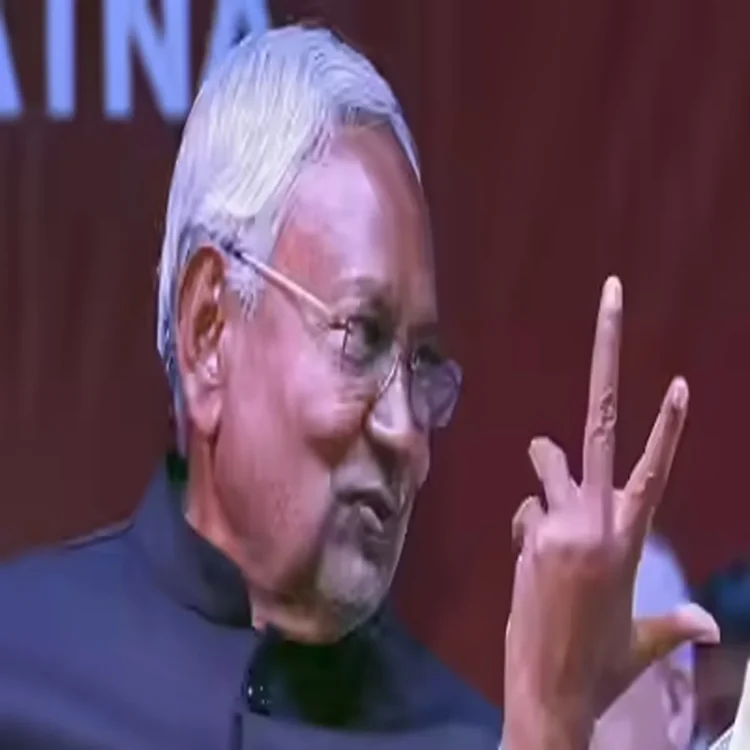
Politics – Former Bihar Chief Minister Nitish Kumar has turned his attention to rebuilding the internal framework of the Janata Dal-United (JD-U) after stepping down from his post and transitioning to the Rajya Sabha. In a move seen as crucial for the party’s future direction, a newly constituted national team was announced on Wednesday, featuring a mix of experienced leaders and emerging faces.
New Leadership Structure Announced
The reorganisation places Nitish Kumar at the helm as the party’s President, reaffirming his central role in guiding JD-U’s strategy. Sanjay Kumar Jha has been appointed as the National Working President, indicating a structured approach to managing party affairs.
Among other significant appointments, former Jehanabad MP Chandeshwar Chandravanshi has been named Vice President, while Alok Kumar Suman will oversee financial matters as Treasurer. The changes suggest a deliberate effort to balance administrative efficiency with political outreach.
Key Leaders Given Organisational Responsibilities
A broad team of General Secretaries has been formed, including prominent figures such as Manish Kumar Verma, Afaq Ahmed Khan, Shyam Rajak, Ashok Choudhary, and Ramesh Singh Kushwaha. Other leaders like Ram Sevak Singh, Kahkashan Perween, Kapil Harishchandra Patil, Raj Singh, Sunil Kumar, Harshvardhan Singh, and Ghulam Rasool Balyavi have also been entrusted with important roles.
In addition, a group of Secretaries has been appointed to support organisational activities. This includes Rajiv Ranjan Prasad, Ravindra Prasad Singh, Vidya Sagar Nishad, Dayanand Rai, Sanjay Kumar, Mohammad Nisar, Ruhi Tagung, and Nivedita Kumari. The expanded structure reflects an attempt to strengthen coordination at multiple levels within the party.
Decisions Follow Internal Party Meeting
The reshuffle comes shortly after a legislative party meeting held on April 20, where Nitish Kumar was granted full authority to take key organisational decisions. During the same phase, Shravan Kumar was appointed as the leader of the JD-U Legislative Party in the Bihar Assembly.
These developments indicate a consolidation of decision-making power, allowing for quicker implementation of political strategies. Party insiders view this as a necessary step ahead of upcoming political challenges in the state.
Focus on Strengthening Party Base
The restructuring is widely interpreted as an effort to revitalise JD-U’s grassroots presence. By assigning clear roles to a larger pool of leaders, the party appears to be aiming for better coordination across districts and communities.
Political observers believe that such organisational clarity could help JD-U respond more effectively to shifting political dynamics in Bihar. The emphasis on both senior leadership and newer entrants suggests a blend of experience and fresh perspectives.
Nishant Kumar’s Yatra Signals New Political Entry
In a parallel development, Nishant Kumar, son of Nitish Kumar, is preparing to begin a statewide tour starting May 3. This yatra is expected to cover several districts, focusing on direct interaction with the public.
The initiative is being closely watched as it may mark Nishant Kumar’s gradual entry into active politics. Until now, he has largely remained away from public political engagements. However, this outreach campaign indicates a possible shift toward a more visible role.
Outreach Campaign Aimed at Public Connection
Through the yatra, Nishant Kumar is expected to engage with citizens at the grassroots level while also strengthening the party’s local networks. The campaign will likely involve meetings, public interactions, and efforts to mobilise support for JD-U.
Observers note that this move could serve dual purposes—enhancing the party’s organisational reach while also helping Nishant Kumar establish his political identity within Bihar.
Signs of a Broader Political Strategy
Taken together, the organisational overhaul and the planned yatra point toward a broader strategy to reposition JD-U ahead of future electoral contests. Nitish Kumar’s renewed focus on internal structure, combined with the emergence of a potential new face in Nishant Kumar, signals a phase of transition within the party.
While the long-term impact of these changes remains to be seen, the current developments underline a clear attempt to strengthen the party’s foundation and adapt to evolving political conditions.