
RoadSafety – Government Moves Ahead With Vehicle Communication Safety Framework
RoadSafety – The Central Government on Wednesday introduced a draft framework for a Vehicle-to-Vehicle (V2V) communication system aimed at strengthening road safety across the country. Authorities have invited feedback from industry participants, manufacturers, technical experts, and other stakeholders before the proposed standards are formally adopted.
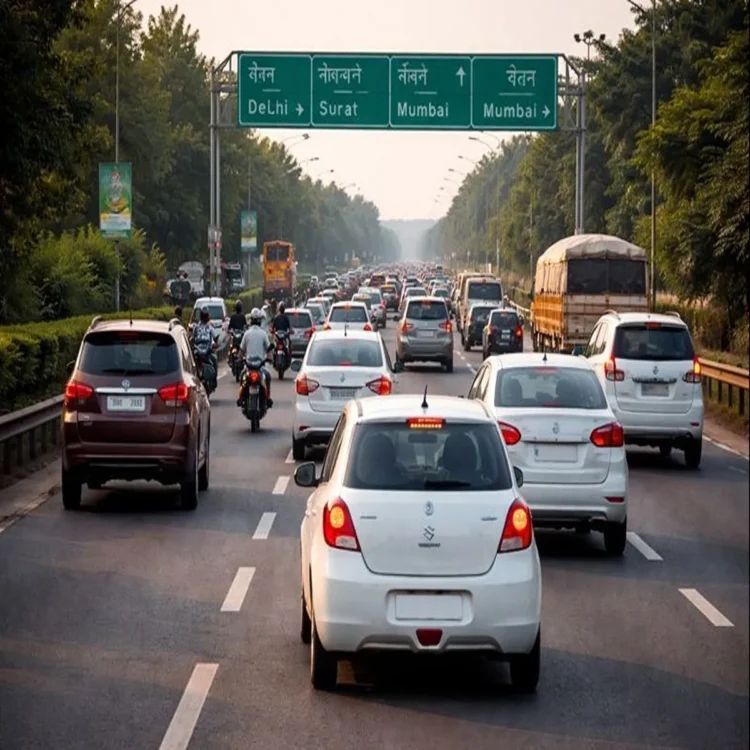
The proposed V2V technology is designed to enable vehicles to exchange critical information instantly through short-range wireless communication. Data such as vehicle speed, location, movement direction, and braking activity can be shared in real time, helping drivers receive early warnings about developing risks on the road.
Technology Designed to Reduce Collision Risks
According to the draft standards, the communication system is intended to improve driver awareness by identifying potential dangers that may not be immediately visible. The technology can notify motorists about sudden braking by vehicles ahead, stationary vehicles on the roadway, and situations that could lead to crashes.
Officials believe that providing advance alerts could help drivers react more quickly, thereby reducing the likelihood of accidents. The system is expected to create an additional layer of safety by extending a driver’s awareness beyond their normal field of vision.
Draft Standards Define Technical Requirements
The newly released draft outlines the minimum technical, operational, environmental, security, and performance specifications that communication devices must meet. These standards apply specifically to factory-fitted On-Board Units installed by vehicle manufacturers during production.
The framework has been developed to ensure that communication equipment operates reliably under different driving and environmental conditions while maintaining data security and system integrity.
Coverage Across Multiple Vehicle Categories
The draft standard is proposed for a broad range of vehicles. It covers Category L vehicles, which include two-wheelers, three-wheelers, and light quadricycles. It also applies to Category M vehicles, primarily used for passenger transport, and Category N vehicles, which are mainly designed for carrying goods.
To support the development of the communication network, the Department of Telecommunications has already assigned a dedicated 30 GHz radio frequency band for the system.
Discussions Held at Transport Development Council Meeting
The concept of introducing V2V communication was discussed earlier this year during a meeting of the Transport Development Council. The meeting was chaired by Union Minister for Road Transport and Highways, Nitin Gadkari.
Following those discussions, the government began exploring measures to make the installation of the technology mandatory. The objective is to improve road safety by enabling vehicles to continuously share information and provide a wider, 360-degree understanding of surrounding traffic conditions.
Potential Mandatory Rollout for New Vehicles
Government officials have indicated that the requirement is expected to be introduced first for newly manufactured vehicles. At a later stage, mechanisms may be developed to allow older vehicles to be upgraded with compatible communication equipment through retrofitting.
Speaking about the initiative earlier, Gadkari described the technology as a transformative step for road safety. He stated that widespread adoption could significantly lower accident rates by helping drivers identify hazards earlier and make better-informed decisions while driving.
The estimated cost of installing the required equipment is expected to range between ₹5,000 and ₹7,000 per vehicle. Policymakers believe that the investment could contribute to long-term improvements in traffic safety and accident prevention across India’s road network.