
Plantation – DDA Introduces Digital System to Track Sapling Survival Across Delhi
Plantation – The Delhi Development Authority (DDA) has rolled out a technology-based monitoring platform to closely track the health, survival, and maintenance of saplings planted under its Mega Plantation Drive 2026-27. The initiative is designed to improve accountability and ensure that newly planted trees receive proper care over the long term instead of being left unattended after plantation.
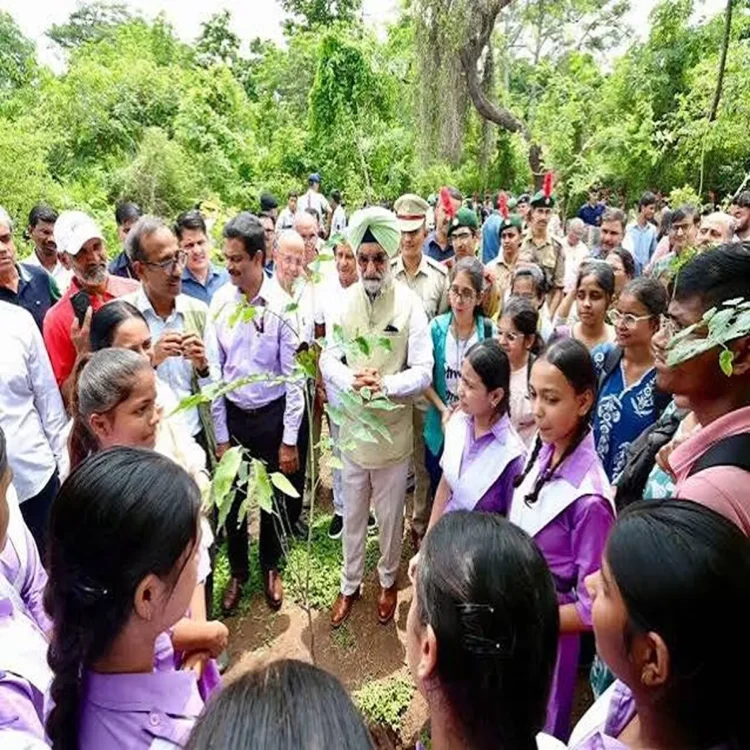
The new system, introduced under the guidance of Delhi Lieutenant Governor Taranjit Singh Sandhu, combines a dedicated mobile application for field officials with a centralized Plantation Monitoring Dashboard. According to officials, every stage of the plantation process will now be digitally documented, making it easier to monitor work across different parts of the city while maintaining accurate records.
Digital Platform to Strengthen Monitoring
The mobile application has been developed to support on-ground horticulture teams by allowing them to upload plantation details directly from the field. Every plantation site will be geo-tagged, ensuring that the exact location of each sapling is recorded. Officials will also be able to upload photographs, making it possible to monitor plantation progress through real-time digital updates.
The integrated dashboard is expected to simplify supervision by providing authorities with detailed information about plantations carried out in various parks and green spaces. The system will maintain records of the number of saplings planted, the species selected for each location, and their geographical coordinates.
Focus on Long-Term Survival of Trees
Officials said the primary objective of the initiative is not only to increase plantation numbers but also to improve the survival rate of saplings. The monitoring platform assigns responsibility for watering, maintenance, and protection of young plants to designated field staff.
The system will also record instances where saplings fail to survive. In such cases, replacement plantation will be undertaken so that the overall green cover targets remain on track. Authorities believe this structured approach will help reduce plant loss while encouraging continuous maintenance after plantation activities are completed.
Independent Verification to Improve Transparency
To make the monitoring process more transparent, the DDA has decided to engage an independent third-party agency to verify plantation work and assess the survival of saplings. The agency will conduct field assessments and provide reports identifying locations where additional maintenance or corrective measures may be required.
Officials said the findings from these inspections will support better decision-making and help improve future plantation efforts by identifying areas that require greater attention.
Dashboard to Offer Public Access to Plantation Data
The Plantation Monitoring Dashboard will be made available through the DDA’s official website, allowing users to access park-wise plantation information. The platform will display details such as the number of saplings planted, the varieties of indigenous species used, latitude and longitude coordinates, and field photographs uploaded by horticulture officials.
According to the authority, the digital platform is intended to increase public confidence by making plantation records more accessible while encouraging greater transparency in the implementation of environmental initiatives.
Plantation Drive Records Strong Public Participation
The DDA said its Mega Plantation Drive 2026-27 has already crossed an important milestone. Within about a month of the campaign’s launch, more than half of the target of planting 23 lakh indigenous saplings has been achieved.
The authority also highlighted broad public participation in the campaign. So far, around 13,750 people have joined the plantation effort, including representatives from 118 Resident Welfare Associations (RWAs), 18 religious organisations, 31 government departments, police units and non-governmental organisations, along with 24 schools and 11 educational institutions. Officials believe such community involvement will contribute to the long-term success of the city’s green initiatives.