
Delhi University Protest – Students Rally in North Campus Over Fees and Academic Concerns
Delhi University Protest –Student groups, led by Krantikari Yuva Sangathan (KYS), joined hundreds of learners from several Delhi University colleges and the School of Open Learning (SOL) in a large protest march across the university’s North Campus. Despite heavy rainfall and waterlogged roads, participants turned out in significant numbers to draw attention to a range of issues they believe are affecting the academic future of students.
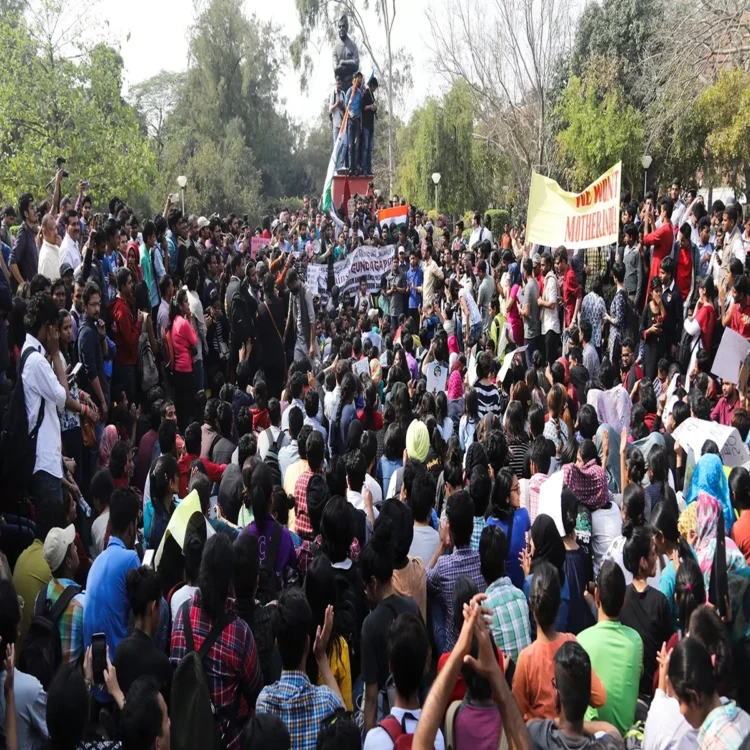
Protest Highlights Key Student Demands
According to a press statement released on Thursday, one of the primary concerns raised during the demonstration was the sharp rise in university fees. Student representatives claimed that the cost of several courses has increased substantially in recent years, with some programmes witnessing fee hikes of more than 300 percent. They argued that the Higher Education Financing Agency (HEFA) model, introduced under the National Education Policy (NEP) 2020, has shifted higher education funding from grants to loans, placing a greater financial burden on institutions and, ultimately, students. Protesters called for the immediate withdrawal of the current funding approach and the associated fee increase policy.
Concerns Over School of Open Learning Study Material
Another major issue highlighted during the march was the quality of study material supplied by the School of Open Learning. According to KYS, students enrolled in SOL, many of whom come from economically and socially disadvantaged backgrounds, continue to receive learning material containing errors and deficiencies. The organisation stated that concerns regarding the quality of these materials have been raised repeatedly in Delhi University’s statutory bodies but have not resulted in meaningful corrective action.
The student group demanded that all substandard study material be withdrawn without delay. It also urged the university to establish an independent academic audit to examine the preparation and distribution process for SOL learning resources.
Support Sought for Students From Marginalised Communities
Participants also focused on the academic challenges faced by students from socially marginalised backgrounds. They argued that many learners struggle to keep pace with coursework because of limited academic support, leading some to fall behind or discontinue their studies.
Among the demands presented was the introduction of remedial classes aimed at helping students who require additional academic assistance. Protesters also called for improvements to Delhi University’s Translation Cell so that educational texts and study resources are made available in a wider range of regional languages, making learning more accessible.
Demand for More One-Year Postgraduate Seats
The march also highlighted concerns regarding the limited number of seats available in one-year postgraduate programmes. Student representatives pointed out that Delhi University implemented the four-year undergraduate programme in line with the National Education Policy 2020, under which eligible graduates were expected to have the opportunity to pursue one-year master’s courses.
However, they claimed that the available postgraduate seats remain far below demand across the university’s 46 departments. Citing available reports, the organisation stated that more than 31,000 students are eligible to apply for these programmes, while the existing intake is insufficient to accommodate them.
To address the issue, protesters demanded a substantial increase in postgraduate seats, along with additional faculty appointments and higher financial support for academic departments so that more eligible students can continue their education.
Wider Reforms Also Raised During Demonstration
Beyond financial and academic concerns, demonstrators called for broader reforms across the university system. Their demands included revising the syllabus, discontinuing what they described as ineffective Skill Enhancement Courses (SECs) and Value Addition Courses (VACs), introducing a 10 percent deprivation point benefit for students from government schools during admissions, strengthening measures against sexual harassment through independent Internal Complaints Committees (ICCs), improving accessibility for students with disabilities, and protecting students’ rights to peaceful expression and democratic participation on campus.
In its statement, Krantikari Yuva Sangathan said it would continue its campaign and intensify future protests if the issues raised during the march are not addressed promptly by the university administration.