
Pollution – Yamuna Water Quality Shows Limited Improvement Despite Persistent Pollution Concerns
Pollution – The latest assessment of the Yamuna’s water quality has indicated minor improvements at a few monitoring locations, although pollution levels remain significantly higher than the prescribed environmental standards.
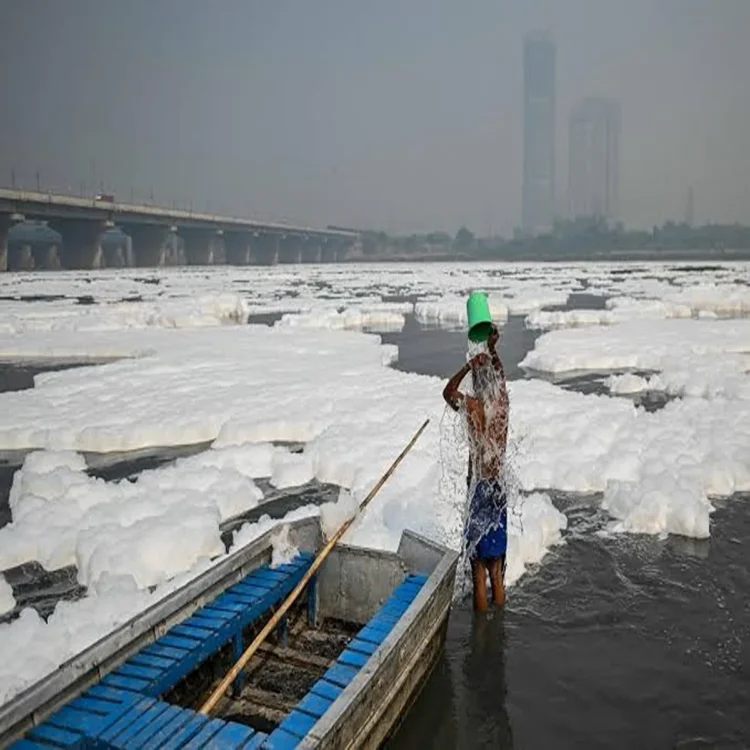
The latest monthly report released by the Delhi Pollution Control Committee (DPCC) indicates a modest improvement in the Yamuna’s water quality during July when compared with June. While the reduction in faecal coliform levels at several monitoring points suggests that the inflow of untreated sewage may have declined slightly, the river continues to face serious pollution challenges. Environmental indicators, particularly Biological Oxygen Demand (BOD), remain at concerning levels, reflecting the continued stress on the river ecosystem.
Water Quality Checked at Multiple Monitoring Points
To evaluate the condition of the Yamuna, the DPCC conducts regular sampling every month from seven locations across Delhi and adjoining areas. These include Palla, Wazirabad, ISBT Bridge, ITO Bridge, Nizamuddin Bridge, Okhla Barrage, and Asgarpur in Haryana. Each water sample undergoes testing for several key parameters such as Biological Oxygen Demand, dissolved oxygen, chemical oxygen demand, pH value, and faecal coliform bacteria. These indicators help authorities determine the extent of pollution and assess changes in water quality over time.
Faecal Coliform Levels Improve at Four Locations
According to the July findings, faecal coliform counts declined at four of the monitored sites. At Palla, the level decreased from 2,800 MPN per 100 ml in June to 2,100 MPN per 100 ml in July. Wazirabad also showed improvement, where the count fell from 4,300 to 3,500 MPN per 100 ml.
A similar trend was observed at ITO Bridge, where the bacterial count reduced from 140,000 to 120,000 MPN per 100 ml. Asgarpur registered one of the larger improvements, with levels dropping from 390,000 to 320,000 MPN per 100 ml during the same period. These changes indicate a slight reduction in contamination, although the figures remain substantially above acceptable standards.
Mixed Results Across Other Monitoring Stations
Not every monitoring point recorded progress. The faecal coliform count remained unchanged at ISBT Bridge, where it stayed at 170,000 MPN per 100 ml. Okhla Barrage also reported no variation, maintaining a reading of 110,000 MPN per 100 ml.
Meanwhile, Nizamuddin Bridge experienced a slight increase in bacterial contamination. The reading rose from 120,000 MPN per 100 ml in June to 130,000 MPN per 100 ml in July, suggesting that pollution levels worsened marginally at this location.
Pollution Levels Continue to Exceed Safety Standards
Despite improvements at selected sites, the overall condition of the river remains a matter of concern. Except for Palla, every monitored location recorded faecal coliform levels that exceeded both the desirable standard of 500 MPN per 100 ml and the permissible limit of 2,500 MPN per 100 ml. Such elevated readings indicate the continued presence of sewage contamination in the river.
The DPCC report also noted that Biological Oxygen Demand remained consistently high across several stretches of the Yamuna. BOD measures the amount of oxygen required by microorganisms to break down organic matter present in water. Elevated BOD values generally indicate heavier organic pollution and lower dissolved oxygen availability, conditions that can adversely affect aquatic ecosystems.
River Health Still Faces Long-Term Challenges
Although the July monitoring data points to slight improvement in certain water quality indicators, the broader assessment suggests that the Yamuna continues to struggle with severe pollution. The marginal decline in faecal coliform counts is encouraging but insufficient to bring water quality within prescribed environmental limits. Sustained efforts to control untreated sewage discharge and strengthen pollution management will remain essential for achieving meaningful improvements in the river’s ecological health.