
Barapullah Corridor – Delhi Set to Open Long-Awaited Signal-Free Elevated Link in August
Barapullah Corridor –Commuters travelling between East and South Delhi are likely to receive a significant transport boost as the long-delayed Phase III of the Barapullah elevated corridor is now ready for public use. After facing years of construction hurdles and repeated deadline extensions, the project is expected to be opened to traffic later this month following its formal inauguration.
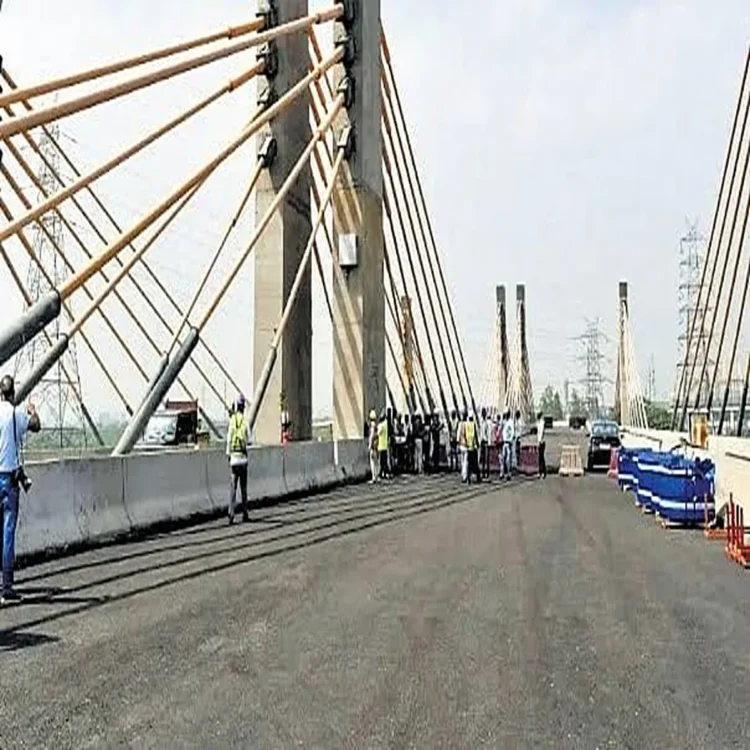
Government Prepares for Official Launch
According to officials, the Delhi government’s Public Works Department (PWD) has informed Chief Minister Rekha Gupta about the completion of the project and has requested a suitable date for its official inauguration. Once the ceremonial opening takes place, the elevated corridor will become operational for daily commuters, offering a smoother travel experience across key parts of the capital.
Key Link Between East and South Delhi
The newly completed Phase III stretch extends approximately 3.5 kilometres and connects Sarai Kale Khan with the AIIMS area in South Delhi. Designed as a signal-free route, the corridor is expected to improve connectivity for residents travelling from Mayur Vihar and surrounding localities towards major destinations in South Delhi.
Transport officials believe the project will help reduce delays caused by multiple traffic signals while providing a more direct and uninterrupted route for thousands of daily commuters.
Expected Reduction in Travel Time
The elevated corridor is anticipated to ease pressure on some of Delhi’s busiest road networks. Motorists using NH-24, the DND Flyway, Ring Road and the Sarai Kale Khan junction are expected to experience reduced congestion once traffic begins moving through the new stretch.
Authorities estimate that the improved connectivity will shorten travel time during peak hours and enhance overall traffic flow between eastern and southern parts of the city, where heavy congestion has remained a regular concern for years.
Project Faced Years of Delays
Although the project received approval in 2014 and construction work began the following year, the original target was to complete it by 2017. However, the corridor encountered multiple challenges that significantly slowed progress.
Officials cited prolonged land acquisition issues, which reportedly lasted several years, along with delays in obtaining environmental clearances. In addition, engineers faced technical complexities while constructing a major bridge section across the Yamuna floodplain, further extending the timeline.
These obstacles resulted in the Barapullah Phase III becoming one of the capital’s most delayed infrastructure developments.
Major Addition to Delhi’s Road Network
With construction now complete, officials expect the corridor to play an important role in improving daily mobility across Delhi. The project has been planned to support faster movement between residential areas, commercial centres and healthcare institutions, including AIIMS, while reducing dependence on heavily congested surface roads.
The opening of the corridor is expected to mark the completion of another important transport infrastructure project aimed at strengthening connectivity and improving commuting efficiency for residents across the national capital.