
Census – Tamil Nadu Begins Statewide Digital Housing Survey for Census 2027
Census – Tamil Nadu has officially launched the first phase of Census 2027 with a statewide Houselisting and Housing Census, introducing a fully digital system to collect housing-related information from every household.
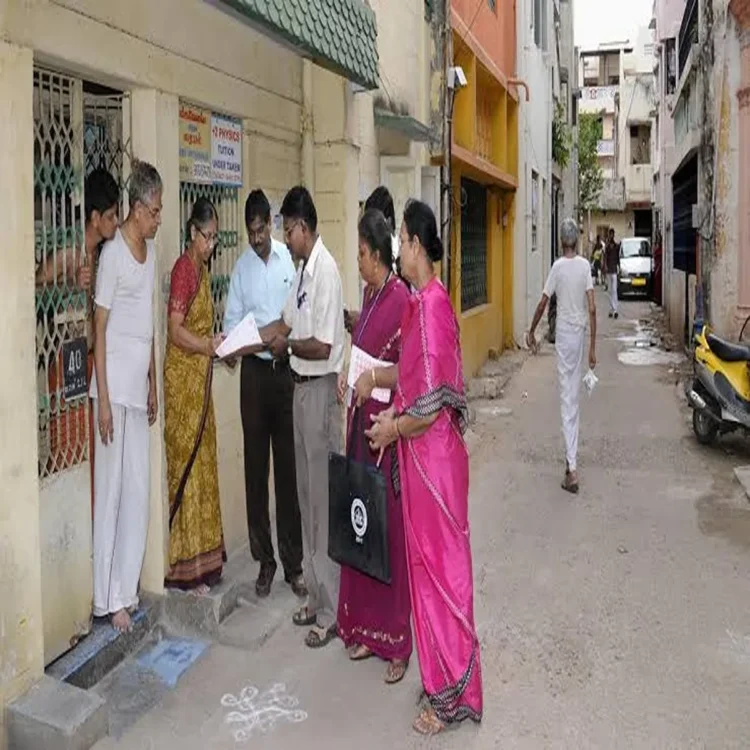
Tamil Nadu has started the Houselisting and Housing Census on Saturday, marking the opening stage of Census 2027 through a month-long door-to-door survey across the State. The exercise, which will continue until August 30, is expected to cover every household through nearly 1.2 lakh house-listing blocks spread across 1,026 administrative units. Officials have described it as India’s first Census operation to be conducted entirely through a digital platform, reflecting a significant shift from traditional paper-based data collection.
Large-Scale Enumeration Across the State
To carry out the extensive survey, the government has deployed more than 1.15 lakh enumerators who will visit households and record information using a specially developed mobile application. Supporting them are around 19,000 supervisors responsible for monitoring the process, resolving operational issues, and ensuring that the survey is completed smoothly and accurately across all districts.
Officials said the digital approach is designed to improve efficiency while maintaining consistency in data collection throughout the State.
Survey to Record Housing and Basic Amenities
During their visits, enumerators will collect responses to a detailed questionnaire consisting of 33 questions. The survey seeks information on housing ownership, type of construction, building materials, access to drinking water, sanitation facilities, electricity supply, cooking fuel, communication services, and other essential household amenities.
The information gathered during this phase will form the foundation for the Population Census that follows. Authorities believe the data will provide an updated picture of housing conditions and help identify areas where infrastructure and public services require further attention.
Digital System Expected to Improve Accuracy
For the first time in the country’s Census history, information will be captured entirely through a dedicated mobile application instead of paper forms. According to officials, this technology-driven process is expected to reduce manual errors, speed up data processing, improve record management, and strengthen the overall quality of statistical information.
The transition to digital collection is also expected to make the compilation and analysis of Census data faster, enabling policymakers to access reliable information within a shorter timeframe.
Data to Support Policy and Welfare Planning
Government officials said the Houselisting and Housing Census plays an important role in shaping evidence-based public policies. Reliable housing data helps authorities assess living conditions, understand infrastructure requirements, and prepare development programmes that address local needs more effectively.
The findings are also expected to support the planning and implementation of welfare schemes by providing updated statistical information that reflects current household conditions across the State.
Strong Response to Self-Enumeration Portal
Before the commencement of door-to-door visits, residents were given the option to complete their details online through the newly introduced self-enumeration facility. Between July 17 and July 31, more than 10 lakh households used the online portal to submit their information.
Officials have requested residents who completed the digital process to keep their Self-Enumeration Identification Number available when field staff visit for verification. At the same time, households that did not participate online will be included during the regular door-to-door enumeration.
Privacy Measures Highlighted by Authorities
Authorities have assured residents that all information collected during the Census will remain confidential under the provisions of the Census Act, 1948. They also stated that the digital collection and processing of data follow the requirements of the Digital Personal Data Protection Act.
According to officials, the information will be used exclusively for statistical purposes, public policy planning, and long-term development initiatives, while maintaining the privacy and security of citizens’ personal details.