
Constitutional Law – Supreme Court Examines Bihar Minister’s Continuation Beyond Six-Month Rule
Constitutional Law – The Supreme Court on Thursday raised serious questions over the continuation of Bihar Panchayati Raj Minister Deepak Prakash, seeking an explanation from the state government on how he continues to hold office despite not being elected within the period prescribed under the Constitution.
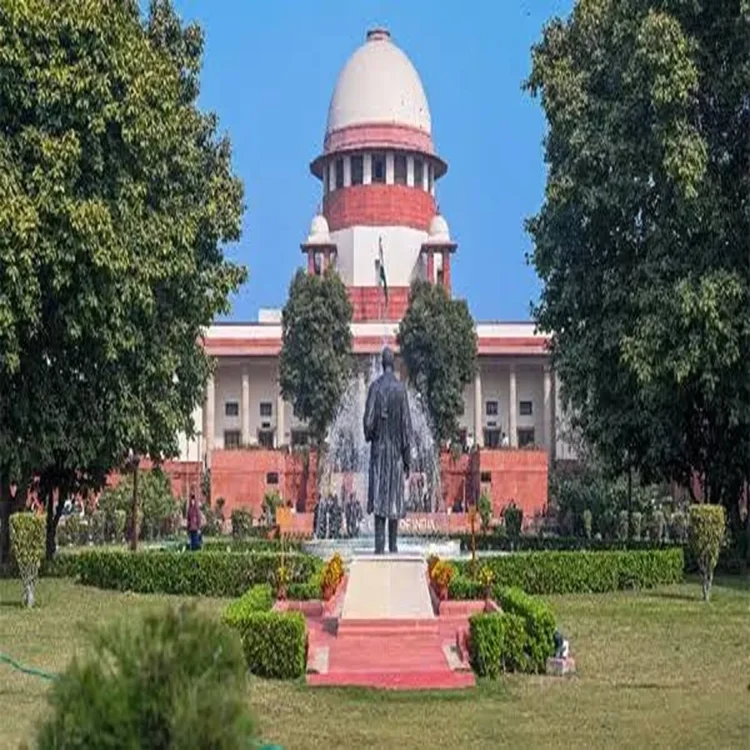
The matter came up before a Bench led by Chief Justice of India Surya Kant along with two companion judges while considering a request for an urgent hearing of a petition challenging Prakash’s reappointment. During the proceedings, the Bench observed that the issue involved a clear constitutional question and asked the Bihar government to justify the legal basis for retaining a minister who has not secured election within six months of assuming office.
Court Refers to Constitutional Provision
The Bench drew attention to Article 164(4) of the Constitution, which permits a person who is not a member of the legislature to serve as a minister only for a maximum period of six months. The judges questioned whether the constitutional limit could be exceeded without the individual becoming an elected legislator.
Petitioner Rakesh Kumar Singh, represented by advocate Sudeep Chandra, informed the Court that more than seven months had passed since Deepak Prakash initially took the oath of office and that he continues to function as a minister. According to the petitioner, the legal issue is straightforward and requires an early judicial determination.
Hearing Fixed for August 4
After hearing the submissions, the Supreme Court directed that the matter be listed for hearing on Tuesday, August 4. The Bench noted that the case concerns the constitutional validity of the minister’s continuation and therefore deserves prompt consideration.
During the hearing, the petitioner’s counsel also pointed out that when the matter was previously listed on July 15, the Bihar government had sought additional time to file its counter affidavit. However, despite the passage of several weeks, the response had not been submitted before the Court.
Background of the Appointment
According to the case records, Deepak Prakash first became a minister in the Bihar government on November 20, 2025, during the cabinet led by Nitish Kumar. After a subsequent political change in the state and the formation of a new government under Chief Minister Samrat Choudhary, he was again sworn in as a minister on May 7, 2026.
The petitioner argues that the constitutional relaxation allowing a non-legislator to serve as a minister is intended only as a temporary exception. It is claimed that the period available for Prakash to become an elected member expired on May 20, 2026, and that his fresh appointment cannot be used to restart the constitutional time limit.
Petition Challenges Reappointment
The plea before the Supreme Court contends that the reappointment defeats the purpose of constitutional safeguards and weakens the principles of representative democracy. It seeks a declaration that the appointment is unconstitutional and requests directions preventing Deepak Prakash from continuing to discharge ministerial responsibilities.
Advocate Chandra also informed the Bench that the case had been listed a day earlier but could not be taken up because of the Court’s schedule. Considering that more than seven months had already elapsed, he requested that the constitutional challenge be heard without further delay.
State Asked to Explain Legal Basis
Representing the Bihar government, the state’s counsel informed the Court that the case status reflected a tentative hearing date of August 27, 2026, while leaving the scheduling decision to the Bench.
Responding to the submissions, Chief Justice Surya Kant stated that no further extension would be granted for filing the counter affidavit. The Bench made it clear that the hearing would proceed regardless of whether the state filed its response, observing that it was ultimately for the Bihar government to explain the constitutional justification for the minister’s continuation in office.
The petition also relies on the Supreme Court’s earlier ruling in the S. R. Chaudhuri v. State of Punjab case, where the Court held that Article 164(4) is an exceptional constitutional provision and should not be interpreted in a manner that allows democratic accountability to be bypassed. The upcoming hearing is expected to address the scope of this constitutional safeguard and determine whether the continuation of a non-elected minister beyond the prescribed period is legally sustainable.