
Sloth Bear – India Records Growth in Sloth Bear Habitat and Population, Report Finds
Sloth Bear –India has witnessed a notable improvement in both the population of sloth bears and the availability of suitable habitat for the species, according to the country’s first nationwide habitat suitability assessment. The findings indicate that conservation measures carried out over recent years have not only supported tiger populations but have also created favorable conditions for other wildlife that share the same forest ecosystems.
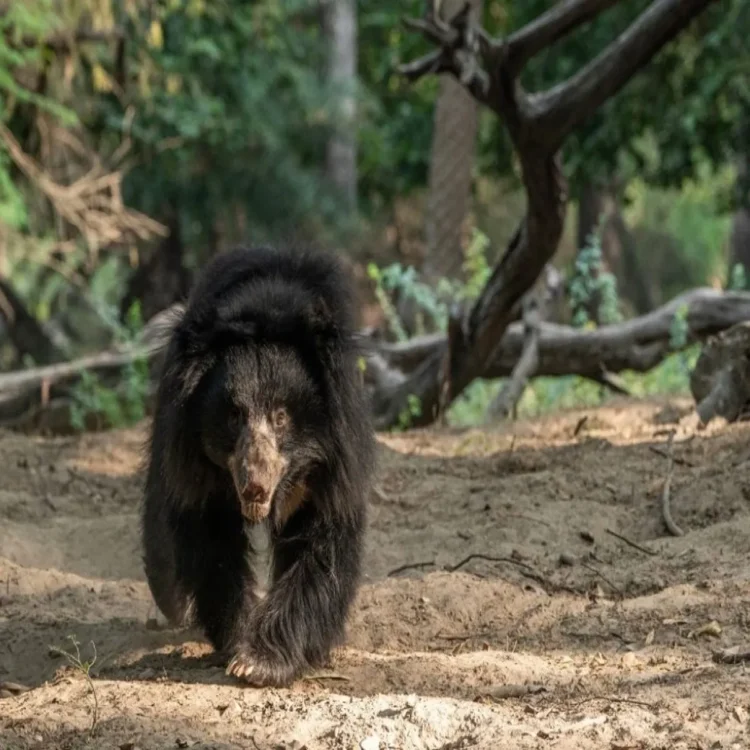
National Assessment Shows Positive Conservation Trends
The report, released by the Ministry of Environment, Forest and Climate Change on the occasion of Global Tiger Day, highlights that the area considered suitable for sloth bears expanded by 10.7 percent between 2018 and 2022. During the same period, the estimated sloth bear population increased by 17 percent. Officials noted that much of this habitat expansion has taken place within tiger reserves, demonstrating the wider ecological benefits of long-term wildlife protection initiatives.
Titled Habitat Suitability Assessment for Sloth Bears Across Tiger Landscapes in India, the study explains that conservation strategies originally designed to protect tigers are also strengthening habitats for several other forest-dependent species.
Habitat Expansion Across Tiger Landscapes
Data collected through the All India Tiger Estimation (AITE) programme showed that sloth bear habitat within tiger landscapes increased from 170,094 square kilometres during 2018-19 to 188,357 square kilometres in 2022-23. Researchers also used predictive MaxEnt modelling to estimate the overall extent of suitable habitat across the country, placing the figure at approximately 231,899 square kilometres.
The assessment found that around 28 percent of this suitable habitat falls inside protected areas. Nearly 19.6 percent, equivalent to 45,441 square kilometres, is located within tiger reserves. The remaining habitat extends across reserved forests, territorial forests and other forested regions that lie outside officially protected zones.
Tiger Conservation Providing Wider Ecological Benefits
According to the report, the expansion of healthy forest landscapes has produced benefits beyond tiger conservation. Sloth bears play an important ecological role by dispersing seeds and contributing to natural forest regeneration, making them valuable to the long-term health of tropical ecosystems.
The study suggests that maintaining intact forest habitats helps sustain biodiversity by supporting multiple wildlife species that depend on similar environmental conditions.
Experts Describe Findings as Encouraging
Dr. Qamar Qureishi, former scientist at the Wildlife Institute of India, said the latest assessment reflects steady progress in wildlife conservation. He noted that the analysis points to an average annual increase of about 3.33 percent in suitable habitat, while the abundance index based on photographic records of sloth bears has risen by roughly 5 percent each year.
He described these trends as a positive sign, indicating that ongoing conservation efforts are delivering measurable improvements for the species.
Challenges Outside Protected Forests Remain
Despite the encouraging findings, the report cautions that increasing human activity continues to pose significant challenges for sloth bear conservation. Expanding settlements, infrastructure development and other forms of human pressure are affecting habitat quality, particularly in areas beyond protected forests.
The assessment stresses that reducing habitat fragmentation and addressing human-bear conflict will be essential for ensuring the species’ long-term survival. Conservation experts believe that strengthening landscape connectivity and improving coexistence measures in forest fringe regions will play a key role in sustaining the recent gains.