
TimeChange – Trump Urges Senate to Back Bill Ending US Daylight Saving Time
TimeChange –US President Donald Trump has renewed his call to end the practice of changing clocks twice a year, urging lawmakers to move forward with legislation that could reshape how time is observed across the United States.
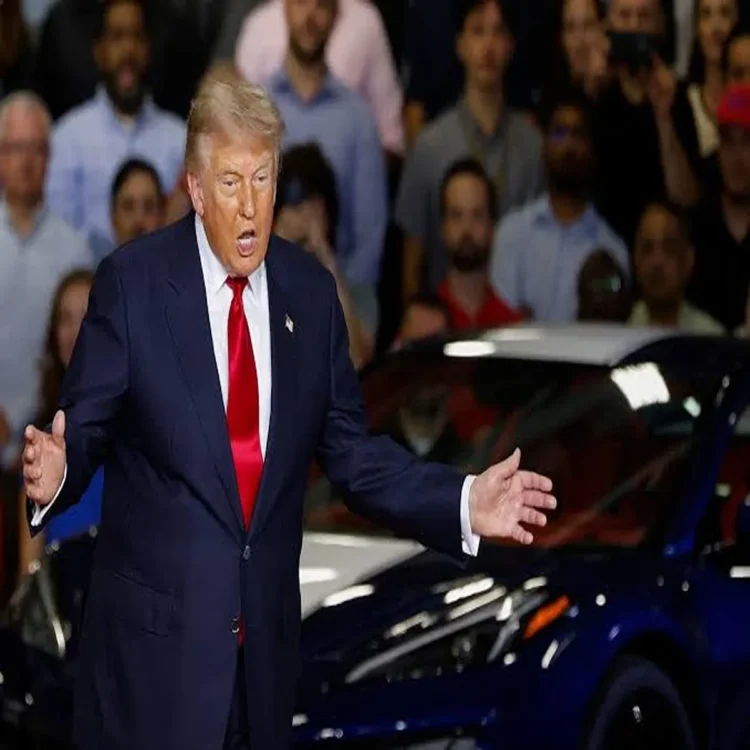
US President Donald Trump has once again voiced support for ending daylight saving time, saying a proposal already approved by the House of Representatives should also receive the Senate’s backing. He made the remarks during a visit to the General Motors Milford Proving Ground in Michigan, where he addressed workers and spoke about a range of topics, including automobiles and federal policy.
Trump Links Personal Anecdote to Policy Proposal
During his speech, Trump reflected on his father’s long-standing appreciation for Cadillac vehicles, recalling that buying a new model every two years symbolized success and luxury in his family. While describing that routine, he shifted unexpectedly to the topic of daylight saving time, saying the country should eliminate the long-standing practice of adjusting clocks each spring and autumn.
He told the audience that legislation dealing with the issue is already before Congress and expressed hope that the Senate would act on it after the House had given its approval. However, he did not provide details about the specific measure or explain how the Senate might amend it before any final decision.
No Preference Announced on Permanent Time Standard
Although Trump reiterated his desire to end the seasonal clock changes, he stopped short of clarifying whether he supports keeping the country on permanent standard time or permanent daylight saving time. The distinction remains central to the broader national debate, as different groups have advocated for each option based on public health, economic activity, and daily routines.
Without outlining a preferred framework, the president limited his comments to encouraging lawmakers to complete the legislative process needed to eliminate the twice-yearly clock adjustment.
President Explains His Speaking Style
After introducing the subject unexpectedly, Trump acknowledged the abrupt transition from discussing Cadillacs to federal time policy. He described the approach as part of his characteristic speaking style, which he referred to as “the weave,” explaining that he often moves between different subjects before returning to his original point.
He then resumed his earlier story, recalling how his father had a Cadillac modified so it could be driven personally or while sitting comfortably in the rear seat if someone else was driving. Trump joked that such a design could even inspire future vehicle concepts.
Debate Over Daylight Saving Time Continues
Most states across the United States currently move clocks forward by one hour in the spring and back again in the autumn under the daylight saving system. Supporters of ending the practice argue that the biannual time changes can disrupt sleep schedules, affect productivity, complicate travel, and create confusion for businesses and schools.
Others believe that any permanent system should be chosen carefully because standard time and daylight saving time each offer different advantages depending on the season, energy use, and public safety considerations. As a result, lawmakers have continued to debate which approach would best serve the country if seasonal clock changes are abolished.
Legislative Process and International Impact
Any nationwide change to the US time system would require approval by both chambers of Congress before being signed into law by the president. Until that process is completed, the current schedule of changing clocks twice each year will remain in effect.
A permanent shift in US time policy would also have implications beyond the country’s borders. It could alter seasonal time differences with nations such as India and require adjustments for international airlines, financial markets, technology services, and businesses that coordinate operations across multiple time zones.