
Remission – Supreme Court Awaits Odisha Panel Decision on Dara Singh’s Release Plea
Remission – The Supreme Court has deferred the hearing on the remission plea of life convict Ravindra Pal, widely known as Dara Singh, while expecting the Odisha government-appointed committee to reach a decision on his application for premature release.
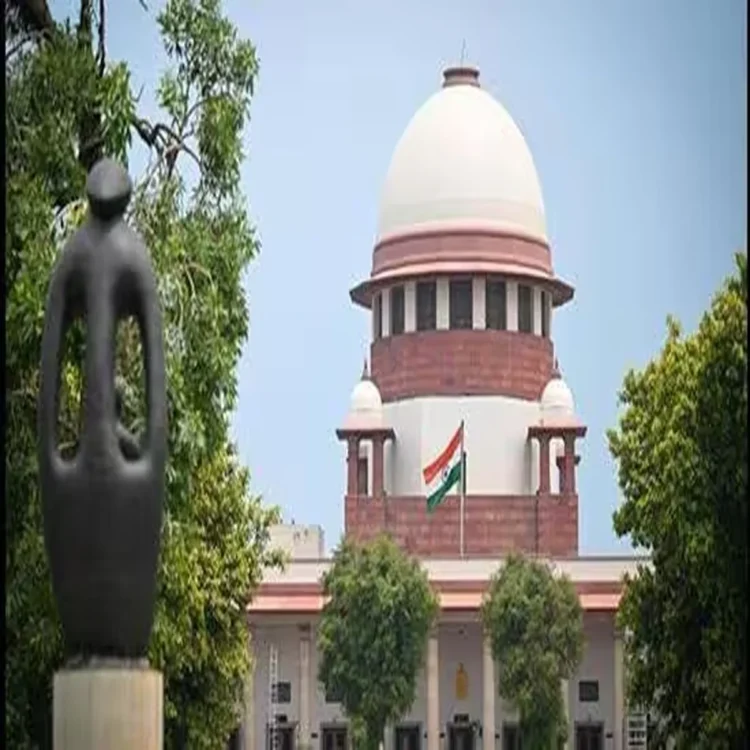
The Supreme Court on Tuesday postponed the hearing related to the remission request filed by Ravindra Pal alias Dara Singh, who is serving a life sentence in connection with the 1999 killing of Australian missionary Graham Stuart Staines and his two minor sons in Odisha’s Keonjhar district. While granting additional time to the state government, the court expressed hope that the committee examining the plea would complete its review before the next hearing scheduled for August 19.
State Seeks More Time for Committee Review
The matter came up before a bench comprising Justice Manoj Misra and Justice Vijay Bishnoi. During the proceedings, the Odisha government informed the court that the committee responsible for considering the remission application had sought additional official records, which were still awaited. Accepting the state’s request, the bench deferred the case and observed that it expected the committee to take a decision before the matter returns to court next month.
The court’s brief order stated that, considering the circumstances presented by the state, the hearing would resume on August 19 while the committee continued its evaluation of the remission request.
Earlier Direction on Remission Application
The Supreme Court had earlier, on March 19 last year, directed the Odisha government to examine and decide Dara Singh’s remission application within six weeks. Singh has argued that he qualifies for consideration under Odisha’s 2022 policy governing the premature release of life convicts and has already spent more than 25 years in prison.
In his petition, he requested that authorities apply the state’s current remission guidelines and consider his release after completing the required period of incarceration.
Background of the 1999 Case
Dara Singh was convicted for the murders of Australian missionary Graham Stuart Staines and his sons, Philip, aged 10, and Timothy, aged 6. The incident took place on the night of January 21, 1999, in Odisha’s Keonjhar district.
According to the prosecution, a mob led by Singh attacked the family while they were sleeping inside their station wagon before setting the vehicle on fire. Investigators said the victims were prevented from escaping as the mob surrounded the vehicle with sticks. The three later died in the blaze, and their remains were recovered from the scene. The case attracted widespread national and international attention because of its brutality.
Convict Seeks Relief Under Existing Policy
In his application before the Supreme Court, Singh maintained that he had undergone the minimum period required under the state’s remission framework and deserved consideration for early release. He also requested that the Central Bureau of Investigation (CBI), which investigated the case, be included as a respondent in the proceedings.
The petition further referred to previous Supreme Court decisions in which life convicts were granted remission after long periods of imprisonment, including the 2022 judgment involving one of the convicts in the Rajiv Gandhi assassination case. Singh argued that similar legal principles should be applied while assessing his request.
Plea Highlights Reform and Personal Circumstances
The petition states that Singh regrets the offences committed more than two decades ago and wishes to contribute positively to society through service-oriented activities if released. Invoking the concept of reformative justice, he relied on past judicial observations that recognise the possibility of rehabilitation for prisoners who have spent many years in custody.
Singh also submitted that he is around 61 years old, has never been released on parole, and could not attend his mother’s last rites due to his imprisonment. He alleged that repeated representations seeking remission had not been acted upon promptly, claiming this affected his constitutional rights. Additionally, he argued that his conduct during incarceration and the lengthy period already served should be considered while evaluating his request for premature release.