
Exports – China’s June Overseas Shipments Rise Sharply on Strong AI Demand
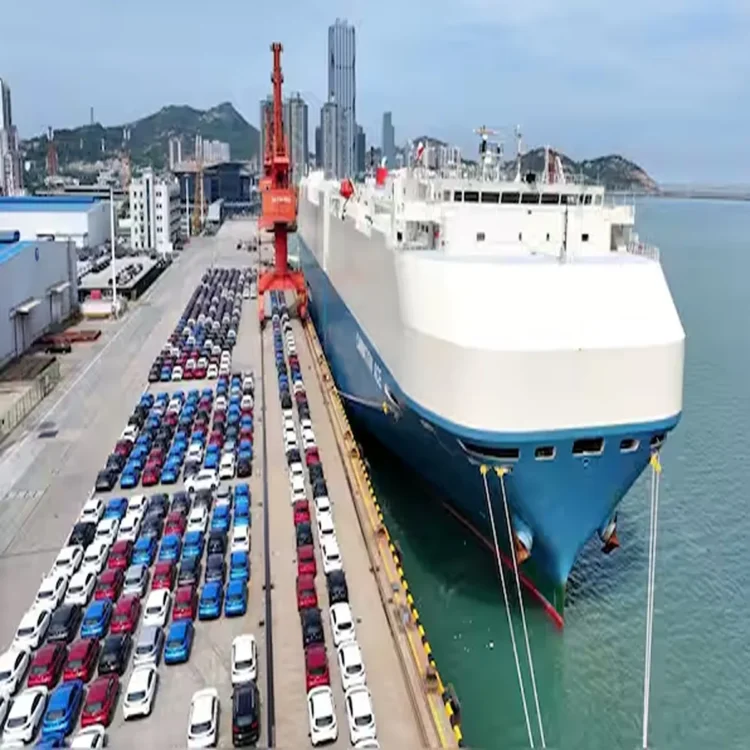
Exports – China’s export sector delivered a stronger-than-expected performance in June, reflecting growing international demand for technology products and advanced manufacturing. Official customs figures released on Tuesday showed exports increased by 27% compared with the same month last year, marking a notable acceleration from May’s annual growth of 19.4%. The latest figures also exceeded most market expectations and highlighted the continued importance of external trade in supporting China’s economy.
Imports Also Record Strong Growth
China’s imports posted an even faster pace of expansion during June, climbing 36% year-on-year after rising 27.4% in May. Market analysts said higher import values were influenced in part by increased global costs linked to the conflict involving Iran, which affected the prices of several imported goods. As a result, China’s monthly trade surplus expanded to $125.6 billion, up from $105.4 billion recorded in May.
Artificial Intelligence Supports Export Momentum
Economists believe the rapid growth of the artificial intelligence industry has become a major factor behind the latest trade figures. Julian Evans-Pritchard, Head of China Economics at Capital Economics, noted that rising semiconductor prices driven by AI demand played a significant role in lifting overall trade values. He also pointed out that international demand for Chinese products remained healthy even beyond the technology sector.
The country has continued to benefit from strong overseas sales of electric vehicles, electronic equipment, and other advanced technology products. Growing investment in AI infrastructure worldwide has increased the need for semiconductors and related components, creating additional opportunities for Chinese manufacturers.
External Demand Offsets Domestic Challenges
The strength of export-oriented industries has helped balance weaker activity within China’s domestic economy. Consumer spending and private investment have remained under pressure due to the prolonged downturn in the country’s property sector. Despite these internal challenges, overseas demand has continued to provide important support for industrial production and manufacturing.
During the first six months of the year, China’s exports increased 17.6% compared with the same period last year, while imports rose 26.6%, according to customs data.
Global Trade Patterns Continue to Shift
China’s expanding trade surplus has continued to attract attention from policymakers in the United States and Europe, where concerns over growing trade imbalances remain. In response to higher tariffs and other trade restrictions, many Chinese manufacturers have increased investment in production facilities outside China, including locations across Europe. At the same time, exports to emerging markets have continued to expand.
June data showed exports to Southeast Asia jumped nearly 35% from a year earlier. Shipments to the European Union grew by more than 18%, while exports to Latin America rose over 28%. Exports to the United States also recorded an annual increase of almost 14%, partly reflecting easier comparisons with lower export levels seen a year earlier following the introduction of higher tariffs.
Growth Outlook Faces Uncertainty
Analysts expect China’s exports to remain relatively strong in the coming months, although they also warn that future growth could become more vulnerable. Wei Li, Head of Multi-Asset Investments at BNP Paribas Securities (China), said continued strength in vehicle exports and AI-related products will largely depend on global demand and future regulatory developments in major markets.
Attention is now turning to China’s upcoming economic growth figures for the April-June quarter, which are scheduled for release on Wednesday. The government has maintained an annual growth target of between 4.5% and 5% for this year, slightly below the 5% expansion achieved in 2025.
Earlier this month, the International Monetary Fund increased its forecast for China’s economic growth in the current year to 4.6%, an improvement of 0.2 percentage point from its previous estimate. However, the IMF also projected that growth could slow to 4.1% by 2027. While authorities continue to encourage household spending through trade-in incentives for vehicles and home appliances, many consumers remain cautious about making major purchases as economic uncertainty persists.