
AirQuality – Delhi Pollution Returns as Poor Air Persists After Early Monsoon Relief
AirQuality – Nearly a week after the capital received its first widespread monsoon showers, Delhi has once again slipped into the poor air quality category, indicating that rainfall alone has not been enough to maintain cleaner air. Weather experts and air quality researchers say a combination of dry conditions, high humidity, weak winds and continuous local emissions has led to a fresh rise in pollution levels across the city.
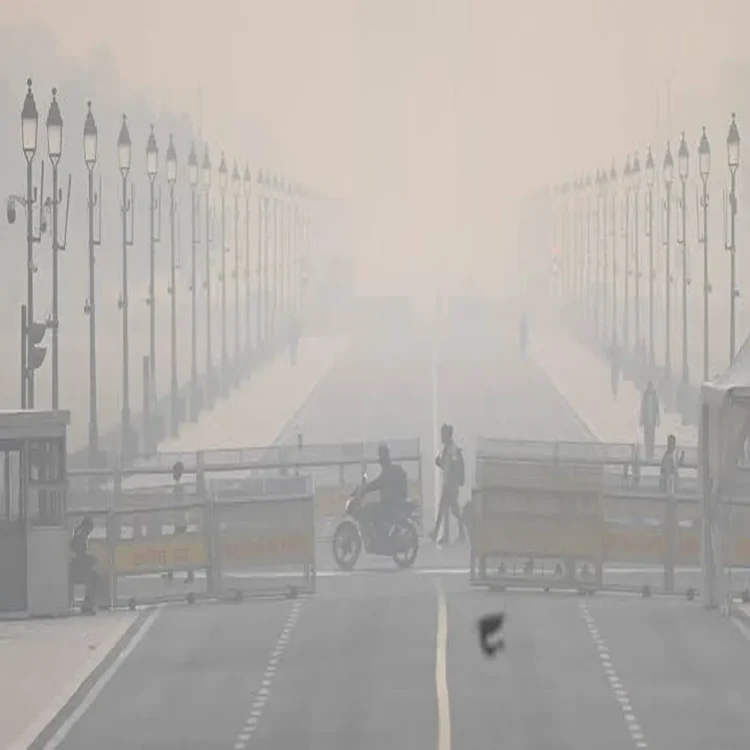
According to the Central Pollution Control Board (CPCB), Delhi’s Air Quality Index (AQI) reached 246 at 4 pm on Monday, marking the second straight day in the poor category. Among all monitoring stations, Anand Vihar recorded the highest pollution level with an AQI of 380, placing it in the very poor category and making it the city’s most polluted location.
Weather Conditions Behind the Decline
Specialists explained that the first spell of monsoon rainfall had temporarily removed pollutants from the atmosphere through a natural cleansing process. However, the absence of further rain in recent days has allowed pollution to build up again, especially as weather conditions have remained unfavorable for dispersing airborne particles.
Mahesh Palawat, Vice President at Skymet Weather, said the combination of dry weather, light surface winds and persistent humidity has prevented pollutants from spreading away from the city. He noted that the atmosphere has remained relatively stable, causing contaminants to stay concentrated closer to the ground.
Dust and Local Emissions Add to Pollution
Apart from stagnant weather conditions, experts pointed to additional pollution sources that have contributed to the worsening air quality. Dry westerly winds have been carrying dust from Rajasthan into Delhi, while emissions from vehicles, construction activity and other local sources continue to accumulate.
Palawat said these combined factors are likely to keep Delhi’s AQI within the current range for the next five to six days. He added that meaningful improvement may only occur if another widespread spell of monsoon rainfall reaches the region, which is expected around July 21 or July 22.
Experts Stress Importance of Emission Control
Air quality researchers cautioned against placing the entire blame on changing weather conditions. They said the latest decline demonstrates that local pollution sources remain a major concern, even during the monsoon season, which typically brings cleaner air because of frequent rainfall.
Palak Balyan, Research Lead at Climate Trends, said rain provides only temporary improvement by washing pollutants from the atmosphere. Once rainfall stops, emissions from road traffic, industrial activity and other urban sources quickly begin accumulating again. She emphasized that without effective measures to reduce these emissions, air quality improvements are unlikely to last.
Balyan also explained that high humidity causes fine particulate matter to combine into larger clusters. At the same time, weak winds and limited atmospheric movement slow the dispersion of these particles, allowing pollution levels to rise rapidly despite recent rainfall.
Most Polluted Areas in Delhi
The latest CPCB monitoring data identified several locations where pollution levels remained significantly higher than the city average. Anand Vihar topped the list with an AQI of 380, followed by Wazirpur at 295, Jahangirpuri at 282, IIT Delhi at 271 and Dilshad Garden at 261. These readings highlight that pollution continues to affect multiple parts of the capital despite the arrival of the monsoon.
Environmental experts believe the current situation serves as a reminder that seasonal rainfall alone cannot solve Delhi’s long-standing air pollution problem. They say sustained improvements will require both favorable weather conditions and stronger efforts to reduce emissions from transport, industry and other local pollution sources.