
Natural Farming – Global Experts Introduce Sustainable Agriculture Model at Guntur School
Natural Farming – Students should gain practical knowledge of natural farming from an early age, as food security, proper nutrition, and good health are essential pillars of a sustainable future, said Jordan Jasper from the Foundation on Future Farming, Germany, during an interactive session with students at Kornepadu High School in Andhra Pradesh.
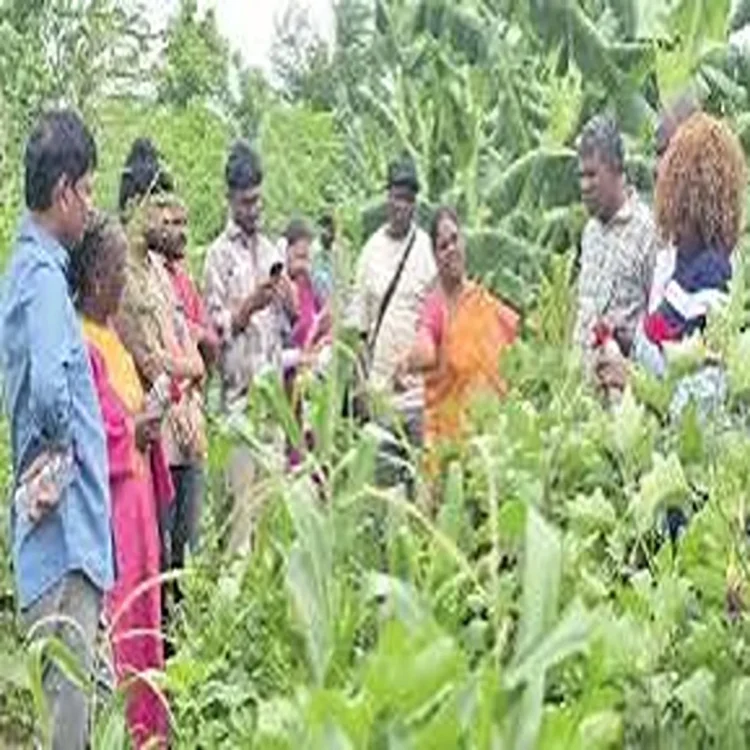
The programme, held on July 10, 2026, marked the introduction of the internationally recognised 2,000 Square Metre farming model at the school in Guntur district. Addressing students, Jasper explained that a carefully designed 2,000-square-metre farm has the potential to provide a family’s food and nutrition needs while promoting environmentally responsible farming practices. He also encouraged young learners to view agriculture as a meaningful and rewarding career option that combines innovation with sustainability.
International Delegation Supports Practical Learning
The event was attended by an international team of agriculture and food system experts representing Kenya and Germany. The visiting delegation included Anjama Njoroge Daniel, Coordinator of the Seed Saver Network-Kenya; Oddah Friday Ochomo, a member of the Global Field Network-Kenya; Zipporah Nyambura Kuria from the Seed Saver Network-Kenya; John Kariuki Mwangi, Head of Slow Food Kenya; and Jordan Jasper from the Foundation on Future Farming, Germany.
Their visit focused on launching a pilot demonstration of the 2,000 Square Metre model at Kornepadu High School, providing students with firsthand exposure to sustainable farming methods that can be applied in everyday life.
Focus on Future Food Security
During discussions with students and teachers, the delegates pointed out that cultivable land is gradually decreasing across many parts of the world due to increasing population and changing land use patterns. They stressed that developing agricultural knowledge among young people is becoming increasingly important to ensure long-term food production and environmental sustainability.
The experts highlighted that schools can play a significant role in building awareness about responsible farming practices by combining classroom learning with practical field experience. They encouraged students to understand the importance of producing healthy food while protecting natural resources for future generations.
Tree Plantation Marks the Beginning
The programme commenced with a tree-planting activity involving the international delegates, school students, and teachers. The symbolic plantation drive reflected the broader objectives of environmental conservation and community participation.
Throughout the event, the speakers discussed several important themes, including natural farming, biodiversity conservation, healthy food systems, and the preservation of indigenous seeds. According to the experts, safeguarding traditional seed varieties and encouraging biodiversity are essential for maintaining resilient agricultural systems capable of meeting future challenges.
Students Encouraged to Become Sustainability Ambassadors
The visiting experts expressed confidence that the participating students would carry forward the message of sustainable agriculture within their communities. By learning environmentally friendly farming techniques at an early stage, students can help promote responsible food production and inspire future generations to adopt sustainable agricultural practices.
Y. Sudhakar, Senior Thematic Lead (Academy) at Rythu Sadhikara Samstha, said the successful implementation of the 2,000 Square Metre model at Kornepadu High School could become an example for educational institutions across the region. He added that if the initiative is carried out effectively, it has the potential to earn recognition not only for the school but also for its students on a wider platform.
The programme concluded with optimism that practical agricultural education, combined with international collaboration, would help prepare young learners to contribute towards food security, environmental protection, and sustainable rural development in the years ahead.