
TrafficChallans – Delhi Traffic Police Reports Rise in Enforcement During First Half of 2026
TrafficChallans –Delhi Traffic Police recorded a slight increase in enforcement action during the first six months of the year, issuing more than 4.842 million challans for traffic rule violations between January 1 and June 30. Officials said the figure represents an increase of nearly two percent compared with the 4.752 million challans issued during the same period last year. Alongside stricter enforcement, authorities have also focused on improving road movement through infrastructure changes, technology-driven monitoring and greater public participation.
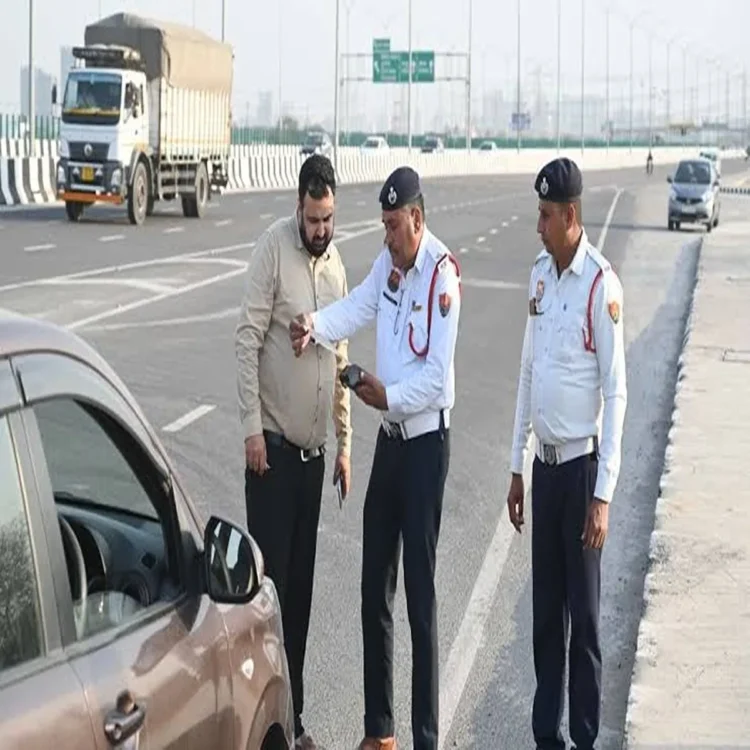
Technology Plays a Larger Role in Traffic Enforcement
According to Additional Commissioner of Police (Traffic Headquarters) Vijayanta Goyal Arya, automated surveillance systems continued to play an important role in identifying violations. A total of 1.721 million challans were generated using the Red Light Violation Detection (RLVD) and Over Speed Violation Detection (OSVD) systems during the six-month period.
The department also intensified action against reckless motorists. Police registered 2,187 First Information Reports (FIRs) against individuals accused of dangerous driving, reflecting continued efforts to improve road discipline and reduce the risk of serious accidents across the capital.
Signal-Free Corridors Introduced to Reduce Congestion
To address persistent traffic bottlenecks, Delhi Traffic Police implemented eight signal-free corridors across different parts of the city. Six of these corridors are located in the northern traffic range, while the remaining two have been developed in the eastern range.
Officials said the initiative involved removing traffic signals that were no longer required, shutting unauthorised median openings, creating dedicated U-turn facilities and redesigning intersections to improve vehicle movement. These measures were introduced with the objective of reducing travel delays and ensuring smoother traffic flow on key routes.
Key Routes Witness Better Vehicle Movement
Police officials reported encouraging results on several upgraded stretches. Roads connecting Netaji Subhash Place (NSP) with Rithala Metro Station and the Vikas Marg corridor between Laxmi Nagar and Karkari Mor have shown noticeable improvements in traffic movement following the changes.
Authorities said these corridors have experienced fewer delays during peak travel hours, indicating that engineering-based traffic management solutions are contributing to more efficient movement of vehicles.
Duty Risks Remain High for Traffic Personnel
The report also highlighted the challenges faced by traffic police personnel while managing roads across the city. Between January and June, 14 officers sustained injuries while performing traffic regulation and enforcement duties. During the same period, one traffic police personnel lost their life while on duty.
Officials noted that managing traffic on busy roads continues to expose personnel to significant occupational risks despite ongoing safety measures.
Coordination With Multiple Agencies
Delhi Traffic Police said it continued working closely with several government agencies to tackle congestion at major locations. The department coordinated with the Public Works Department (PWD), Municipal Corporation of Delhi (MCD), National Highways Authority of India (NHAI), Delhi Metro Rail Corporation (DMRC) and Delhi Transport Corporation (DTC) to identify and address traffic-related issues across the city.
Such coordination has supported infrastructure improvements and helped implement traffic management measures at several critical junctions.
Public Participation Through Project SANGAM
The department also reviewed the progress of Project SANGAM, an initiative launched on April 3 to encourage residents, traders and market associations to contribute suggestions for improving traffic conditions.
Officials said 309 stakeholder meetings were organised under the programme, resulting in 514 recommendations. Out of these, 368 suggestions have already been implemented, while the remaining proposals have been forwarded to the concerned departments for further consideration and action.