
AI – Ruchir Sharma Sees India’s Tech Challenge Beyond Global Partnerships
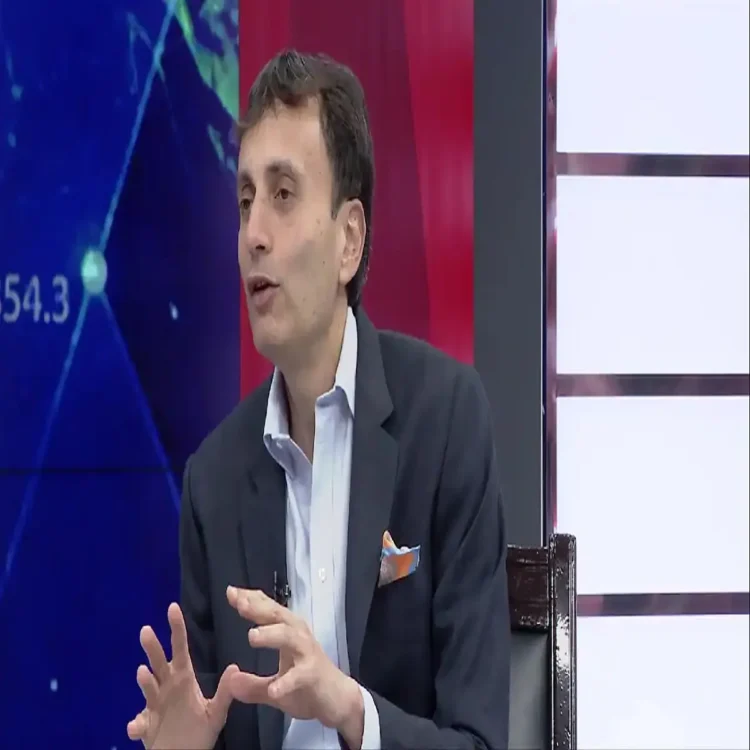
AI – Ruchir Sharma, chairman of Rockefeller International and founder of Breakout Capital, has said India’s expanding artificial intelligence partnerships may strengthen its strategic options, but they are unlikely to close the country’s technology capability gap quickly. Speaking with Jayanth Jacob, Sharma discussed India’s AI ambitions, employment, manufacturing, foreign investment and the evolving relationship with the United States.
Hardware gap remains a major hurdle
Sharma said the present phase of artificial intelligence is rewarding economies that already possess deep capabilities in computing infrastructure. Countries leading in large language models, semiconductor production, servers and data centres are seeing the strongest gains from the AI boom.
India’s technology sector, he noted, has traditionally been driven by software services rather than hardware manufacturing. That difference matters because the current AI expansion depends heavily on advanced chips, computing power and large-scale data infrastructure.
He pointed to Japan, South Korea, Taiwan and Israel as examples of economies that have built broader technology ecosystems over decades. These countries have invested significantly in technology and research, while India’s investment in these areas remains comparatively lower. Sharma said such gaps cannot be narrowed in a short period and require sustained policy support and long-term capital.
Diversified partnerships can protect strategic interests
On India’s efforts to work with countries ranging from France to Japan, Sharma said diversification is a sensible response to rising geopolitical uncertainty. He argued that India should avoid becoming excessively dependent on any one country for critical technology.
According to Sharma, India is likely to maintain stronger cooperation with the United States than China because of deeper historical trust. Although India-US ties have faced periods of strain, he said the trust gap with China remains much wider. Maintaining relationships with several technology partners, he added, could help India preserve greater strategic autonomy.
AI may reshape professions rather than eliminate work
Sharma rejected the view that artificial intelligence will automatically lead to widespread unemployment. He said major technological changes often remove certain professions while creating new forms of work in other sectors.
He acknowledged that entry-level IT services roles could face pressure, but said employment is growing in areas such as healthcare, data centres and related industries. The full effect of AI on labour markets remains uncertain, he said, but fears of a permanent collapse in jobs may be overstated.
Drawing on previous industrial and technological shifts, Sharma said efficiency improvements often increase demand instead of reducing it. He referred to the Jevons paradox, which suggests that greater efficiency can lead to higher overall consumption. In that scenario, technology may alter the nature of employment without necessarily reducing total jobs over time.
India yet to gain strongly from China+1 shift
Sharma said India has not captured the level of manufacturing gains that many expected from the China+1 supply-chain strategy. Instead, countries such as Vietnam and South Korea have benefited more visibly, particularly as global demand for AI-linked products has increased.
He said foreign investors continue to find India difficult to navigate because of regulatory complexity and uneven execution across different levels of government. Coordination between the Centre, states and local authorities can often slow projects, he said.
Sharma also questioned the assumption that global investors have limited alternatives to India because of its large domestic market. He argued that such thinking can weaken the urgency for reforms that make the country more competitive for foreign companies.
India-US relationship likely to outlast political cycles
On India’s ties with the United States, Sharma said the relationship rests on broader structural factors, including the influence and success of the Indian diaspora. He said these forces are likely to endure despite changes in political leadership or temporary disagreements.
He added that the relationship between Prime Minister Narendra Modi and President Donald Trump has become more complicated than it was during Trump’s first term. However, Sharma said Trump’s transactional political style means policy positions can change quickly.
Looking ahead, Sharma said AI will remain transformative but warned against treating it as the sole force that will determine the future global order. He believes the current enthusiasm around AI has created elements of a bubble and said geopolitics, trade, institutions and economic policy will continue to shape the world alongside technology.