
Renewable Energy – Modi Seeks Australian Support for India’s 2030 Clean Power Goal
Renewable Energy – Prime Minister Narendra Modi has said Australia could become an important partner in India’s effort to build 500 gigawatts of renewable energy capacity by 2030. Speaking in Melbourne on Thursday, he pointed to potential cooperation in clean technology, civil nuclear energy and large-scale infrastructure investment.
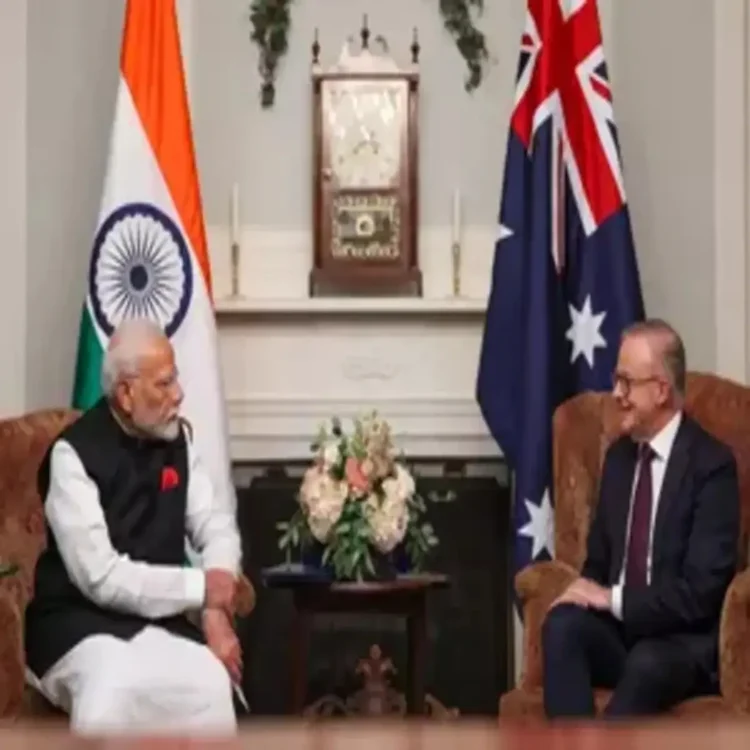
Modi addressed business leaders at the India-Australia CEO Forum and Economic Roadmap Business Reception, where Australian Prime Minister Anthony Albanese was also present. The event formed part of Modi’s visit to Australia during his three-nation tour of Indonesia, Australia and New Zealand.
Clean Energy Manufacturing Focus
The Prime Minister said India is expanding its domestic manufacturing base to support its energy transition. He noted that the country is developing capabilities linked to hydropower projects, green hydrogen, solar modules and wind turbines.
India has set a target of reaching 500 gigawatts of renewable energy capacity by 2030 and achieving net-zero emissions by 2070. Modi said Australian technology, investment and natural resources could help India move faster towards those goals.
He told the gathering that several companies working in the clean energy sector were represented at the forum, creating an opportunity for businesses from both countries to explore new partnerships.
Nuclear Cooperation on the Agenda
Modi also highlighted the scope for deeper engagement in civil nuclear energy. India has announced a target of developing 100 gigawatts of nuclear power capacity by 2047.
Australia’s large uranium reserves could support India’s long-term nuclear energy plans, he said. The two countries have previously discussed energy cooperation, and the issue is expected to remain part of broader bilateral discussions.
Infrastructure Investment Opportunities
The Prime Minister invited Australian long-term investors to participate in India’s infrastructure expansion. He identified ports, airports, roads, railways and urban development as sectors where Australian capital could find significant opportunities.
India has been increasing public and private investment in infrastructure as part of its wider economic growth strategy. Modi said the scale of planned projects offered room for stronger engagement with Australian pension funds, investment firms and other institutions.
Critical Minerals and Supply Chains
Indian High Commissioner to Australia Nagesh Singh said the visit could also strengthen cooperation in critical minerals and supply chains. Australia is a major producer of critical minerals and rare earth elements, while India’s demand is expected to rise as it expands renewable energy, electric mobility and advanced manufacturing.
Singh said discussions are already taking place between businesses and governments in both countries. He added that future cooperation could go beyond a traditional buyer-seller arrangement and include processing, value addition and other joint industrial activities.
The two prime ministers are expected to provide strategic direction on these areas, while detailed commercial and policy discussions continue through official and business channels.
Broader Bilateral Talks Expected
Modi met Albanese in Melbourne after arriving in Australia on Wednesday. He received a welcome from members of the Indian community, including cultural performances reflecting connections between the two countries.
During the three-day visit, the leaders are expected to discuss defence and security, trade and investment, education, mobility, emerging technologies, sports and people-to-people ties.
Australia is the second stop on Modi’s three-nation visit. He travelled to Melbourne after completing engagements in Indonesia and is scheduled to visit New Zealand after concluding his Australian programme.