
Election Technology – India and Indonesia Prepare Pact on Electoral Cooperation
Election Technology – India and Indonesia are preparing to deepen cooperation on election management, with a proposed memorandum of understanding expected to cover voting technology, training, institutional capacity and the sharing of election practices.
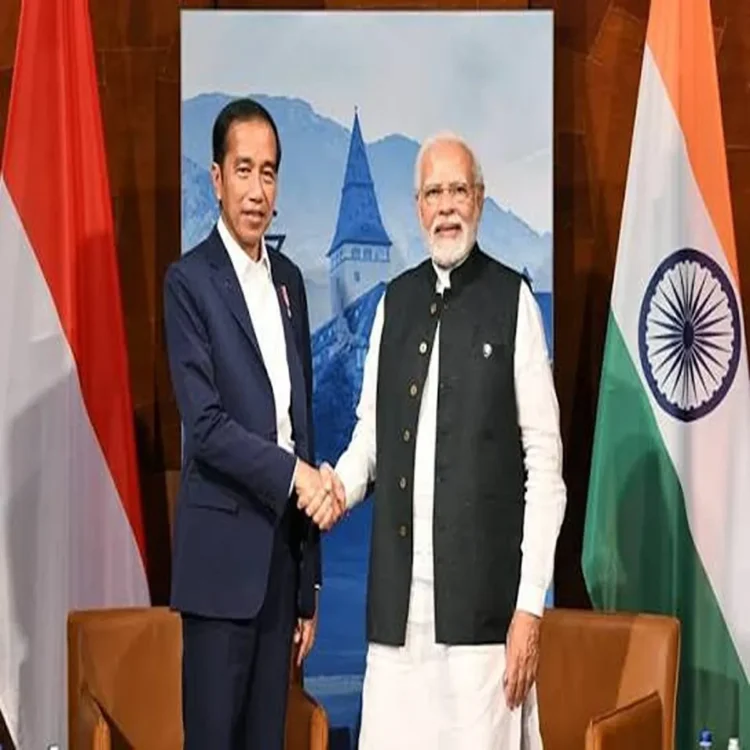
Indonesia, one of the world’s largest democracies with a population of about 288 million, is looking to draw on India’s experience in organising large-scale elections. The planned agreement is expected to include discussions on customised Electronic Voting Machines, commonly known as EVMs, along with wider cooperation in electoral administration.
Proposed agreement to cover technology and training
Officials familiar with the discussions said the proposed MoU between New Delhi and Jakarta would focus on several areas, including election technology, human resource development, capacity building and the exchange of operational knowledge.
The arrangement could also create a framework for Indonesia to explore the use of Indian-designed voting machines adapted to its electoral requirements. Both countries have already held exchanges involving election officials, who reviewed India’s EVM system, election monitoring arrangements, voter education programmes and digital tools used in electoral governance.
India’s Election Commission has built extensive experience in conducting polls across a vast and diverse electorate. Its systems are regularly examined by visiting delegations seeking practical lessons in voter registration, polling logistics, public awareness and election supervision.
India expands international election partnerships
The Election Commission of India has entered into cooperation agreements with election management bodies in 28 countries, as well as three international organisations. These partnerships include countries such as Australia, Brazil, Chile, Fiji, Mexico and South Africa.
Such agreements generally support the exchange of technical knowledge, training opportunities and discussions on ways to improve election administration. They also reflect growing international interest in India’s experience of managing elections involving hundreds of millions of voters.
India’s election model has previously supported electoral authorities in countries including Bhutan, Nepal and Namibia. The cooperation has ranged from providing voting equipment to offering technical guidance and institutional support.
EVM experience in Bhutan, Nepal and Namibia
Bhutan was the first country to use customised Indian EVMs with technical assistance from India. Nepal has also received specially designed machines for pilot projects, alongside support for electoral institutions.
Namibia became a significant commercial example of India’s election technology outreach after using Indian-made EVMs in national elections. The country later adopted Indian Voter Verifiable Paper Audit Trail, or VVPAT, units as part of its voting process.
Indian EVMs have received attention for their ability to support large elections efficiently. Supporters of the technology point to its operational reliability and its role in helping election authorities manage voting across geographically varied regions.
Support extends beyond voting machines
India’s role in overseas election support is not limited to electronic voting equipment. The Election Commission has also supplied indelible ink for elections in several countries, including Madagascar, Myanmar, Cambodia, Fiji, Bhutan, Sierra Leone and Mongolia.
Indelible ink is used to help prevent multiple voting and is considered an important safeguard in many electoral systems. Its supply to foreign election authorities has added another dimension to India’s engagement in democratic processes abroad.
As elections become more complex and increasingly dependent on technology, India’s experience is gaining wider relevance. The proposed India-Indonesia agreement is expected to build on that record by combining technical cooperation with training and institutional exchange.