
Tiger Conservation – NSTR Faces Shortage of Breeding-Age Female Tigers
Tiger Conservation – The Nagarjunasagar-Srisailam Tiger Reserve, widely known as NSTR, has restricted public access to its most sensitive areas as the tiger breeding season begins. The Forest Department has halted tourism activities, safari operations, temple visits and other public movement in core habitats from July 1 to September 30.
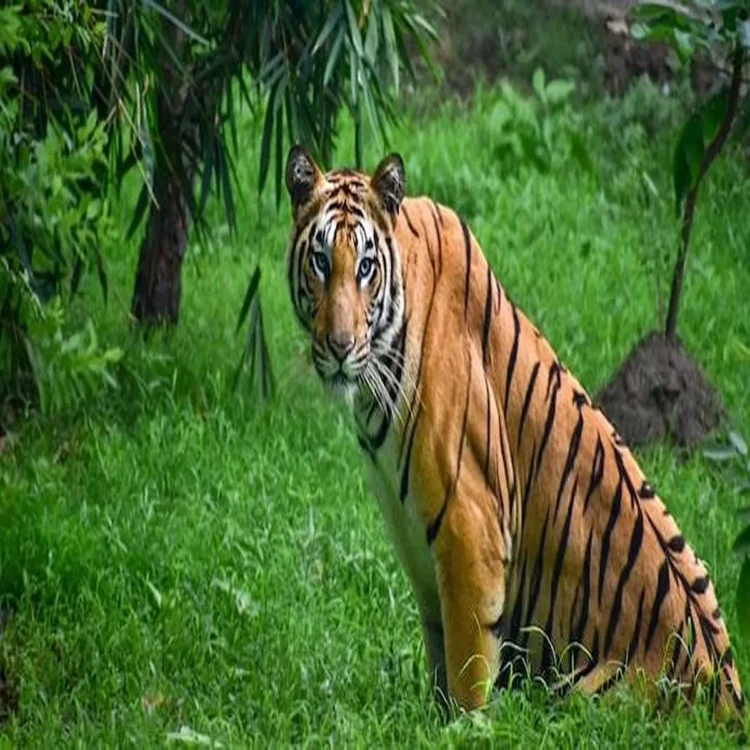
Monsoon creates favourable conditions for tiger breeding
Heavy rains have improved conditions across the Nallamala forest, bringing water availability, thicker vegetation and cooler weather. These factors support prey species and offer tigers better cover during mating and cub-rearing.
Forest officials say breeding tigresses require quiet and secure territory during this period. Disturbance from visitors, vehicles or nearby activity can affect mating behaviour and reduce the chances of cub survival. The seasonal restrictions are intended to allow wildlife to move freely without pressure from human presence.
Limited female population remains a conservation concern
Despite the access restrictions, wildlife researchers say the reserve faces a more complex challenge: a shortage of breeding-age females in its central breeding landscape. Sources familiar with tiger monitoring in the reserve estimate that NSTR currently has about 17 adult tigresses considered capable of breeding.
Only a small number of these females are believed to be occupying the core breeding areas, where tiger reproduction has historically been more successful. Conservationists say the number of breeding females is a crucial factor in determining how quickly the tiger population can grow.
A protected forest can provide suitable habitat, but population recovery depends on enough healthy females producing cubs that survive into adulthood. The issue has become particularly important because NSTR is regarded as India’s largest tiger reserve by area.
Fresh tiger survey report awaited
Forest officials are waiting for the findings of a recent tiger estimation exercise carried out across the reserve. The survey is expected to provide updated details on the tiger population, territorial distribution, breeding activity, cub numbers and survival patterns.
The final assessment could guide future decisions on habitat protection, prey management, patrol deployment and wildlife corridor planning. It may also help authorities identify forest pockets where breeding females need greater protection.
According to Andhra Pradesh Forest Department data from the 2024 tiger estimation, the NSTR and wider Nallamala landscape had nearly 87 tigers. The count included 32 adult males, 40 adult females, 11 cubs and four animals whose sex could not be determined.
Verification delays keep latest figures undisclosed
A 2025 tiger count reportedly suggested an increase in the reserve’s tiger population. However, officials did not release the figures after discrepancies involving around 10 animals were identified during the verification process.
The results of the 2026 All India Tiger Estimation have also not yet been announced. The previous national assessment in 2022 recorded 76 tigers in Andhra Pradesh, including 40 males, 32 females and four unidentified animals.
Cub survival is critical to population growth
Experts note that births alone do not guarantee a long-term rise in tiger numbers. Nearly half of tiger cubs may not survive to adulthood because of disease, natural mortality, territorial disputes and accidental deaths.
Adult tigers can also be injured or killed in snares set illegally for wild boars. In some fringe areas, illegal electric fencing and exposed power lines continue to pose risks to wildlife. Organised tiger poaching has declined significantly, but accidental threats remain a concern for forest authorities.
Female tigers generally reach maturity at around 18 months, while males take about two years. Breeding efficiency can decline after the age of 10, making younger adult females especially important for the reserve’s future population.
Conservationists say protecting core habitat, improving cub survival and maintaining a stable population of young breeding tigresses will be essential for strengthening tiger conservation in NSTR over the coming years.