
Supreme Court – Chargesheet Copy Delay Does Not Create Default Bail Right
Supreme Court – The Supreme Court has ruled that an accused person cannot seek default bail solely because a copy of the chargesheet was not provided after it was filed in court. The decision clarifies that the right to statutory bail depends on whether investigators submit the chargesheet within the legally prescribed time limit, not on the timing of its delivery to the accused.
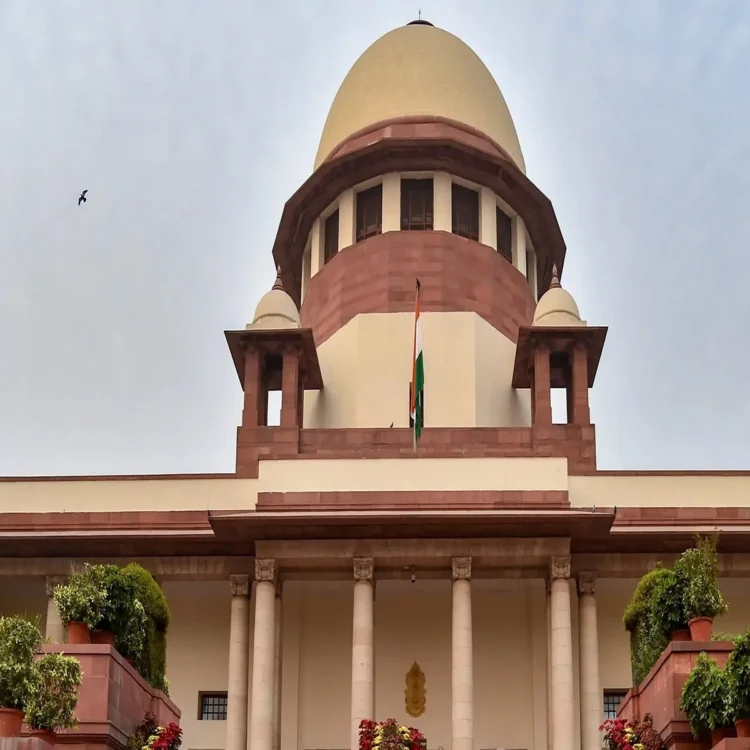
A bench comprising Justices Sanjay Karol and Nongmeikapam Kotiswar Singh delivered the ruling on Wednesday while dismissing an appeal against a Bombay High Court order. The High Court had earlier refused default bail to an accused who argued that the chargesheet filing was incomplete because he had not received a copy.
Court separates filing requirement from document supply
The case arose from an FIR registered in Maharashtra under provisions of the Bharatiya Nyaya Sanhita and other applicable laws. The accused had first approached a special court seeking statutory bail. After the plea was rejected, he moved the Bombay High Court.
His argument was based on the claim that although the chargesheet had been filed within 90 days, the investigating agency had not supplied him with a copy. He contended that the absence of the document meant the chargesheet could not be treated as a complete filing.
The Supreme Court rejected this submission and said the filing of a chargesheet before a competent court and the supply of its copy to an accused are separate legal obligations.
Default bail applies only when investigation deadlines are missed
Under Section 187(3) of the Bharatiya Nagarik Suraksha Sanhita, an accused may become entitled to default bail if the investigating agency fails to file a chargesheet within 60 or 90 days, depending on the nature of the alleged offence.
The bench said that once a chargesheet is filed within the required period, the statutory right to default bail comes to an end. A later failure to provide copies of the document does not revive that right.
The court also examined Section 193(8) of the BNSS, which deals with the filing of additional copies of the chargesheet. It held that non-submission of such copies does not make the chargesheet invalid or incomplete.
According to the ruling, procedural shortcomings in providing documents may need correction, but they do not affect the legal validity of a chargesheet that has been filed on time.
Trial court asked to provide chargesheet within a week
The Supreme Court noted that Section 230 of the BNSS gives an accused the right to receive a copy of the chargesheet and other relevant documents to prepare a defence. However, it said the appropriate remedy in such situations is to seek directions from the trial court.
While upholding the Bombay High Court decision, the bench directed the trial court to furnish the chargesheet copy to the accused within one week.
The ruling is expected to provide clarity on the scope of default bail under the BNSS and the distinction between timely filing of investigation reports and compliance with document-supply requirements.
Petition seeks rules for comedy and AI-generated material
In another matter before the Supreme Court, a petition was filed on Wednesday seeking a broader regulatory framework for stand-up comedy, podcasts, social media platforms and artificial intelligence-generated content.
The plea referred to a controversial “370 biryani” remark made during a stand-up performance by comedian Pranit More in Gurugram. The petition sought guidelines to address concerns relating to online content, public performances and AI-created material.
Gujarat poll candidates must disclose spouse assets
The Supreme Court also held that candidates contesting municipal elections in Gujarat must disclose assets owned by their spouses in election affidavits.
In a separate ruling, the court said an error by a magistrate in referring to an incorrect statutory provision while taking cognisance of a case can be corrected and does not automatically invalidate the proceedings.