
Counterterrorism – India Calls for Unified Global Stand Against Terror Networks
Counterterrorism – India has called on the global community to take a consistent and uncompromising approach against terrorism, saying no political dispute, grievance or strategic interest can excuse violence carried out by terror groups. The country made the remarks during the United Nations General Assembly’s adoption of the ninth review of the United Nations Global Counter-Terrorism Strategy on Wednesday.
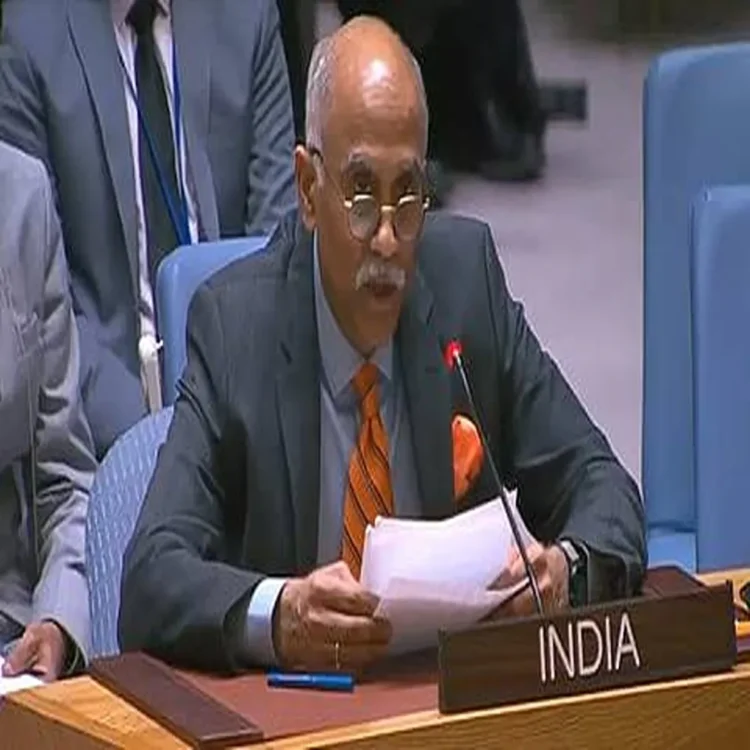
India highlights long experience with cross-border terrorism
India’s Permanent Representative to the United Nations, Ambassador Harish Parvathaneni, said the country has faced cross-border terrorism for decades and has witnessed its lasting impact on families and communities. He said India’s experience has reinforced its belief that terrorism must be rejected in every form, without exceptions.
Parvathaneni said attacks driven by terror groups cannot be defended on the basis of political causes or other arguments. He urged member states to work together against the ideology that promotes such violence and warned against attempts to create distinctions between different forms of terrorism.
Call for action against terror planners and sponsors
The Indian envoy stressed that those involved in planning, funding, organising or supporting terrorist activity must face legal action. He said countries should cooperate fully in bringing perpetrators and their backers to justice.
According to Parvathaneni, counter-terrorism efforts lose effectiveness when they are shaped by political interests or selective interpretations. While the international community must understand factors that contribute to radicalisation, he said these circumstances should never be treated as a defence for terrorism.
He also underlined the importance of protecting human rights and following the rule of law. At the same time, he said the right to life must remain central to the global response, as terrorism directly threatens that fundamental right.
India seeks stronger measures against terror financing
India said disrupting financial channels used by terror organisations should remain a major priority for governments and international agencies. Parvathaneni called for better sharing of financial intelligence, stronger implementation of Financial Action Task Force standards and closer scrutiny of jurisdictions that may be used to move funds for terrorist activity.
He said no country or financial system should become a route through which terror groups can access money, resources or support.
Concern over emerging technology misuse
India also raised concerns over the use of new and emerging technologies by terrorist organisations. Parvathaneni expressed disappointment that the latest review of the Global Counter-Terrorism Strategy did not produce a consensus on measures to prevent terrorists from accessing or exploiting advanced technological tools.
He said the issue has become increasingly important as technology can be misused to spread extremist content, coordinate operations and support unlawful activities across borders.
Push for global anti-terrorism legal framework
The latest review marks two decades since UN member states adopted the Global Counter-Terrorism Strategy. India said the milestone should encourage countries to strengthen their shared response to a threat that affects regions across the world.
Parvathaneni recalled that India had proposed the Comprehensive Convention on International Terrorism before the strategy was adopted in 2006. He said the absence of a universally accepted legal framework continues to limit efforts related to prosecution, extradition and action against safe havens for terrorists and their supporters.
India urged member states to show political commitment and conclude the convention, which it believes could help close gaps in international counter-terrorism law.
Delhi Declaration and religious hatred also raised
The ambassador referred to India’s Delhi Declaration on preventing the use of emerging technologies for terrorist purposes, along with the No Money for Terror conferences. He criticised the exclusion of the Delhi Declaration from the latest review, saying it reflected disagreements that have affected collective action.
Parvathaneni also said the UN should take an inclusive approach while addressing hatred linked to religion or identity. India condemned violence motivated by Islamophobia, Christianophobia and antisemitism, while noting that prejudice against other faiths must also receive recognition.
He concluded by saying terrorism can only be defeated through political will, transparent sanctions processes, objective decision-making and a refusal to apply double standards.