
Bihar Health – Government Plans CCTV Monitoring and Highway Ambulance Expansion
Bihar Health – Bihar is preparing to strengthen its public healthcare network with a series of reforms aimed at improving hospital management, ensuring better patient services, and expanding emergency medical support. Health Minister Nishant Kumar announced the new initiatives while addressing public concerns during a Janata Darbar held at the JD(U) state office in Patna.
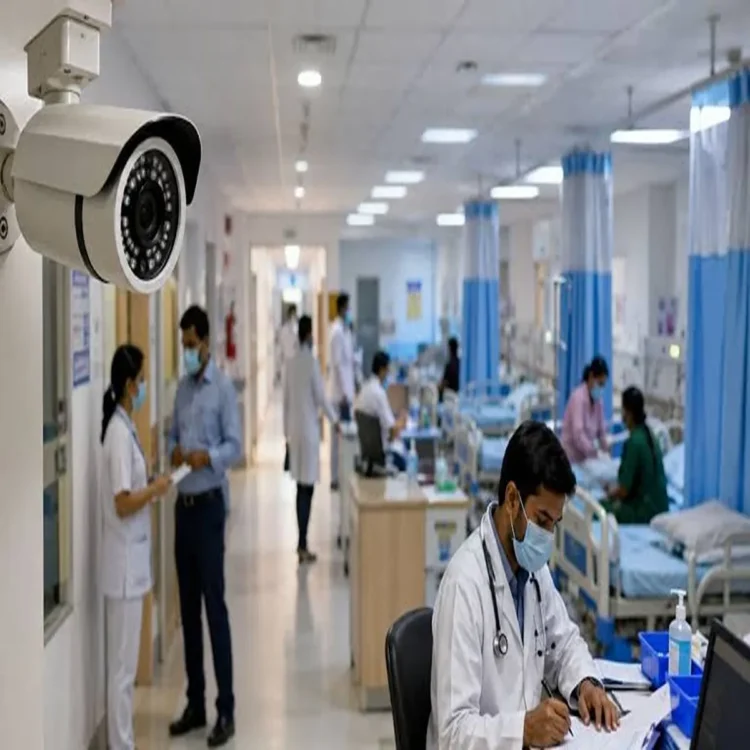
The minister said the government has decided to install CCTV cameras in every government hospital across the state to improve oversight and increase accountability. The surveillance system will be linked to a central monitoring facility in Patna, allowing officials to keep track of hospital operations and staff attendance in real time. The move is expected to help address recurring complaints about delayed reporting by doctors, nurses, and paramedical employees.
Central Monitoring to Improve Hospital Accountability
According to Nishant Kumar, authorities regularly receive reports of medical staff arriving late or remaining absent from duty, affecting healthcare delivery. Through the new monitoring mechanism, officials will be able to identify such cases more effectively. He stated that strict disciplinary measures would be taken against employees found neglecting their responsibilities, adding that the objective is to improve services rather than simply increase surveillance.
Focus on Medicine Availability Across Hospitals
The Health Minister also highlighted concerns over the availability of medicines in government healthcare facilities. He explained that hospitals are expected to maintain stocks covering 504 categories of essential medicines, but currently only around 350 types are available in many institutions. Officials have been instructed to ensure uninterrupted supplies so that patients receive prescribed medicines without facing shortages or unnecessary delays.
Diagnostic Equipment to Remain Operational
Another major focus of the government’s healthcare plan is maintaining diagnostic equipment in working condition. Nishant Kumar said that MRI machines, CT scanners, and other essential medical devices should not remain out of service for extended periods. He directed health officials to improve maintenance systems and ensure timely repairs whenever required. In hospitals where trained technicians or machine operators are unavailable, new appointments will be made so diagnostic services continue without interruption.
Additional Ambulances Planned for Faster Emergency Response
To improve emergency medical assistance, the Bihar government intends to deploy 100 ambulances along national and state highways. The initiative is designed to reduce response time for road accident victims and ensure quicker transportation to healthcare facilities. The minister said faster access to emergency treatment can significantly improve patient outcomes, particularly in serious trauma cases.
Trauma Care Infrastructure to Be Strengthened
Alongside ambulance deployment, the government has announced plans to establish 11 Level-3 trauma centres and five Level-3 trauma hospitals across Bihar. These facilities are expected to expand the state’s emergency care capacity and provide specialized treatment for critically injured patients. The proposed infrastructure aims to strengthen trauma management and improve medical support in accident-prone areas.
Surprise Inspections to Continue Across Bihar
Nishant Kumar reaffirmed that improving public healthcare remains one of the government’s key priorities. He said hospital performance will continue to be reviewed through regular inspections as well as surprise visits. Referring to his recent inspection of Patna Medical College and Hospital, he recalled expressing dissatisfaction over the conditions observed there and emphasized that similar inspections across the state would continue to encourage better administration, improved patient care, and greater accountability within government hospitals.