
Ladakh Talks – Centre Schedules Fresh Dialogue With Leh and Kargil Leaders
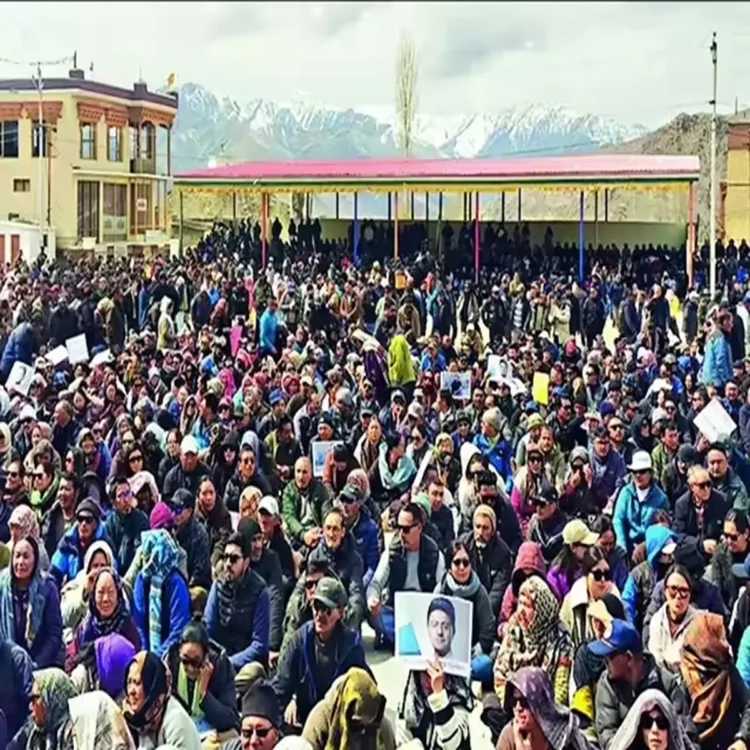
Ladakh Talks – The Ministry of Home Affairs (MHA) has invited representatives of Ladakh’s key civil society groups for an informal meeting in Leh on July 2, marking the first occasion that a central delegation will travel to the Union Territory since structured discussions began over its long-pending constitutional and administrative demands. The invitation comes days after a region-wide shutdown was observed in protest against what local leaders described as the Centre’s failure to act on earlier understandings.
Informal meeting to continue previous discussions
Leh Apex Body (LAB) co-chairman Chering Dorjay confirmed that the MHA had invited leaders for informal discussions in Leh. While no official agenda has been circulated, he said the meeting is expected to revisit the issues that were discussed during the sub-committee talks held in New Delhi on May 22.
According to Dorjay, the delegation intends to remind the Centre of the commitments that were reportedly made during those discussions, particularly regarding constitutional safeguards and the establishment of a stronger democratic governance framework for Ladakh.
Focus on constitutional protection and elected governance
Among the key demands likely to be raised are legal protections under Article 371 and the creation of an elected administrative structure with legislative, executive and financial authority. Leaders have consistently argued that such a framework would provide Ladakh with greater participation in decision-making while preserving local interests.
Dorjay said the proposed model also includes an executive body headed by a chief minister, reflecting the aspirations of many groups seeking enhanced democratic representation within the Union Territory.
Draft proposal prepared by civil society groups
The Leh Apex Body has completed a draft proposal outlining a new Union Territory-level elected institution with expanded legislative and financial powers. The proposal also recommends constitutional safeguards designed to protect the region’s unique identity and governance structure.
Before it is submitted to the Centre, the draft will be shared with the Kargil Democratic Alliance (KDA), which has independently prepared a similar framework. Representatives from both organisations plan to compare their proposals, resolve differences through consultation and present a unified document to the Ministry of Home Affairs for further consideration.
Demand for clarity on previous understandings
LAB and KDA leaders have also urged the Centre to publicly release the official minutes of the May 22 meeting. They maintain that the discussions had resulted in important “in-principle” understandings, which they believe should now be reflected in future negotiations.
Member of Parliament Haji Haneefa Jan had also participated in the earlier round of discussions alongside officials and representatives from both organisations.
Revenue concerns remain a hurdle for statehood
According to the joint statement issued after the May meeting, MHA officials explained that Ladakh’s present financial position remains the primary obstacle to granting full statehood. Officials reportedly stated that the Union Territory currently does not generate sufficient revenue to independently meet major expenditure commitments, including government salaries.
However, the Centre indicated that the proposed governance arrangement could serve as a pathway toward eventual statehood if the region meets the required financial benchmarks in the future. Both LAB and KDA leaders have expressed willingness to continue consultations with legal and constitutional experts to refine the proposed framework.
Protest reflected growing concerns
On June 23, Ladakh witnessed a widespread shutdown following a joint call by LAB and KDA. The protest was organised after both groups alleged that several important understandings reached during the May discussions had not been incorporated into the official record.
The organisations also criticised the administration under the Lieutenant Governor, claiming that decisions related to land, tourism, power, transport and liquor policy had been taken without adequate consultation with local stakeholders.
Long-standing demands remain unchanged
Since Ladakh became a separate Union Territory following the reorganisation of the former Jammu and Kashmir state in 2019, LAB and KDA have jointly campaigned for Sixth Schedule status, statehood with a legislature, separate Lok Sabha constituencies for Leh and Kargil, and the establishment of a dedicated Public Service Commission.
The outcome of the July 2 meeting is expected to influence the direction of future negotiations between the Centre and Ladakh’s representative groups as both sides seek to narrow differences through continued dialogue.